TFBSFootprinter: a multiomics tool for prediction of transcription factor binding sites in vertebrate species
Harlan R. Barker, Seppo Parkkila, MarttiE.E. Tolvanen

TL;DR
TFBSFootprinter is a new tool that predicts where transcription factors bind in the genomes of many vertebrate species using multiple types of data, improving accuracy compared to existing methods.
Contribution
TFBSFootprinter introduces a multiomics approach for predicting TFBSs across 317 vertebrate species, offering improved accuracy and usability.
Findings
TFBSFootprinter achieved an AUC of 0.881 using all multiomic data, outperforming existing tools like DeepBind and DeepSEA.
Combining the best multiomic data further improved performance to an AUC of 0.910.
The tool is available as Conda and Python packages for easy use.
Abstract
Transcription factor (TF) proteins play a critical role in the regulation of eukaryotic gene expression via sequence-specific binding to genomic locations known as transcription factor binding sites (TFBSs). Accurate prediction of TFBSs is essential for understanding gene regulation, disease mechanisms, and drug discovery. These studies are therefore relevant not only in humans but also in model organisms and domesticated and wild animals. However, current tools for the automatic analysis of TFBSs in gene promoter regions are limited in their usability across multiple species. To our knowledge, no tools currently exist that allow for automatic analysis of TFBSs in gene promoter regions for many species. The TFBSFootprinter tool combines multiomic transcription-relevant data for more accurate prediction of functional TFBSs in 317 vertebrate species. In humans, this includes vertebrate…
Genes, proteins, chemicals, diseases, species, mutations and cell lines named across the full text — each resolved to its canonical identifier and authoritative record.
Click any figure to enlarge with its caption.
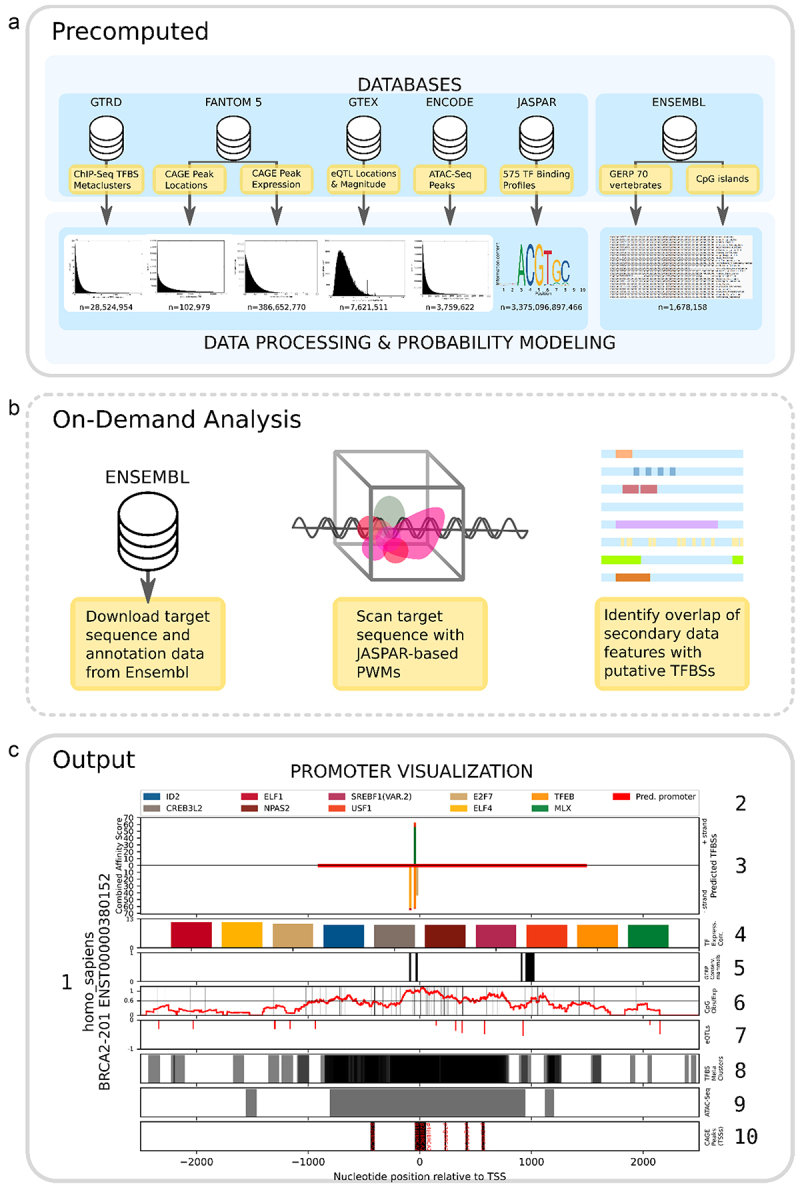 Figure 1
 Figure 2
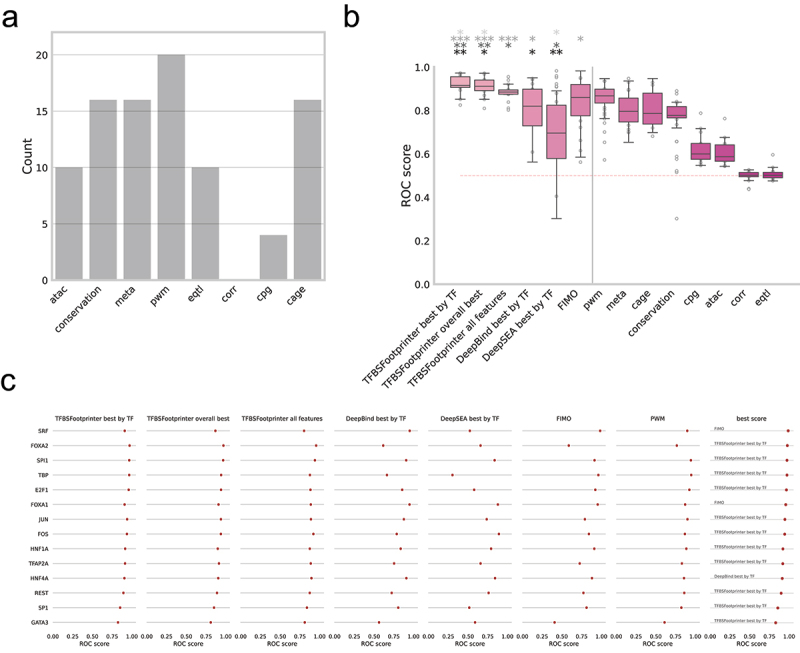 Figure 3
 Figure 4
 Figure 5
 Figure 6
 Figure 7
 Figure 8
 Figure 9
 Figure 10
 Figure 11
 Figure 12
 Figure 13
 Figure 14
Peer Reviews
No public reviews on file for this paper yet. If you reviewed it on a platform where reviews are public (OpenReview, ICLR, NeurIPS, ICML), you can paste yours below so the community can read it here.
Videos
No videos yet. Explain this paper in a talk, walkthrough, or lecture? Add one.
Taxonomy
TopicsGenomics and Chromatin Dynamics · Cancer-related molecular mechanisms research · Epigenetics and DNA Methylation