Impact of low testing numbers on chronic wasting disease apparent prevalence
Jameson J. Mori, Nelda A. Rivera, William M. Brown, Daniel J. Skinner, Peter E. Schlichting, Jan E. Novakofski, Nohra E. Mateus-Pinilla

TL;DR
Low testing numbers can make chronic wasting disease prevalence appear higher than it is, especially when fewer than 23 deer are tested.
Contribution
The study reveals that apparent prevalence is significantly influenced by testing numbers, not just disease cases, when testing is limited.
Findings
Apparent prevalence values ≥50% were only observed when fewer than 23 deer were tested.
Bayesian models showed a significant negative relationship between testing numbers and apparent prevalence.
The impact of testing on apparent prevalence decreases as testing increases.
Abstract
Chronic wasting disease (CWD) is a fatal, neurodegenerative disease of cervids, and its management heavily relies on diagnostic testing. Test results are commonly used to calculate ‘apparent prevalence’ (AP) – the percent of animals tested for CWD (CWD tests) with CWD-positive test results (CWD cases) – but this obscures how tests and cases individually contribute to this statistic. This is most relevant when CWD testing is limited because when few animals are tested, detection of even a single infected deer can result in a high AP that poorly reflects reality. We hypothesized that when CWD testing is limited, AP is negatively driven by testing – rather than cases – with more tests corresponding to lower APs. Graphed CWD surveillance data from townships in Illinois and Wisconsin, USA, indicate that CWD AP values ≥50% were only observed when <23 deer were tested. We used Bayesian…
Genes, proteins, chemicals, diseases, species, mutations and cell lines named across the full text — each resolved to its canonical identifier and authoritative record.
Click any figure to enlarge with its caption.
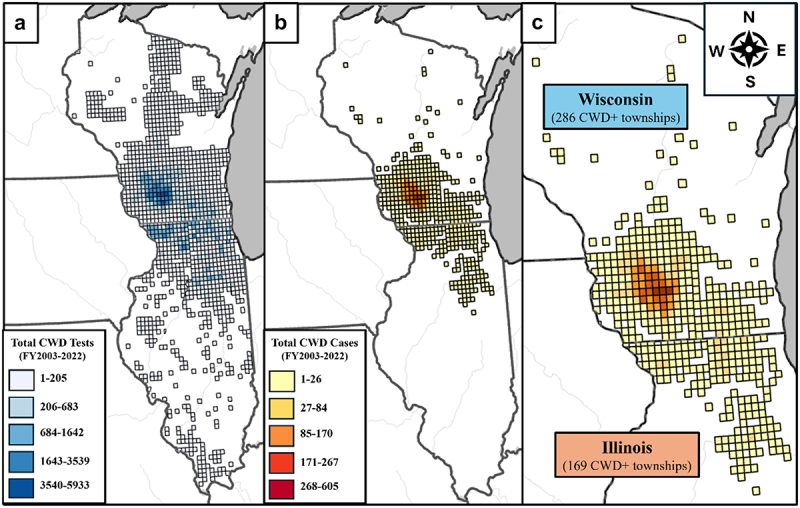 Figure 1
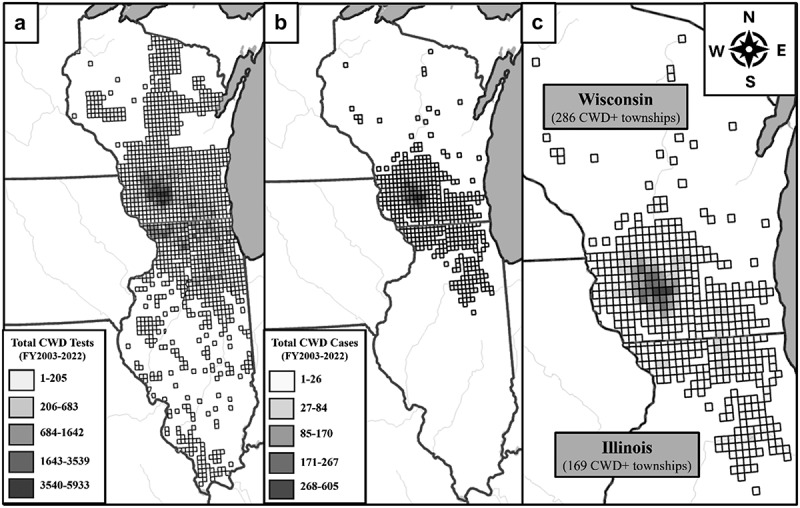 Figure 2
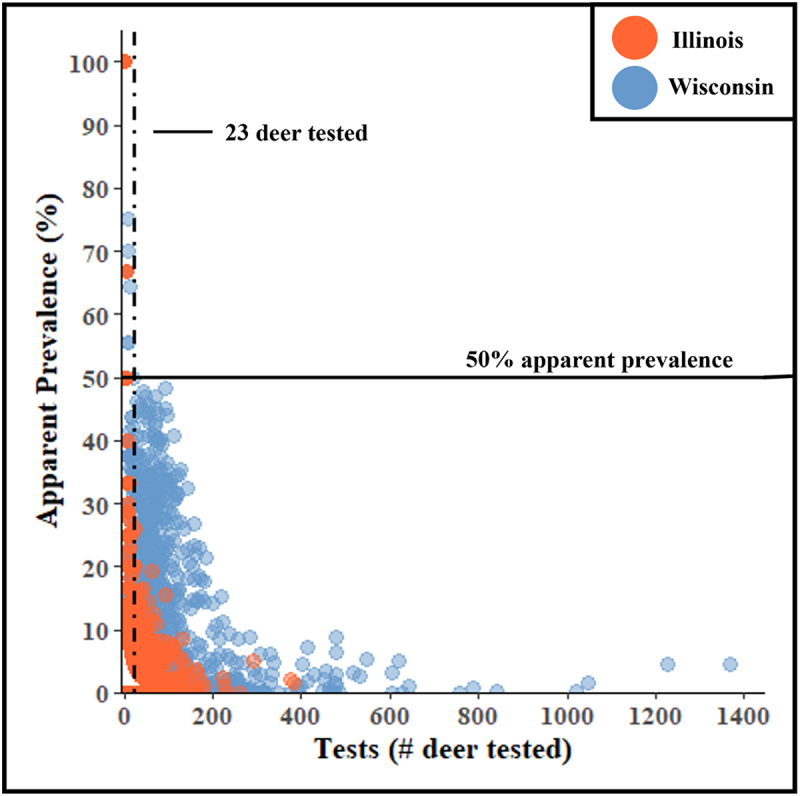 Figure 3
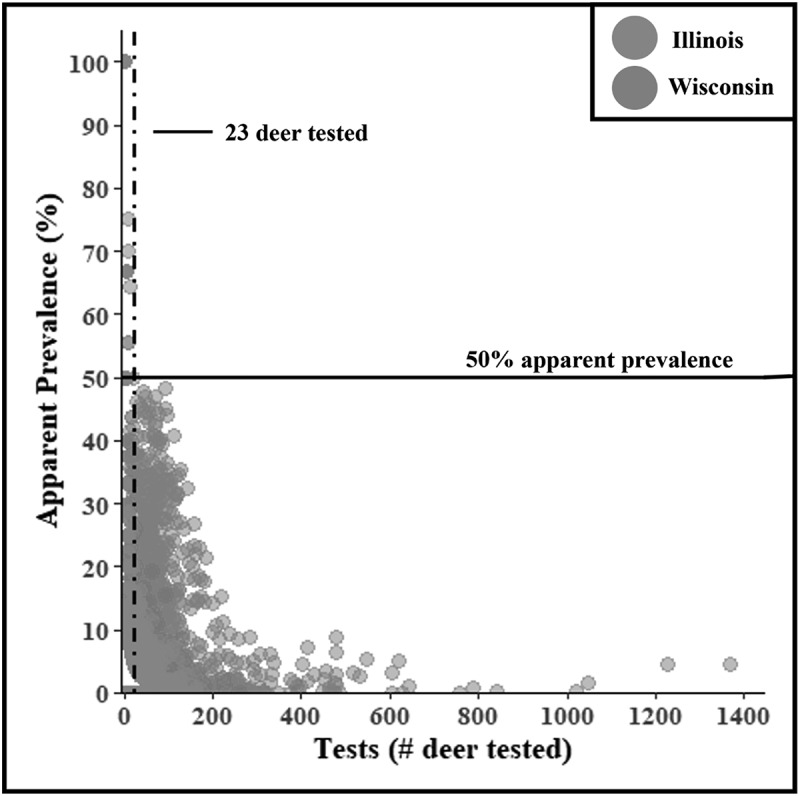 Figure 4
 Figure 5
Peer Reviews
No public reviews on file for this paper yet. If you reviewed it on a platform where reviews are public (OpenReview, ICLR, NeurIPS, ICML), you can paste yours below so the community can read it here.
Videos
No videos yet. Explain this paper in a talk, walkthrough, or lecture? Add one.
Taxonomy
TopicsPrion Diseases and Protein Misfolding · Celiac Disease Research and Management · Metallurgy and Material Science