Continuous positive airway pressure in delivery room in extremely preterm infants: A single‐center retrospective study in China
Xiaoting Zhang, Long Chen, Xiaoyun Zhong, Jiangfeng Ou, Yuan Shi

TL;DR
This study examines whether using continuous positive airway pressure in the delivery room helps extremely preterm infants in China by reducing the need for tracheal intubation.
Contribution
The study provides a single-center retrospective analysis of DRCPAP effects in extremely preterm infants in China, a context with limited prior research.
Findings
DRCPAP initially showed a reduced intubation rate compared to the control group.
After propensity score matching, no significant difference in intubation rates was observed between DRCPAP and control groups.
The study highlights the need for further investigation into DRCPAP's effectiveness in reducing intubation rates in extremely preterm infants.
Abstract
To assess the beneficial effects of delivery room continuous positive airway pressure (DRCPAP) in extremely preterm infants, a single‐center retrospective study was performed at the Women and Children's Hospital of Chongqing Medical University in China. Infants born between January 2016 and December 2018 were regarded as the control group, and those born between January 2019 and August 2022 were considered as the observation group (DRCPAP group). The primary outcome was tracheal intubation within 72 h after birth. Six hundred and seven patients were included in the study (control: 232; DRCPAP: 375). Compared with the control group, DRCPAP reduced the intubation rate (56.8% vs. 62.9%, OR 0.57, 95% CI 0.34–0.96, p = 0.035), including <28 weeks gestational age (GA) subgroup (61.5% vs. 84.7%, OR 0.12, 95% CI 0.02–0.78, p = 0.027). One‐to‐one propensity score matching (195:195) was used to…
Genes, proteins, chemicals, diseases, species, mutations and cell lines named across the full text — each resolved to its canonical identifier and authoritative record.
Click any figure to enlarge with its caption.
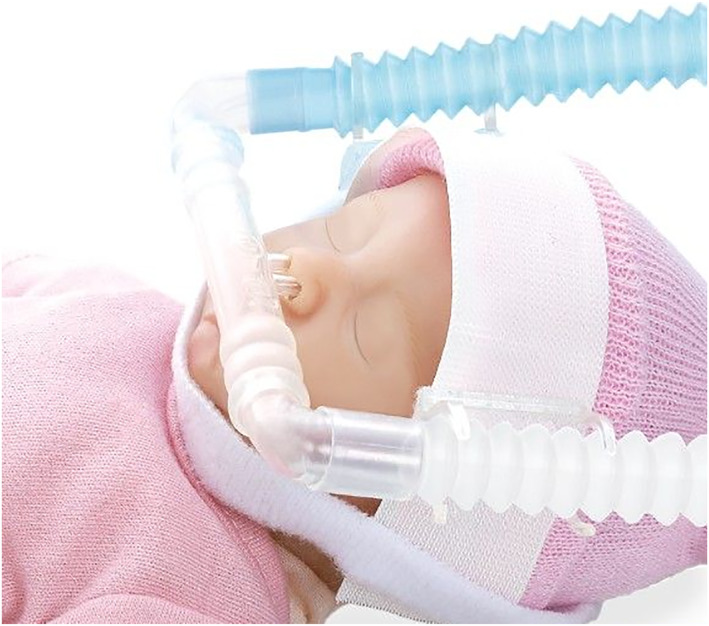 Figure 1
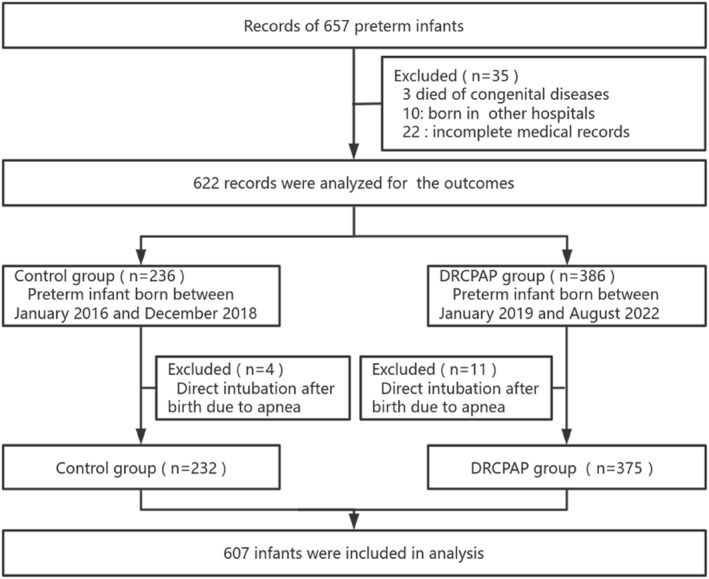 Figure 2
Peer Reviews
No public reviews on file for this paper yet. If you reviewed it on a platform where reviews are public (OpenReview, ICLR, NeurIPS, ICML), you can paste yours below so the community can read it here.
Videos
No videos yet. Explain this paper in a talk, walkthrough, or lecture? Add one.
Taxonomy
TopicsNeonatal Respiratory Health Research · Neuroscience of respiration and sleep · Congenital Diaphragmatic Hernia Studies