A case report of disconnected pancreatic duct syndrome: an underrecognized complication of acute necrotizing pancreatitis
Oumaima Mesbah, Kaoutar Imrani, Safae Lanjeri, Khaoula Boumeriem, Nabil Mouatassim Billah, Ittimade Nassar

TL;DR
This case report describes a rare complication of acute necrotizing pancreatitis called disconnected pancreatic duct syndrome, emphasizing the need for early diagnosis and timely treatment to prevent severe outcomes.
Contribution
The paper presents a rare clinical case of delayed disconnected pancreatic duct syndrome following acute necrotizing pancreatitis, highlighting diagnostic challenges and treatment outcomes.
Findings
DPDS can manifest with recurrent pancreatic fluid collections after necrotizing pancreatitis.
Advanced imaging techniques are essential for diagnosing DPDS.
Surgical intervention, such as distal pancreatectomy, can resolve DPDS and prevent complications.
Abstract
Disconnected pancreatic duct syndrome (DPDS) is a rare condition characterized by a disruption of the pancreatic duct, separating viable pancreatic tissue from the gastrointestinal tract. It often follows acute or chronic pancreatitis, abdominal trauma, or pancreatic surgery, leading to ductal necrosis or disintegration. DPDS presents significant diagnostic and management challenges, especially in cases with delayed onset. The authors report a complex case of recurrent pancreatic fluid collections after necrotizing pancreatitis, highlighting the potential for delayed DPDS manifestation. Advanced imaging techniques, including endoscopic ultrasonography, contrast-enhanced CT, and MRCP, were used for diagnosis. Due to failure of conservative treatment, a distal pancreatectomy was performed, resolving the issue and preventing complications such as infection, sepsis, or pancreatic fistula.…
Genes, proteins, chemicals, diseases, species, mutations and cell lines named across the full text — each resolved to its canonical identifier and authoritative record.
Click any figure to enlarge with its caption.
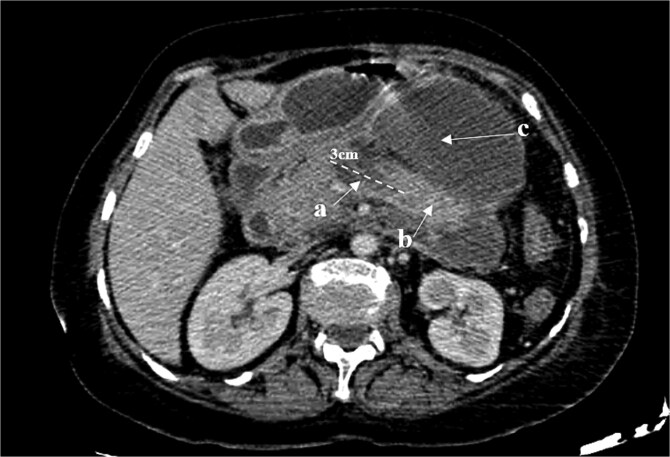 Figure 1
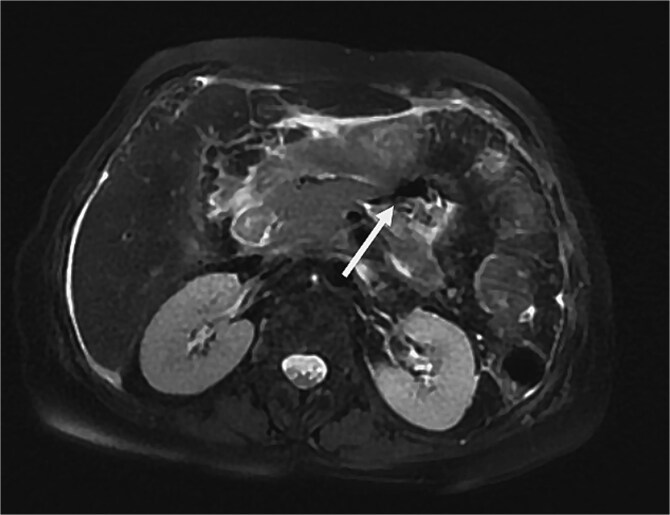 Figure 2
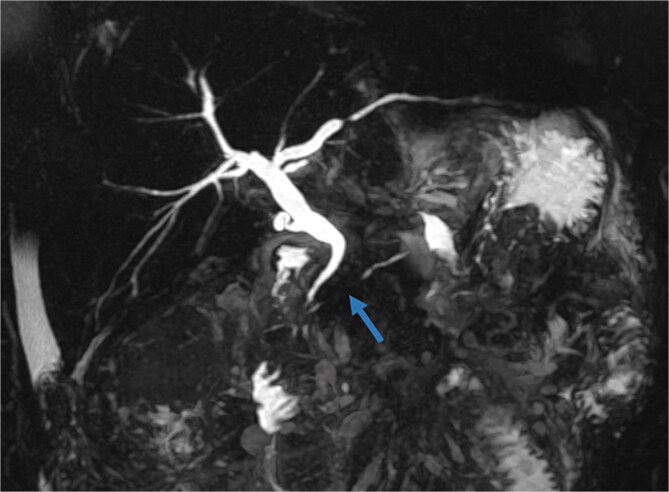 Figure 3
Peer Reviews
No public reviews on file for this paper yet. If you reviewed it on a platform where reviews are public (OpenReview, ICLR, NeurIPS, ICML), you can paste yours below so the community can read it here.
Videos
No videos yet. Explain this paper in a talk, walkthrough, or lecture? Add one.
Taxonomy
TopicsPancreatitis Pathology and Treatment · Gastrointestinal disorders and treatments · Pancreatic and Hepatic Oncology Research