The Role of Oxytocin and Oxytocin Gene Receptor Methylation During Withdrawal Therapy in Males With Alcohol Use Disorder
Phileas J. Proskynitopoulos, Alissa F. Haarmeyer, Stefan Bleich, Helge Frieling, Thomas Hillemacher, Alexander Glahn, Mathias Rhein

TL;DR
This study explores how alcohol withdrawal affects methylation of the oxytocin and its receptor gene in males with alcohol use disorder, finding that methylation levels are linked to withdrawal symptoms and craving.
Contribution
The study is the first to report an association between alcohol use disorder and methylation changes in the oxytocin receptor gene during withdrawal.
Findings
Controls showed significantly higher OXTR gene methylation than patients during withdrawal.
Craving and withdrawal symptoms were associated with changes in oxytocin gene methylation.
OXTR gene methylation was reduced in alcohol use disorder patients compared to healthy controls.
Abstract
Oxytocin is a promising therapeutic target in the treatment of alcohol use disorder (AUD). However, many studies report contradicting evidence regarding its effect on drug craving, relapse risk and withdrawal symptoms. Epigenetic regulation of the oxytocin and oxytocin receptor (OXTR) gene is altered in several mental disorders and influences social behaviour, often depending on the underlying sex. Evidence suggests that altered promoter methylation could result in oxytocin and OXTR expression differences, thereby possibly influencing drug craving and relapse risk. It is unclear whether promoter methylation changes throughout alcohol withdrawal and is linked to craving and withdrawal symptoms. In this exploratory study, we investigated the effect of 2‐week alcohol withdrawal therapy in 99 males on methylation levels (oxytocin and OXTR) compared with 31 healthy controls. We found…
Genes, proteins, chemicals, diseases, species, mutations and cell lines named across the full text — each resolved to its canonical identifier and authoritative record.
Click any figure to enlarge with its caption.
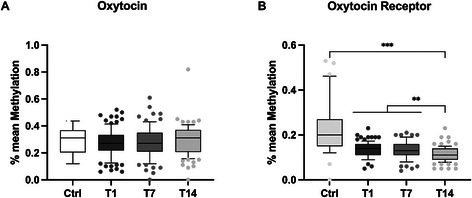 Figure 1
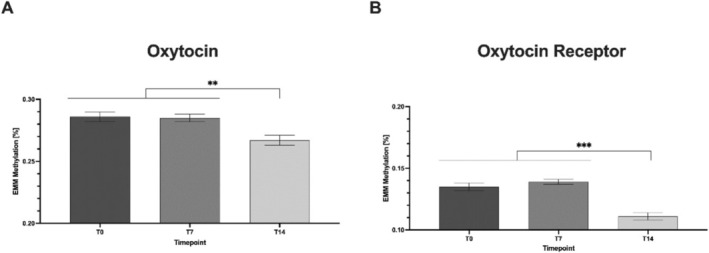 Figure 2
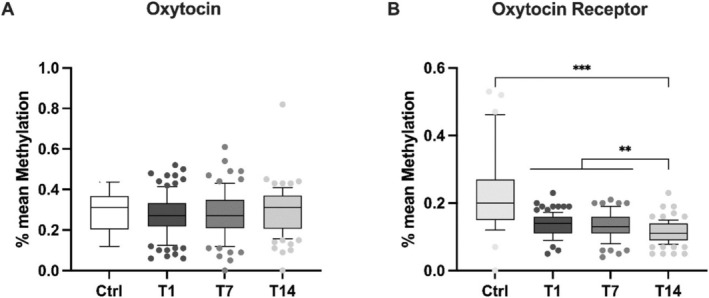 Figure 3
 Figure 4
Peer Reviews
No public reviews on file for this paper yet. If you reviewed it on a platform where reviews are public (OpenReview, ICLR, NeurIPS, ICML), you can paste yours below so the community can read it here.
Videos
No videos yet. Explain this paper in a talk, walkthrough, or lecture? Add one.
Taxonomy
TopicsNeuroendocrine regulation and behavior · Attachment and Relationship Dynamics · Neuroscience of respiration and sleep