A Kinetic Model of Antigen‐Dependent IgG Oligomerization and Complement Binding
Jürgen Strasser, Nikolaus Frischauf, Lukas Schustereder, Andreas Karner, Sieto Bosgra, Aran F. Labrijn, Frank J. Beurskens, Johannes Preiner

TL;DR
This paper develops a model to predict how IgG antibodies form clusters, which is important for triggering immune responses and could improve antibody-based treatments.
Contribution
A novel kinetic model is introduced to predict IgG oligomerization and its impact on complement pathway activation.
Findings
The model incorporates IgG subclass, concentration, and antigen density to predict oligomerization.
Rate constants and thermodynamic parameters were quantified using high-speed atomic force microscopy data.
The model successfully predicts complement-mediated lysis in liposomal vesicle assays.
Abstract
The classical complement pathway (CCP) is an essential part of the immune system, activated when complement protein C1 binds to IgG antibody oligomers on the surface of pathogens, infected or malignant cells, culminating in the formation of the membrane attack complex and subsequent cell lysis. IgG oligomers also engage immune effector cells through Fcγ receptors or complement receptors, facilitating antibody‐dependent cellular cytotoxicity and phagocytosis. Understanding the factors that drive IgG oligomerization is thus crucial for improving IgG‐based therapies. Herein, a kinetic model to predict oligomer formation based on IgG concentration, antigen density, IgG subclass, Fc mutants, and oligomerization inhibitors like staphylococcal protein A is developed. The underlying molecular interactions in single molecule force spectroscopy and grating coupled interferometry experiments are…
Genes, proteins, chemicals, diseases, species, mutations and cell lines named across the full text — each resolved to its canonical identifier and authoritative record.
Click any figure to enlarge with its caption.
 Figure 1
 Figure 2
 Figure 3
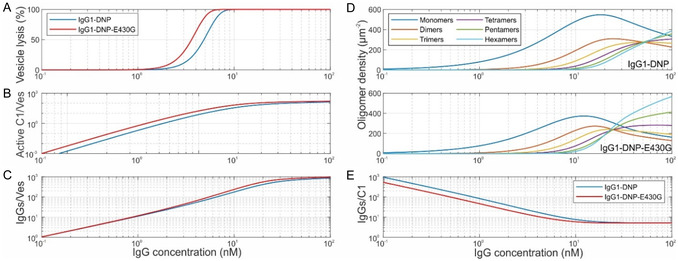 Figure 4
 Figure 5
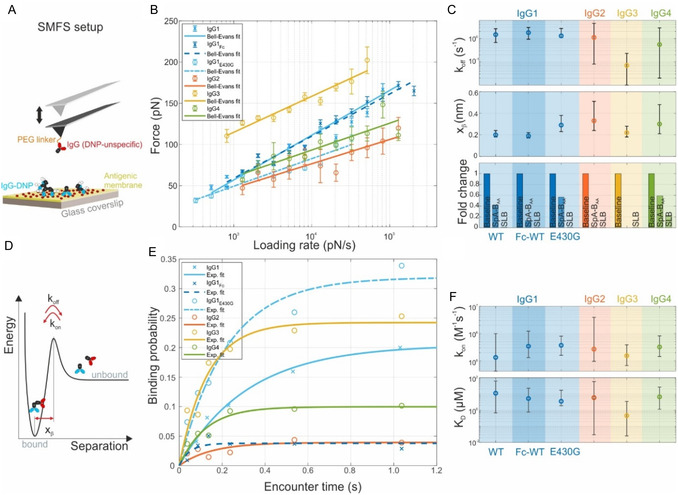 Figure 6
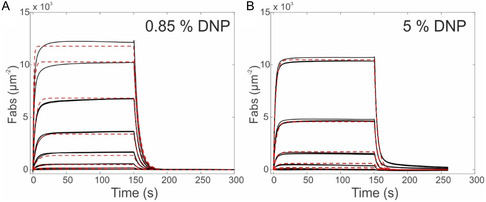 Figure 7
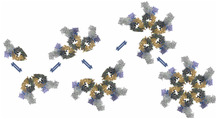 Figure 8
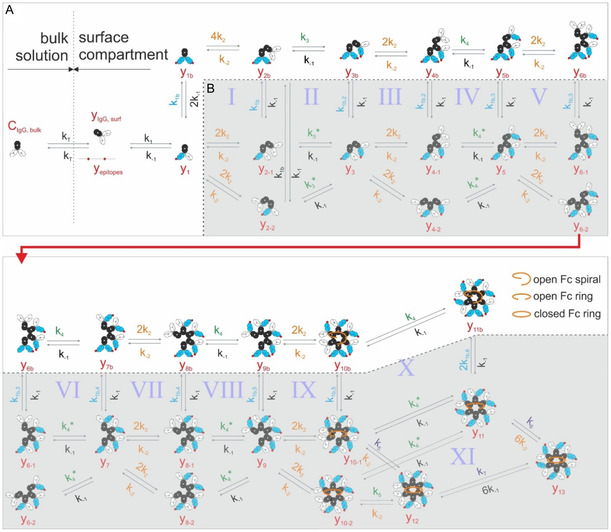 Figure 9
Peer Reviews
No public reviews on file for this paper yet. If you reviewed it on a platform where reviews are public (OpenReview, ICLR, NeurIPS, ICML), you can paste yours below so the community can read it here.
Videos
No videos yet. Explain this paper in a talk, walkthrough, or lecture? Add one.
Taxonomy
TopicsMonoclonal and Polyclonal Antibodies Research · Force Microscopy Techniques and Applications · Lipid Membrane Structure and Behavior