Acute degradation of nucleolin reveals its novel functions in cell cycle progression and cell division in triple negative breast cancer
Joseph Mills, Anna Tessari, Vollter Anastas, Damu Sunilkumar, Nastaran Samadi Rad, Saranya Lamba, Ilaria Cosentini, Ashley Reers, Zirui Zhu, Wayne O. Miles, Vincenzo Coppola, Emanuele Cocucci, Thomas J. Magliery, Heather Shive, Alexander E. Davies, Lara Rizzotto, Carlo M. Croce

TL;DR
This study shows that removing a key nucleolar protein, Nucleolin, disrupts cell division in triple negative breast cancer cells and may improve cancer treatments.
Contribution
The study reveals a new role for Nucleolin in cell division and shows that its degradation enhances the effectiveness of mitosis inhibitors in TNBC.
Findings
Nucleolin depletion causes accumulation of bi-nucleated TNBC cells due to failed cytokinesis.
Nucleolin levels correlate with cell cycle regulators in TNBC patients.
Nucleolin degradation increases the effectiveness of mitotic inhibitors like APCin.
Abstract
Nucleoli are large nuclear sub-compartments where vital processes, such as ribosome assembly, take place. Most nucleolar proteins are essential; thus, their abrogation cannot be achieved through conventional approaches. This technical obstacle has limited our understanding of the biological functions of nucleolar proteins in cell homeostasis and cancer pathogenesis. We applied the Auxin Inducible Degron (AID) proteolytic system, paired with CRISPR/Cas9 knock-in gene-editing, to obtain an unprecedented characterization of the biological activities of Nucleolin (NCL), one of the most abundant nucleolar proteins, in Triple Negative Breast Cancer (TNBC) cells. Then, we combined live-cell imaging, RNA-sequencing, and quantitative proteomics, to characterize the impact of NCL acute abrogation on the behavior of TNBC cells. Finally, we used in silico analyses to validate NCL molecular role in…
Genes, proteins, chemicals, diseases, species, mutations and cell lines named across the full text — each resolved to its canonical identifier and authoritative record.
Click any figure to enlarge with its caption.
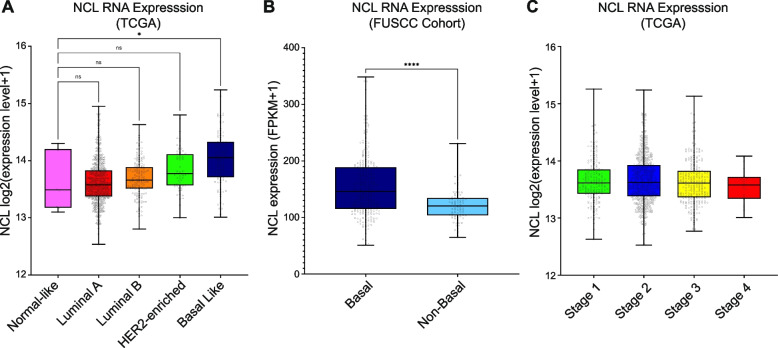 Figure 1
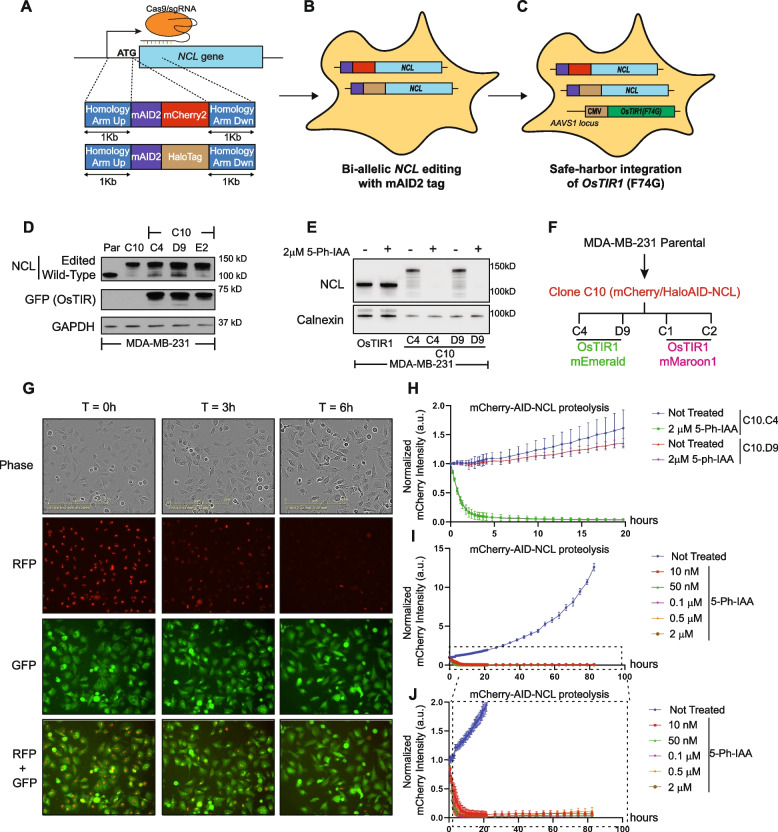 Figure 2
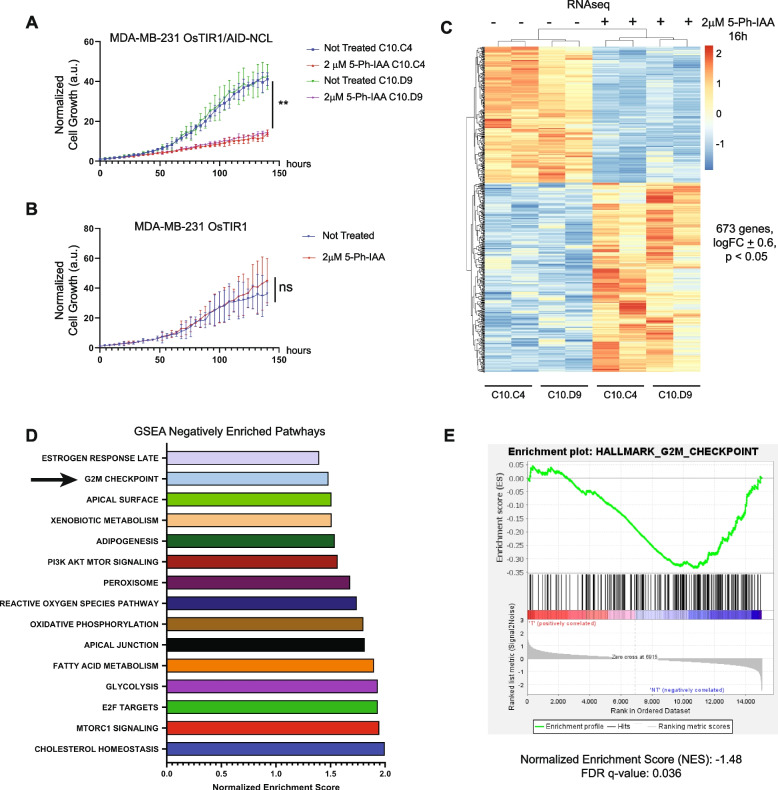 Figure 3
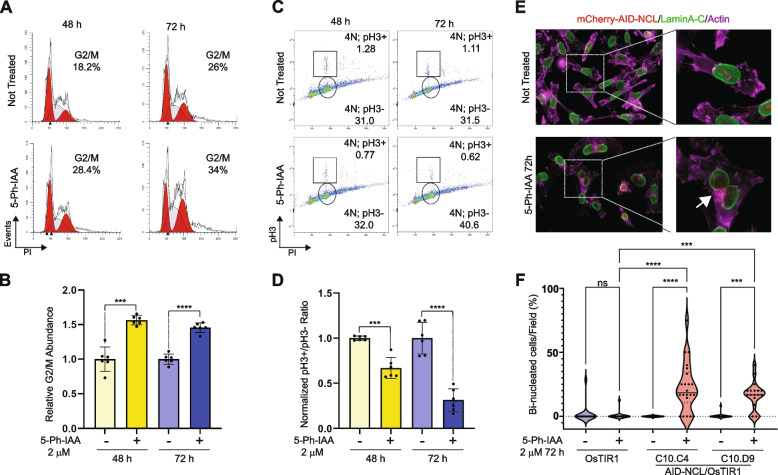 Figure 4
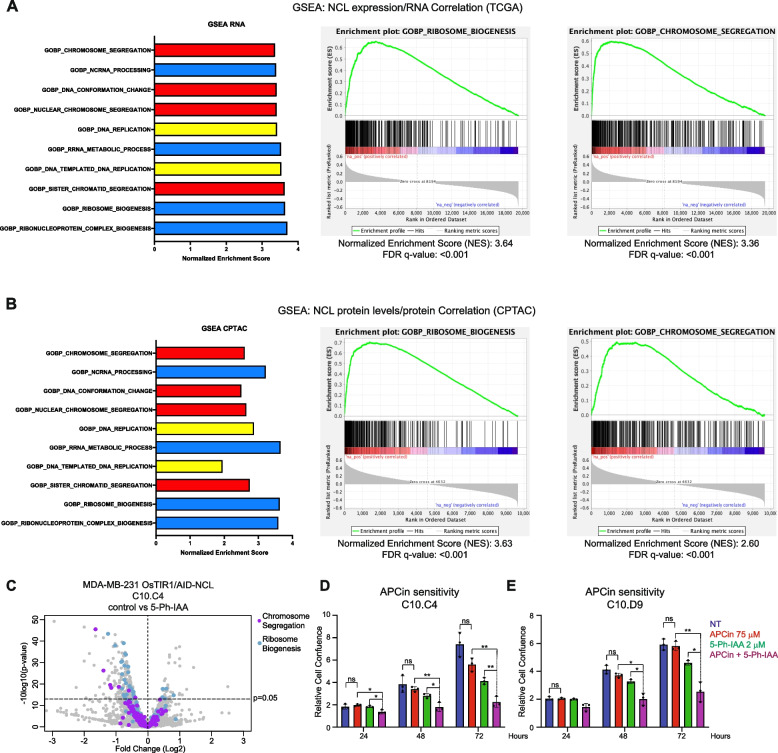 Figure 5
Peer Reviews
No public reviews on file for this paper yet. If you reviewed it on a platform where reviews are public (OpenReview, ICLR, NeurIPS, ICML), you can paste yours below so the community can read it here.
Videos
No videos yet. Explain this paper in a talk, walkthrough, or lecture? Add one.
Taxonomy
TopicsRNA modifications and cancer · Genomics and Chromatin Dynamics · Ubiquitin and proteasome pathways