Effects of Wolbachia removal on microbial composition and diversity in Aedes albopictus: implication of using wAlbB for discriminating irradiation-based sterile and wild males
Paerhande Dilinuer, Ming Li, Datao Lin, Yu Wu, Zhongdao Wu, Xiaoying Zheng, Dongjing Zhang

TL;DR
This study explores how removing Wolbachia bacteria affects the microbiome of Aedes albopictus mosquitoes and suggests using wAlbB as a reliable marker to distinguish sterile males from wild ones in mosquito control programs.
Contribution
The study introduces wAlbB as a novel biomarker for differentiating irradiated sterile males from wild males in SIT programs.
Findings
Wolbachia removal significantly alters the microbial composition in male Aedes albopictus mosquitoes.
wAlbB is a more stable and reliable biomarker for distinguishing sterile males compared to wAlbA or Enterococcus.
The GT strain of mosquitoes shows no significant fitness costs compared to the wild-type GUA strain.
Abstract
The sterile insect technique (SIT) requires distinguishing sterile from wild male mosquitoes to evaluate male qualities and maintain an appropriate release ratio for efficient population suppression. Current dye/powder marking methods have limitations and may affect SIT effectiveness, necessitating alternative discrimination strategies. Aedes albopictus naturally harbors two Wolbachia infections (wAlbA/wAlbB), which can be eliminated via tetracycline. Although Wolbachia removal minimally affect host fitness, its impact on microbiota remains unclear. Characterizing post-elimination microbial communities is the first step to identify novel endogenous biomarkers for SIT monitoring. We analyzed the bacterial diversity and composition of two strains of wild-type GUA (Wolbachia-infected) and GT (Wolbachia-free) mosquitoes using the 16S rRNA V3-V4 region sequencing. qPCR was employed to…
Genes, proteins, chemicals, diseases, species, mutations and cell lines named across the full text — each resolved to its canonical identifier and authoritative record.
Click any figure to enlarge with its caption.
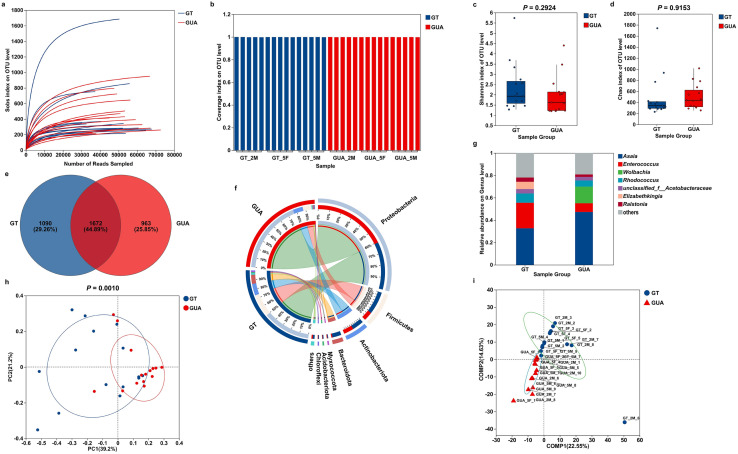 Figure 1
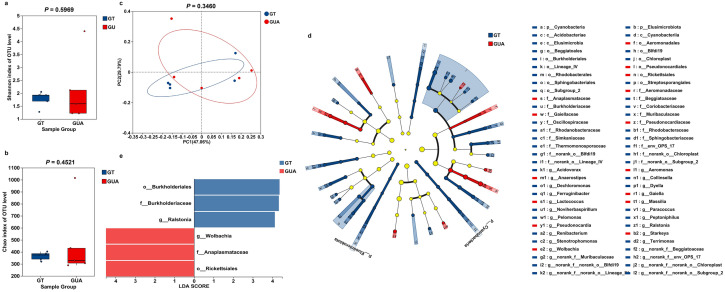 Figure 2
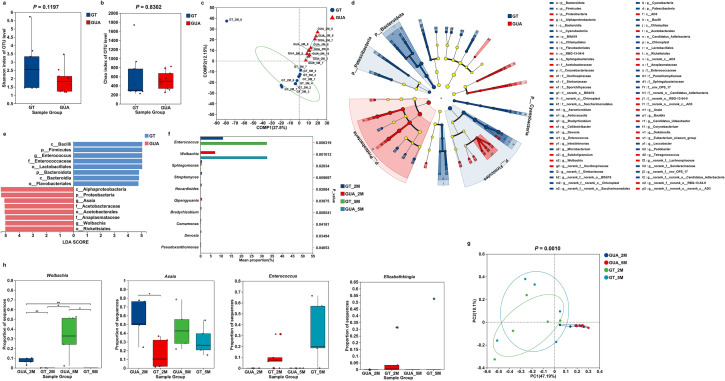 Figure 3
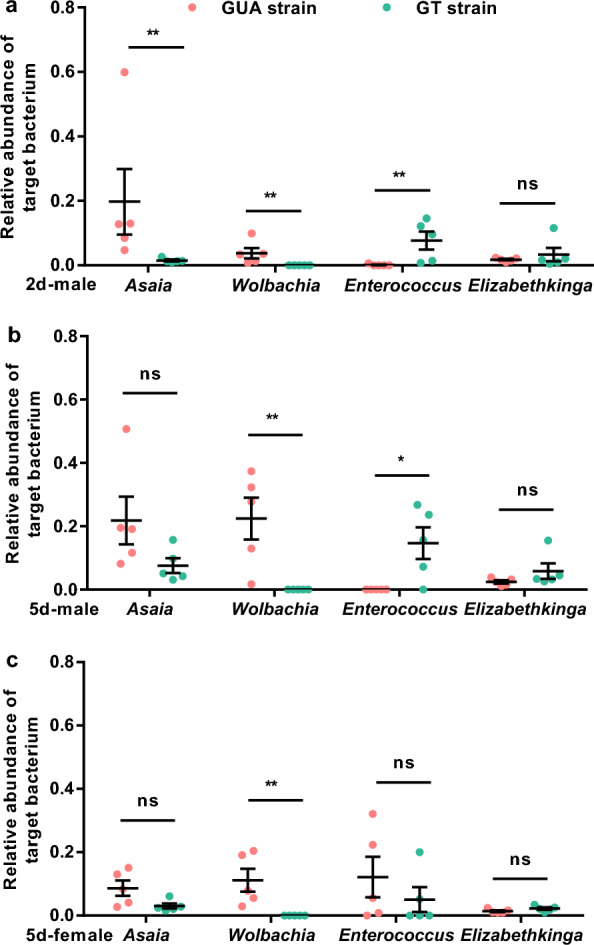 Figure 4
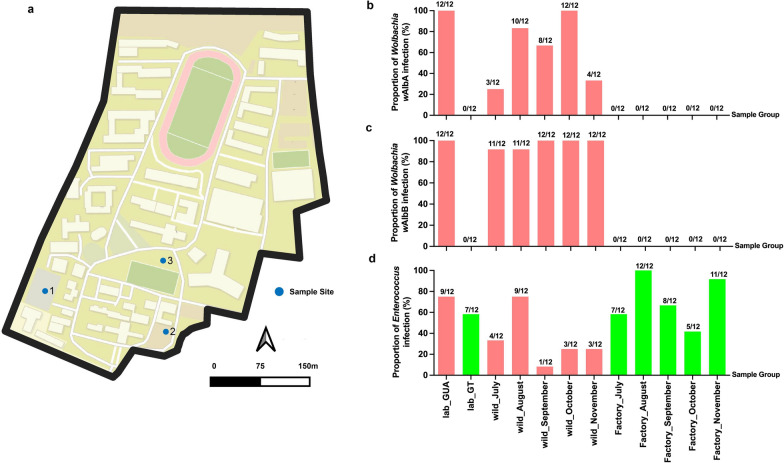 Figure 5
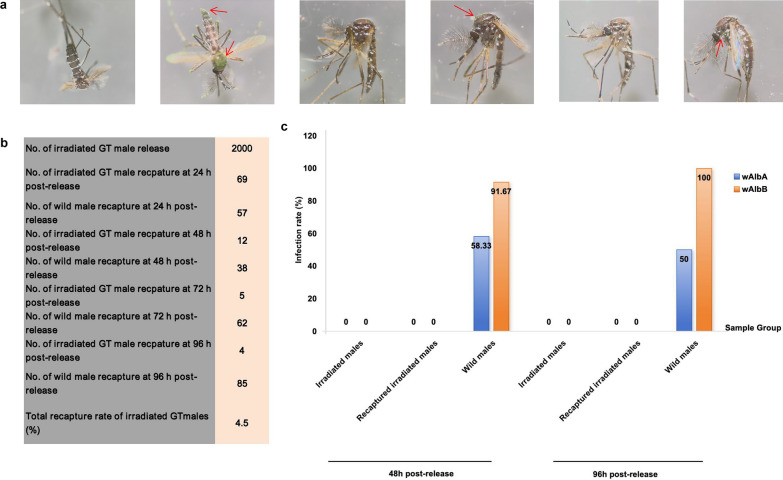 Figure 6
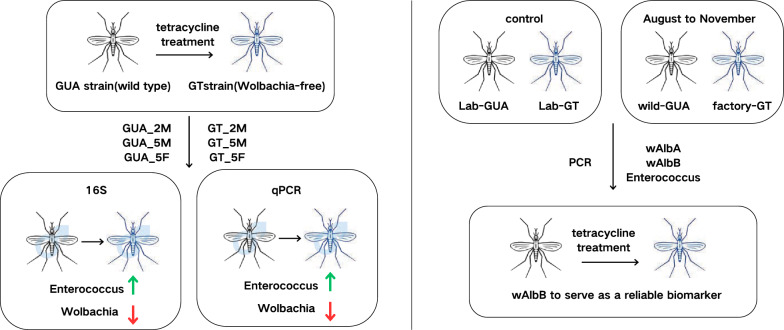 Figure 7
Peer Reviews
No public reviews on file for this paper yet. If you reviewed it on a platform where reviews are public (OpenReview, ICLR, NeurIPS, ICML), you can paste yours below so the community can read it here.
Videos
No videos yet. Explain this paper in a talk, walkthrough, or lecture? Add one.
Taxonomy
TopicsInsect symbiosis and bacterial influences · Mosquito-borne diseases and control · Insect behavior and control techniques