AK2‐Deficient Mice Recapitulate Impaired Lymphopoiesis of Reticular Dysgenesis Patients, but Also Lack Erythropoiesis
Rebekka Waldmann, Franziska Werner, Alpaslan Tasdogan, Felix Immanuel Maier, Ursula Kohlhofer, Irene Gonzalez‐Menendez, Leticia Quintanilla de Fend, Amrit Kaur Puarr, Ruth Maree Arkell, Anselm Enders, Manfred Hoenig, Hubert Schrezenmeier, Hans Joerg Fehling, Klaus Schwarz

TL;DR
This study shows that mice lacking the AK2 gene mimic some features of a rare human immune disorder but also die from severe anemia due to failed red blood cell development.
Contribution
The study introduces a mouse model of AK2 deficiency that reveals species-specific differences in erythropoiesis and myelopoiesis.
Findings
AK2-deficient mice show impaired T-cell development and atrophic thymus, similar to human RD.
Mice with AK2 deficiency die from severe anemia due to a block in definitive erythropoiesis.
Murine erythroid progenitors lack compensatory kinases for AK2 deficiency, unlike human cells.
Abstract
Reticular dysgenesis (RD) is a rare genetic disorder caused by mutations in the adenylate kinase 2 (AK2) gene. It is characterized by a T−B− severe combined immunodeficiency, agranulocytosis, and sensorineural deafness. We established and characterized a haematopoiesis‐specific conditional Ak2‐knockout mouse model to provide a model system to study the molecular pathophysiology of RD. As expected from the human phenotype of RD, haematopoiesis‐specific AK2‐deficient embryos had a small, atrophic thymus consisting mainly of epithelial cells. No recognizable T‐cell component was observed, but B‐cell lineage precursor cells were present in the foetal liver. The effects of AK2 deficiency on myelopoiesis were less severe in mice than in humans. The absolute numbers of monocytes, macrophages, granulocytes and megakaryocytes in foetal liver as well as colony‐forming precursors were not reduced.…
Genes, proteins, chemicals, diseases, species, mutations and cell lines named across the full text — each resolved to its canonical identifier and authoritative record.
Click any figure to enlarge with its caption.
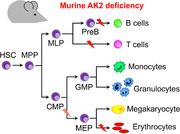 Figure 1
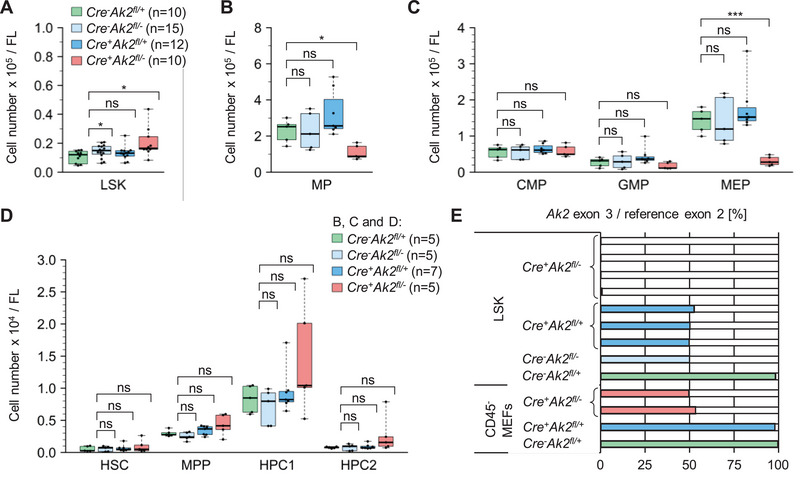 Figure 2
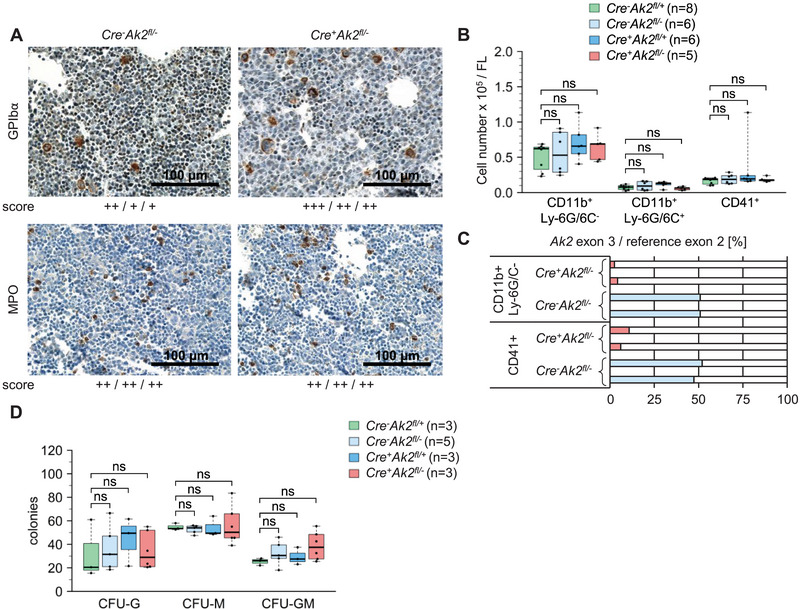 Figure 3
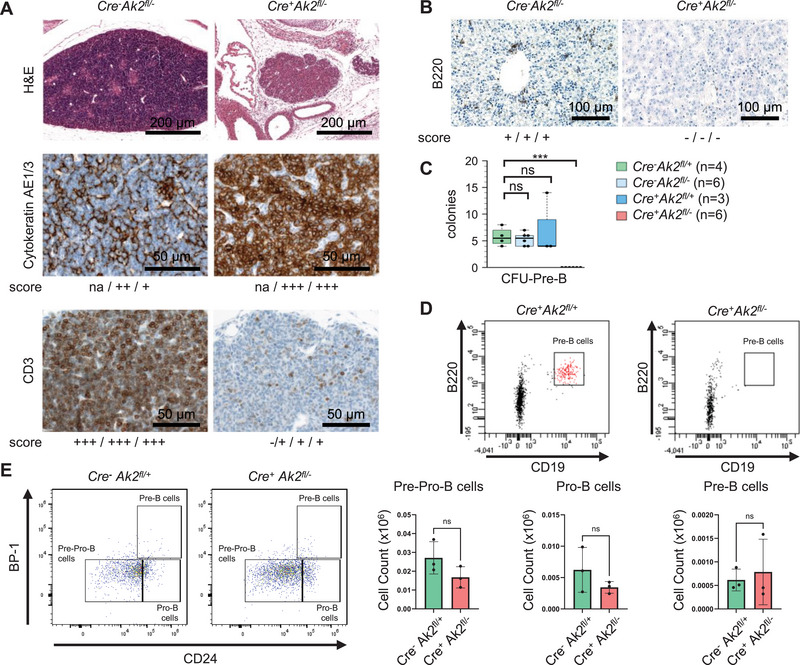 Figure 4
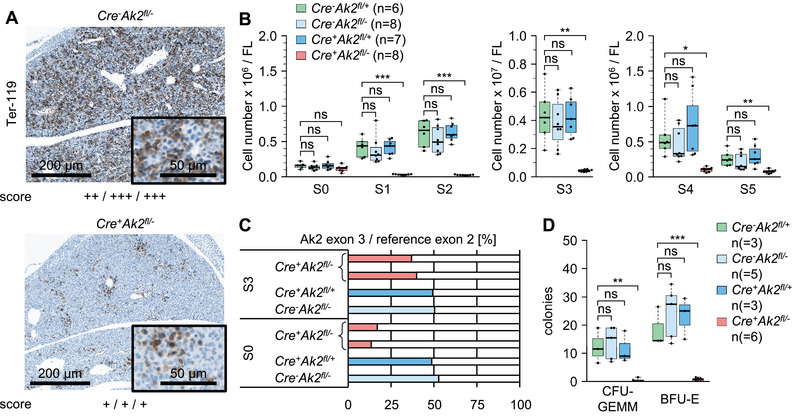 Figure 5
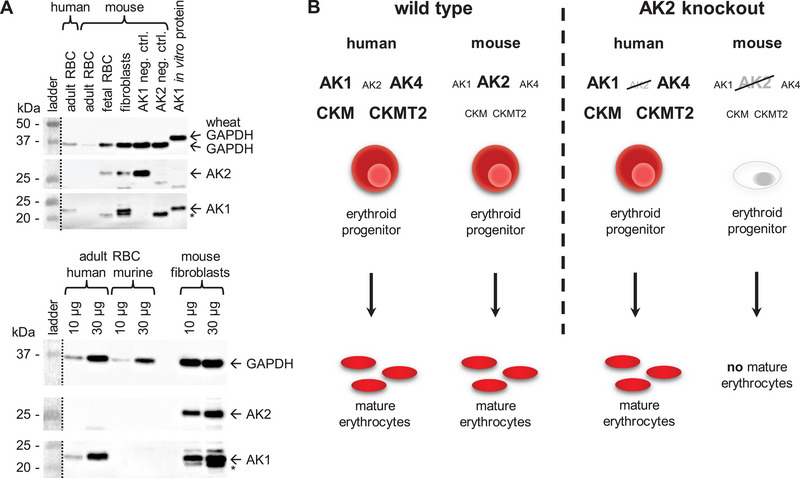 Figure 6
Peer Reviews
No public reviews on file for this paper yet. If you reviewed it on a platform where reviews are public (OpenReview, ICLR, NeurIPS, ICML), you can paste yours below so the community can read it here.
Videos
No videos yet. Explain this paper in a talk, walkthrough, or lecture? Add one.
Taxonomy
TopicsErythrocyte Function and Pathophysiology · Zebrafish Biomedical Research Applications · Immune Cell Function and Interaction