Trajectories of Symptom Clusters and Their Predictive Factors in Patients With Colorectal Cancer 3 Months After Surgery: A Longitudinal Study
Yue Li, Wenwen Gan, Qin Mao, Hongying Wu, Ting Cao, Haiyan Wu, Xiaorong Mao

TL;DR
This study tracks symptom changes in colorectal cancer patients after surgery and identifies factors that predict different symptom patterns.
Contribution
The study identifies two distinct symptom trajectories and their predictive factors in colorectal cancer patients post-surgery.
Findings
Two symptom trajectory subgroups were identified: 'high symptom—decreases and then increases' and 'low symptoms—continuous decline'.
Predictive factors for the high symptom subgroup include multimorbidity, chronic lung disease, preoperative frailty, and severe anxiety/depression.
Early intervention targeting predictive factors like frailty and mood disorders could improve postoperative outcomes.
Abstract
To examine the changing trajectories of symptom clusters within 3 months following surgery in patients with colorectal cancer (CRC) and identify their predictive factors. A prospective longitudinal observational study. Convenience sampling was used to recruit inpatients with CRC who were scheduled for surgical treatment at the Sichuan Provincial People's Hospital between October 2022 and September 2023. The Chinese version of the MD Anderson Symptom Inventory Gastrointestinal Cancer Module was utilized. The prevalence and severity of patients' symptoms were assessed at 7 days (T1), 6 weeks (T2), and 3 months (T3). Before the operation, a total of 240 patients with CRC were recruited. There were 203, 164, and 139 patients participating in T1, T2, and T3, respectively. Exploratory factor analysis identified symptom clusters. Latent class growth modeling determined the developmental…
Genes, proteins, chemicals, diseases, species, mutations and cell lines named across the full text — each resolved to its canonical identifier and authoritative record.
Click any figure to enlarge with its caption.
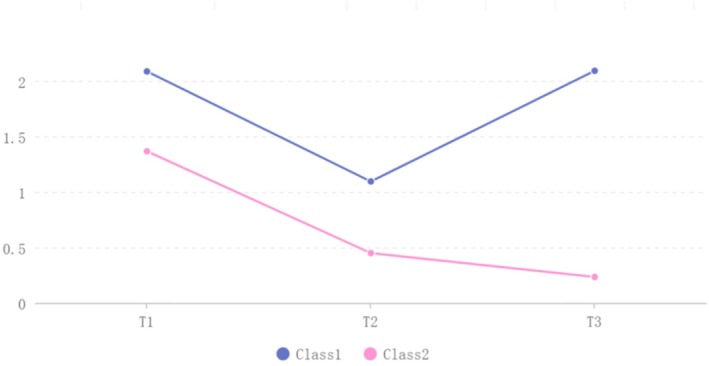 Figure 1
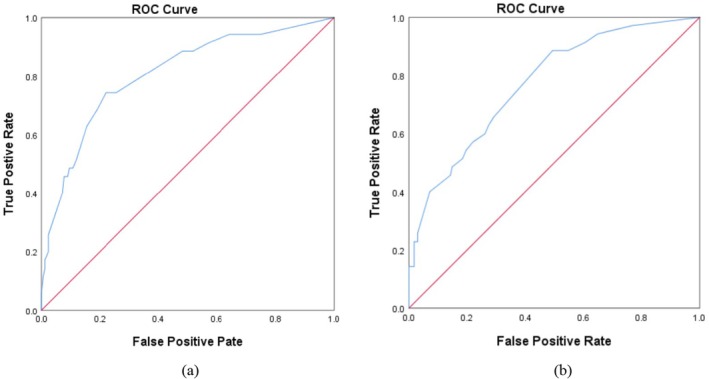 Figure 2
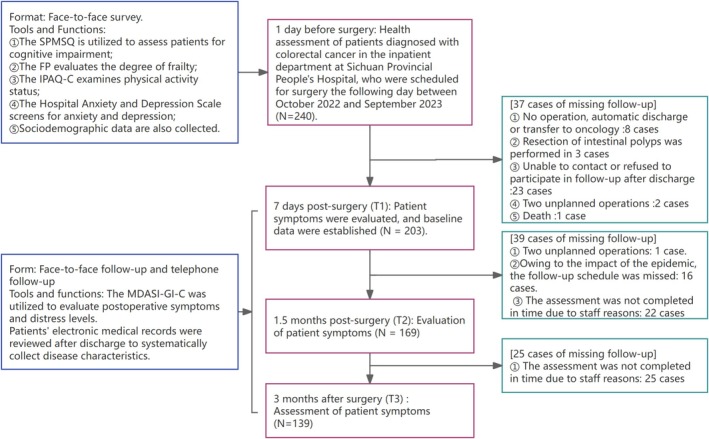 Figure 3
Peer Reviews
No public reviews on file for this paper yet. If you reviewed it on a platform where reviews are public (OpenReview, ICLR, NeurIPS, ICML), you can paste yours below so the community can read it here.
Videos
No videos yet. Explain this paper in a talk, walkthrough, or lecture? Add one.
Taxonomy
TopicsCancer survivorship and care · Frailty in Older Adults · Cancer-related cognitive impairment studies