Neural Network Models for Prediction of Biological Activity using Molecular Dynamics Data: A Case of Photoswitchable Peptides
Anton Cherednichenko, Sergii Afonin, Oleg Babii, Taras Voitsitskyi, Roman Stratiichuk, Ihor Koleiev, Volodymyr Vozniak, Nazar Shevchuk, Zakhar Ostrovsky, Semen Yesylevskyy, Alan Nafiiev, Serhii Starosyla, Anne S. Ulrich, Aigars Jirgensons, Igor V. Komarov

TL;DR
This paper shows that using molecular dynamics data improves neural network predictions of biological activity for complex, flexible molecules like photoswitchable peptides.
Contribution
The study introduces neural network models using molecular dynamics features to predict biological activity for conformationally flexible molecules.
Findings
MD-derived features outperform static 2D/3D descriptors in predicting peptide activity.
Two NN models accurately predict cytotoxicity and photoisomer activity differences.
The approach generalizes to molecules previously considered too complex for ligand-based models.
Abstract
Prediction of biological activities of chemical compounds by the machine learning techniques in general and the neural networks (NNs) in particular, is usually based on the analysis of their binding to the target of interest. If such affinity data is not available, the ligand‐based approaches can be used where the NN models are trained to assess similarity of compounds to those with known biological activity. Obviously, this approach only works well if the similarity between the training set and the evaluated molecules is sufficiently high. In the case of large and conformationally flexible organic compounds, the activity becomes dependent not only on chemical identity but also on the dynamics of molecular motions, which imposes significant challenges to existing approaches based on static structural 2D and 3D molecular descriptors. A prominent example of compounds, which are especially…
Genes, proteins, chemicals, diseases, species, mutations and cell lines named across the full text — each resolved to its canonical identifier and authoritative record.
Click any figure to enlarge with its caption.
 Figure 1
 Figure 2
 Figure 3
 Figure 4
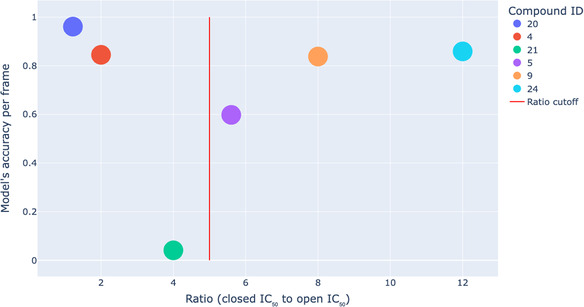 Figure 5
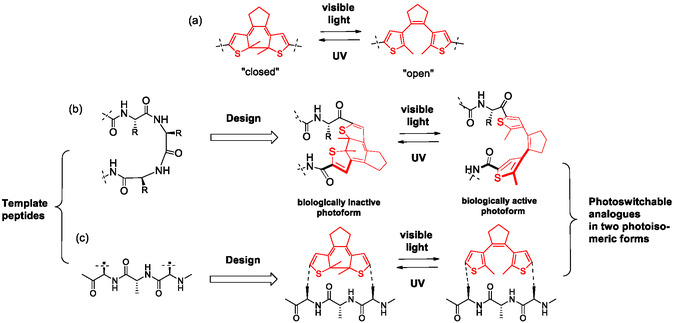 Figure 6
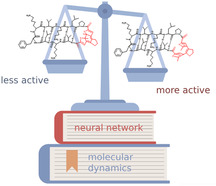 Figure 7
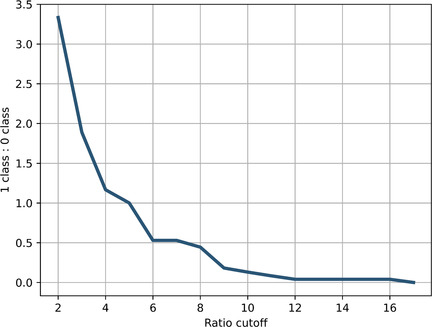 Figure 8
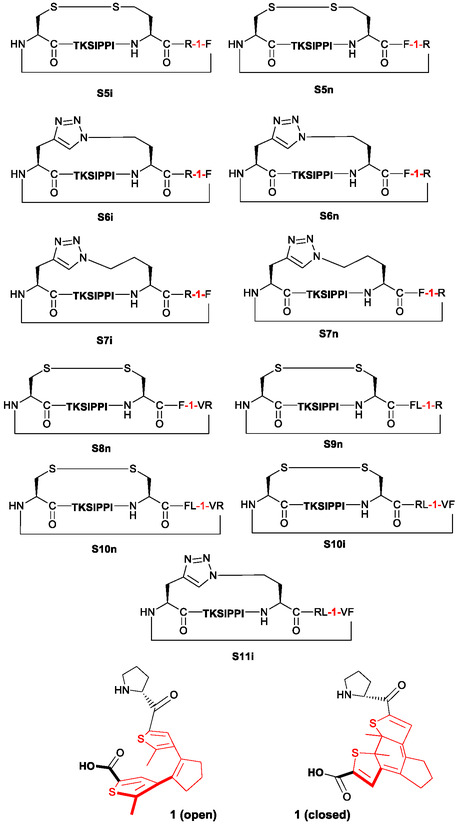 Figure 9
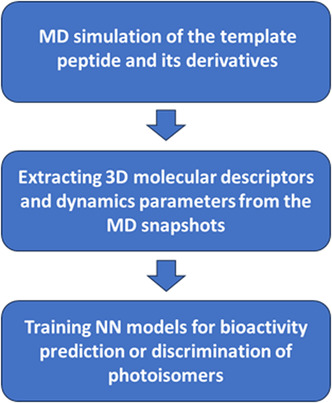 Figure 10
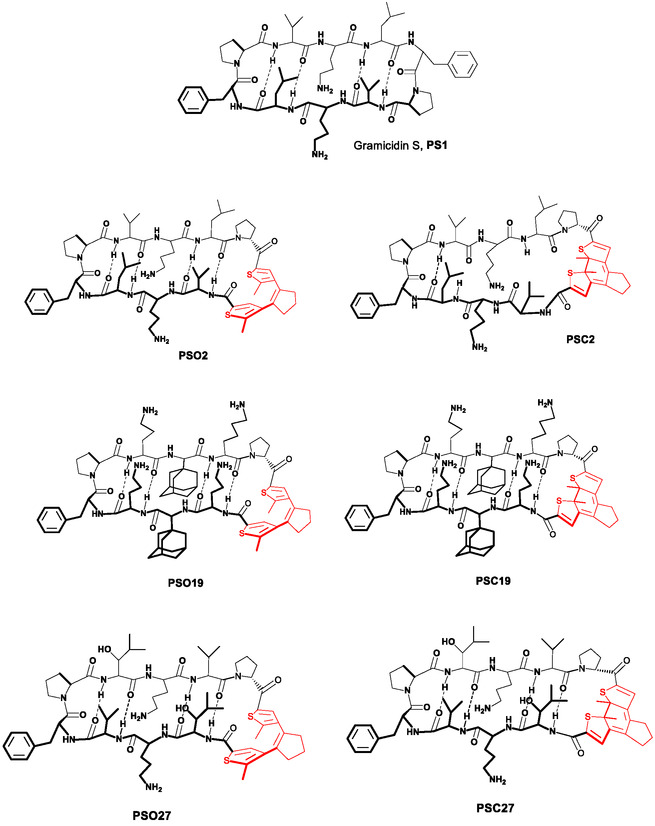 Figure 11
Peer Reviews
No public reviews on file for this paper yet. If you reviewed it on a platform where reviews are public (OpenReview, ICLR, NeurIPS, ICML), you can paste yours below so the community can read it here.
Videos
No videos yet. Explain this paper in a talk, walkthrough, or lecture? Add one.
Taxonomy
TopicsPhotochromic and Fluorescence Chemistry · Click Chemistry and Applications · Chemical Synthesis and Analysis