Scaffold Hopping Strategy toward New 4‑Aminoquinazolines Active Against Extracellular and Intracellular Mycobacterium tuberculosis
Guilherme Arraché Gonçalves, Alexia de Matos Czeczot, Marcia Alberton Perelló, Eric Greve, Renee Allen, Camili Zanella Zotti, Laura Calle González, Andresa Berger, Josiane Delgado Paz, Lídia Klatt Oliveira, Sidnei Moura e Silva, Cristiano Valim Bizarro, Luiz Augusto Basso

TL;DR
Scientists designed new 4-aminoquinazoline compounds that effectively target tuberculosis bacteria both inside and outside cells, potentially offering a new treatment approach.
Contribution
A new scaffold hopping strategy led to potent 4-aminoquinazolines with intracellular activity and a novel mechanism against tuberculosis.
Findings
4-aminoquinazolines showed potent antimycobacterial activity with MIC values as low as 0.28 μM.
The N-(3-phenylpropyl)quinazolin-4-amine scaffold emerged as a promising chemotype with good selectivity and intracellular efficacy.
Mechanistic studies ruled out several known targets, suggesting a novel mechanism of action.
Abstract
A series of 4-aminoquinazolines was designed through a scaffold hopping approach inspired by pharmacophoric features of known antimycobacterial agents. The compounds were synthesized via a one-pot silylation–amination reaction under solvent-free conditions, affording the desired molecules in 70%–99% yields. Antimycobacterial evaluation using multiple Mycobacterium tuberculosis strains and assay platforms revealed potent activity, with MIC values as low as 0.28 μM. Structure–activity relationship analysis identified the N-(3-phenylpropyl)quinazolin-4-amine scaffold as a promising chemotype. Mechanistic studies indicated that the compounds do not act via QcrB inhibition, membrane disruption, ROS induction, or MmpL3 targeting. The most active derivatives displayed favorable selectivity indices, lacked broad-spectrum antibacterial activity, and demonstrated intracellular efficacy in a…
Genes, proteins, chemicals, diseases, species, mutations and cell lines named across the full text — each resolved to its canonical identifier and authoritative record.
Click any figure to enlarge with its caption.
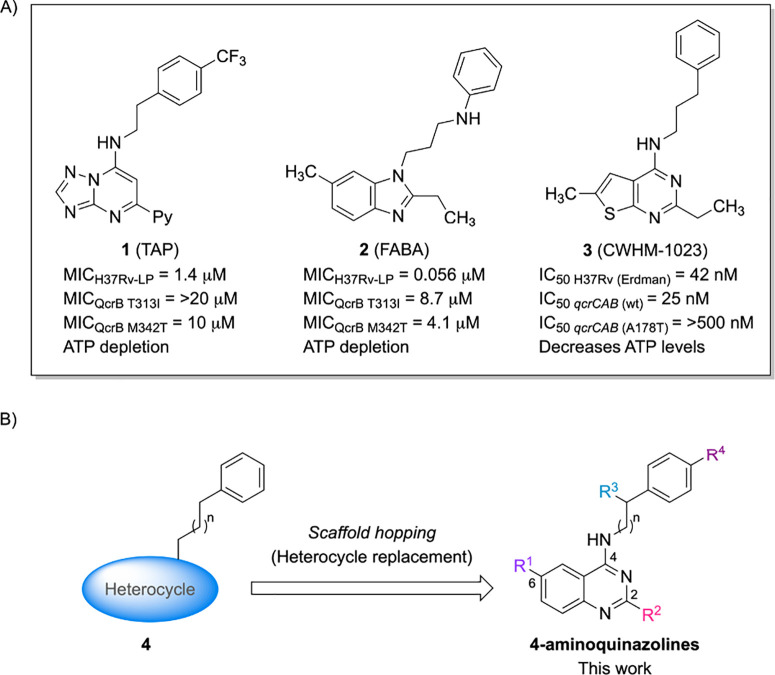 Figure 1
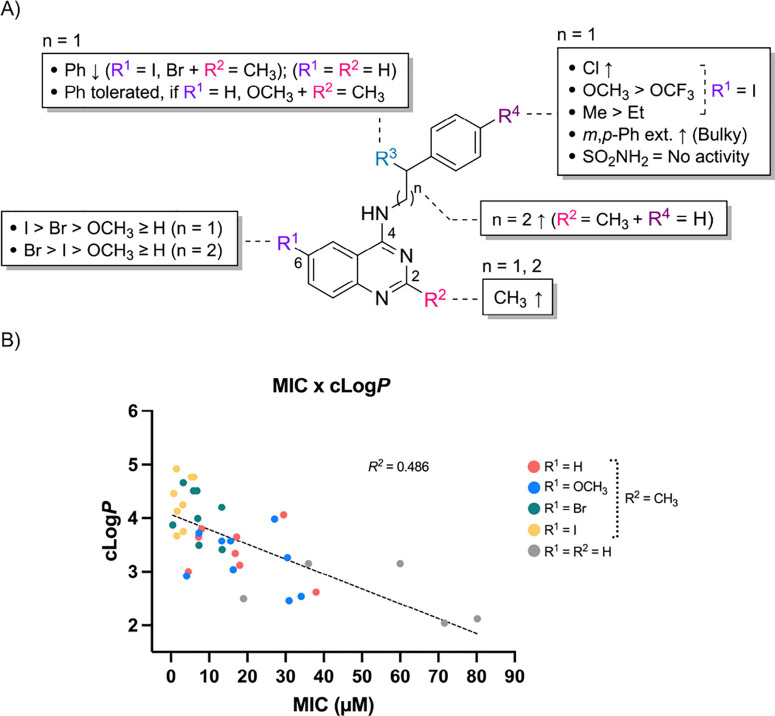 Figure 2
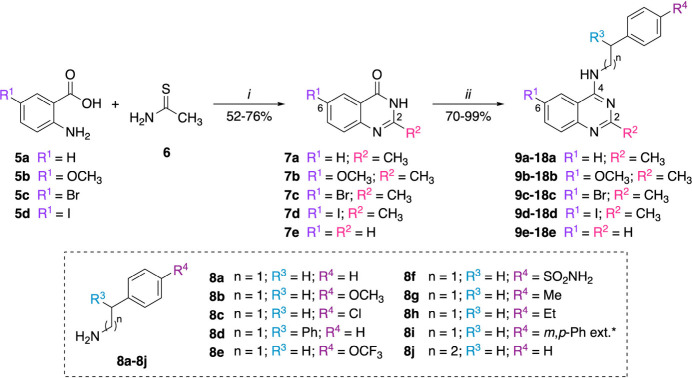 Figure 3
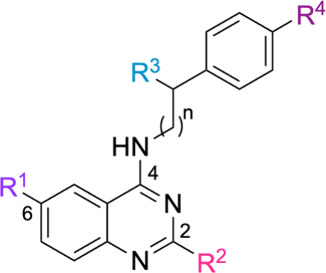 Figure 4
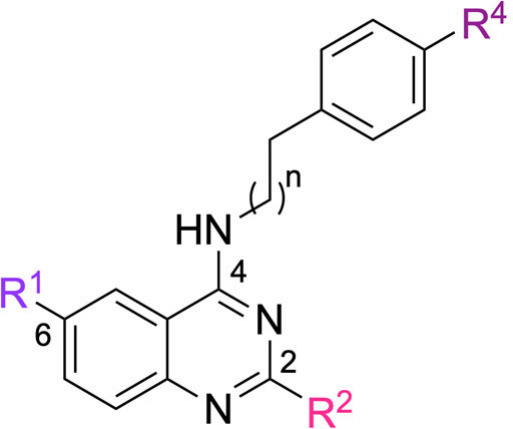 Figure 5
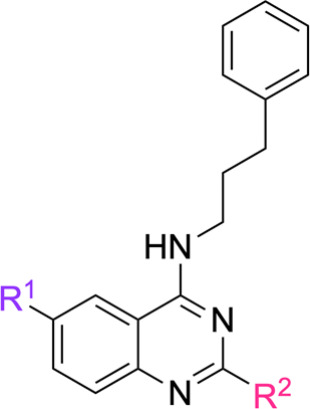 Figure 6
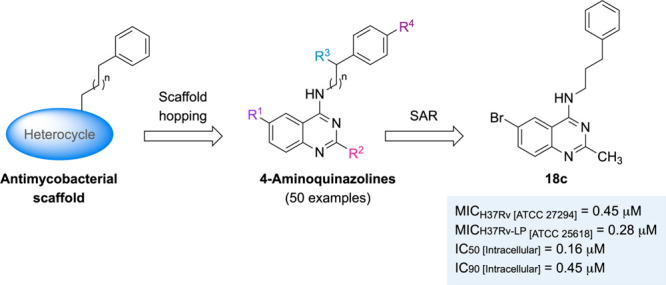 Figure 7
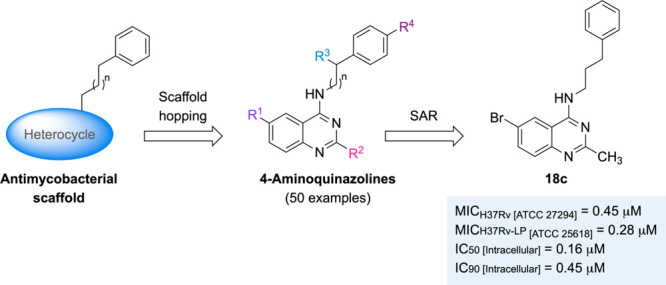 Figure 8
Peer Reviews
No public reviews on file for this paper yet. If you reviewed it on a platform where reviews are public (OpenReview, ICLR, NeurIPS, ICML), you can paste yours below so the community can read it here.
Videos
No videos yet. Explain this paper in a talk, walkthrough, or lecture? Add one.
Taxonomy
TopicsQuinazolinone synthesis and applications · Tuberculosis Research and Epidemiology · Cancer therapeutics and mechanisms