Brass‐mesh‐bolus–Radiation safety analysis and activation characterization following high energy photon treatment
Richard C. Mallory, Kyle Woods, Kiernan McCullough

TL;DR
This study investigates the radiation risks of using brass-mesh bolus in high-energy photon treatments, finding that photo-neutron activation poses a greater exposure risk than previously assumed neutron-capture activation.
Contribution
The study introduces photo-neutron activation as a novel and dominant source of radiation exposure from brass-mesh bolus in high-energy treatments.
Findings
Photo-neutron activation produces radionuclides like Cu-62 and Zn-63, which emit positrons and annihilation photons.
Handling brass-mesh bolus for 30 seconds per treatment could expose therapists to 0.106 mrem per course.
Positron emission from photo-neutron activation has significant penetration due to annihilation photons.
Abstract
Brass‐mesh‐bolus (BMB) has been proposed as an alternative to water‐equivalent bolus due to its ease of setup and conformality to patient contour. In high‐energy beams, BMB can become radioactive and pose a potential exposure risk to therapists from frequent exposure while handling. Very little research has been performed on the method of activation and dose from clinically realistic activation of BMB, necessitating the need for further investigation. To determine the expected activation of the BMB, products via neutron‐capture were calculated using thermal‐neutron cross‐section tables, as has been performed in previous literature. A novel consideration is to include the photo‐neutron activation components. Measurements were performed using an NaI‐scintillator after BMB irradiation, assessing its activity for both in‐field and out‐of‐field activation. The collected gamma spectrum was…
Genes, proteins, chemicals, diseases, species, mutations and cell lines named across the full text — each resolved to its canonical identifier and authoritative record.
Click any figure to enlarge with its caption.
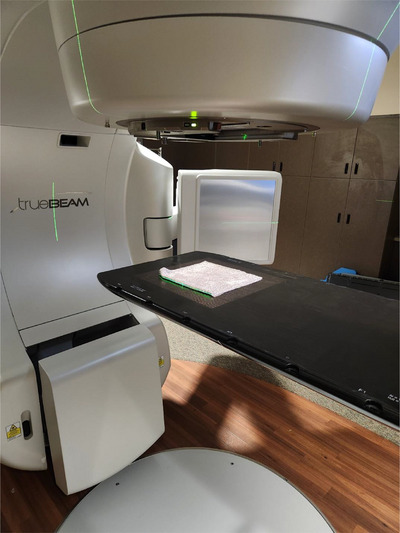 Figure 1
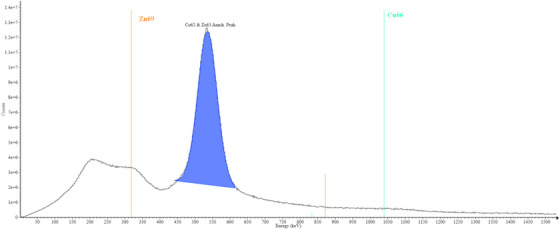 Figure 2
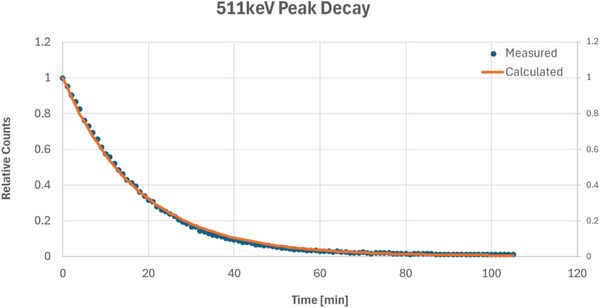 Figure 3
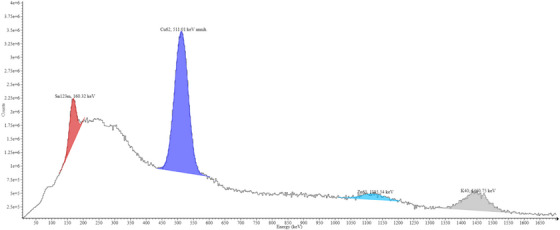 Figure 4
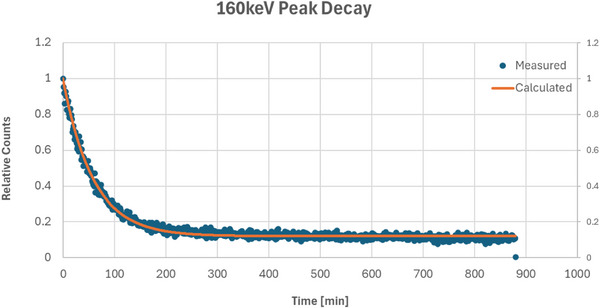 Figure 5
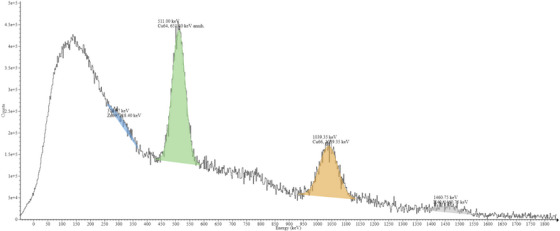 Figure 6
Peer Reviews
No public reviews on file for this paper yet. If you reviewed it on a platform where reviews are public (OpenReview, ICLR, NeurIPS, ICML), you can paste yours below so the community can read it here.
Videos
No videos yet. Explain this paper in a talk, walkthrough, or lecture? Add one.
Taxonomy
TopicsRadiation Dose and Imaging · Advanced Radiotherapy Techniques · Graphite, nuclear technology, radiation studies