Synthesis of monodisperse inorganic polyphosphate polyP10via a photocaging strategy
Sandra Moser, Gloria Hans, Jiahui Ma, Thomas Haas, Nikolaus Jork, Felix Bauer, Bernhard Breit, Henning J. Jessen

TL;DR
Scientists developed a new method to create a uniform chain of 10 phosphate units using light-sensitive molecules, enabling better control and labeling for biological studies.
Contribution
A photocaging strategy to synthesize the longest monodisperse polyP10 with 18O labeling and light-triggered deprotection.
Findings
A new method using coumarin photocages to synthesize polyP10 with high purity and defined length.
An aromatic substitution reaction was observed during uncaging, indicating a loop-like structure in water.
18O-labeled photocages were successfully used to release 18O-labeled metabolites for downstream applications.
Abstract
Inorganic polyphosphate (polyP), a linear biopolymer composed only of orthophosphate units, has emerged as a molecule of critical biological importance across species. While commercially available polyPs are polydisperse mixtures – irrespective of their origin (chemical, biochemical) – recent strategies have focused on the bottom-up synthesis of monodisperse polyPs that have distinct advantages in mechanistic studies. However, until now, syntheses have been limited to defined chains of up to eight phosphate units due to challenges in deprotection-associated degradation and purification. Here, we disclose a new strategy based on two terminal coumarin photocages to synthesize the longest monodisperse polyP chain available to date: polyP10. The photoremovable protecting groups facilitate purification and enable efficient deprotection with light. By tuning the photocage, we achieve control…
Genes, proteins, chemicals, diseases, species, mutations and cell lines named across the full text — each resolved to its canonical identifier and authoritative record.
Click any figure to enlarge with its caption.
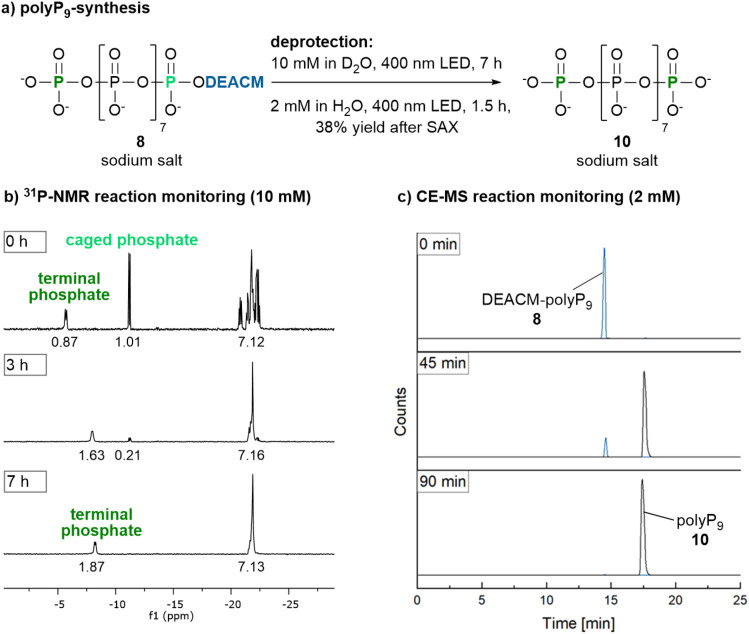 Figure 1
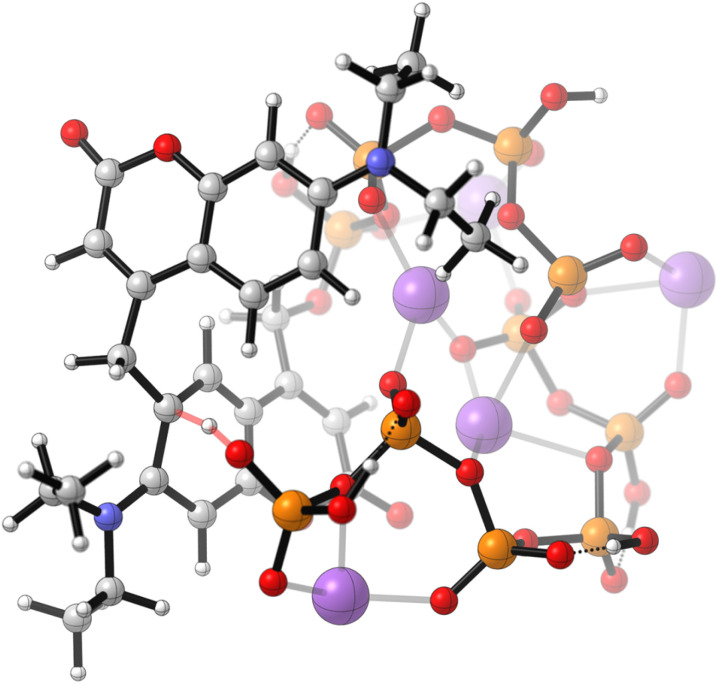 Figure 2
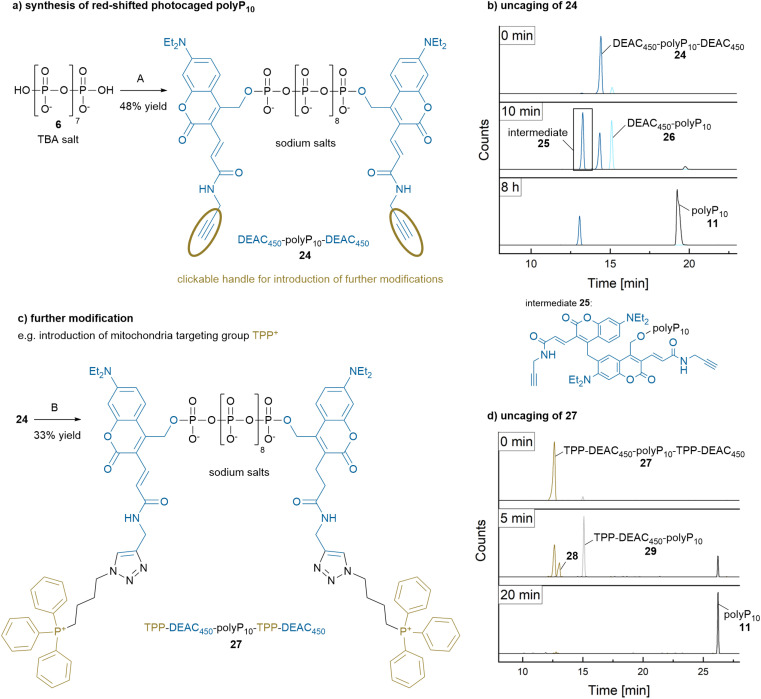 Figure 3
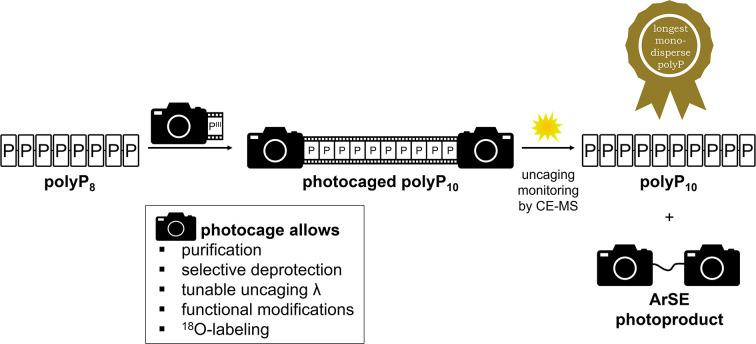 Figure 4
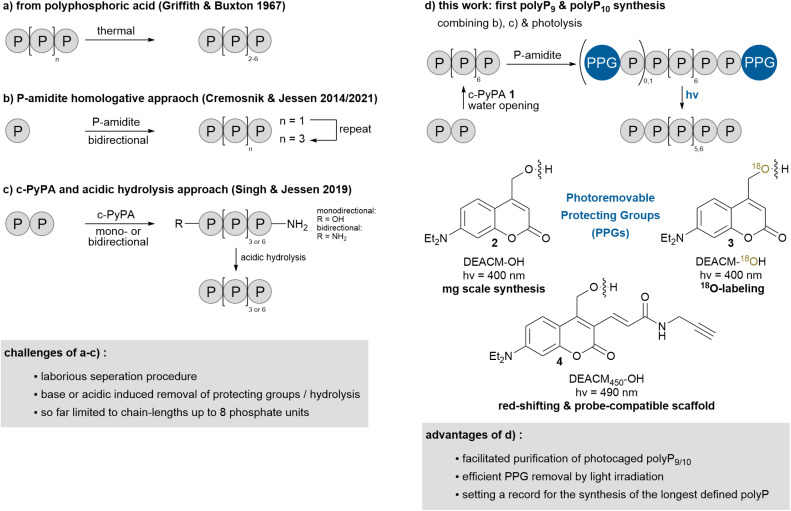 Figure 5
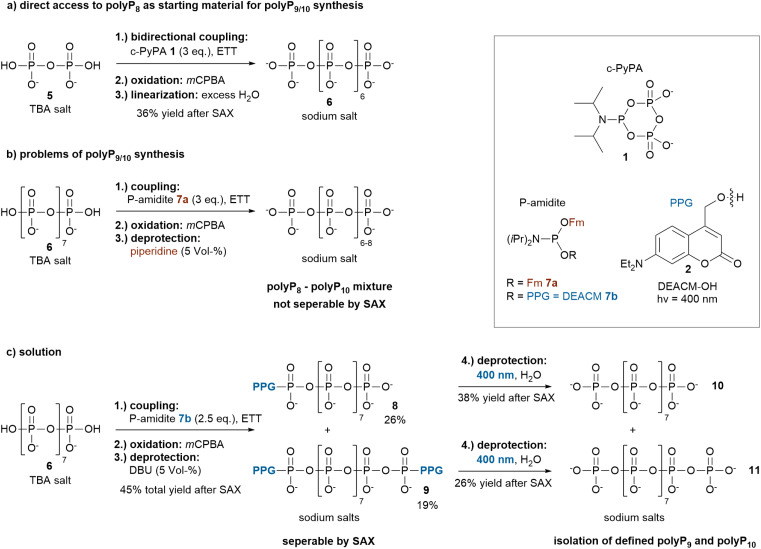 Figure 6
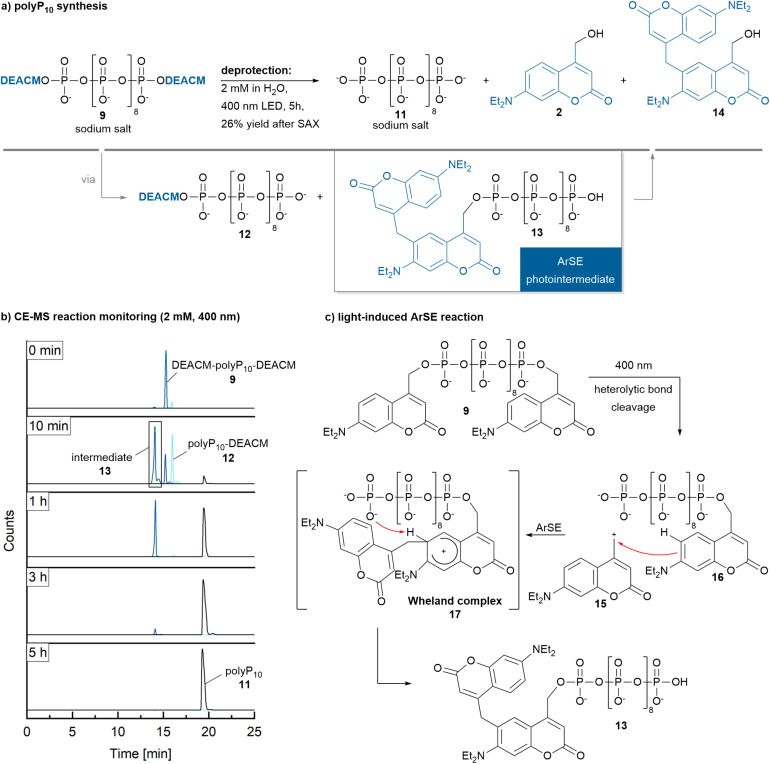 Figure 7
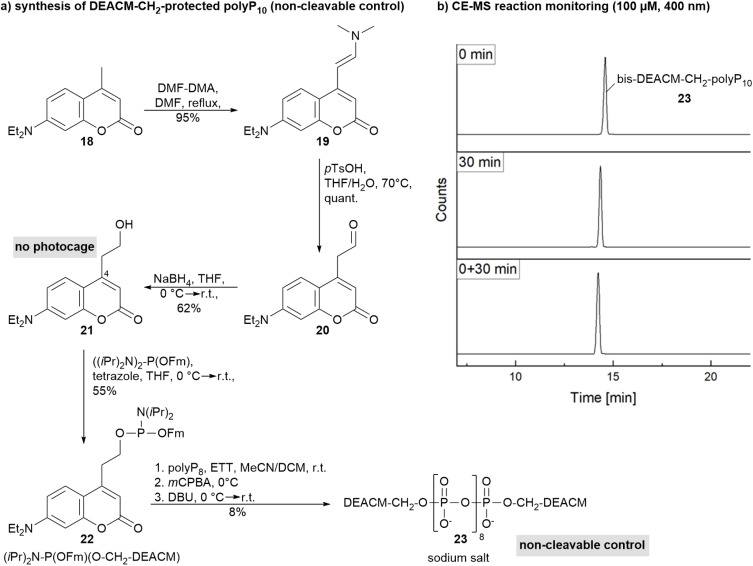 Figure 8
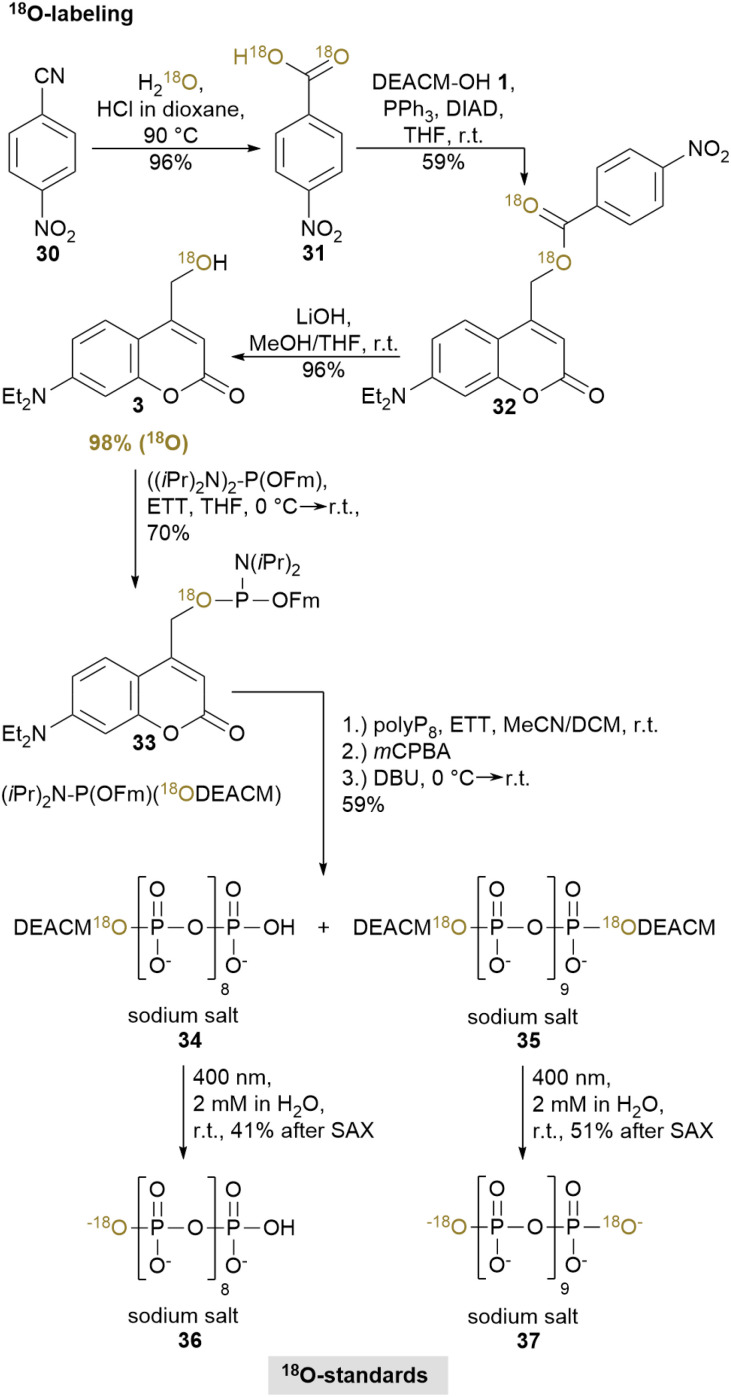 Figure 9
Peer Reviews
No public reviews on file for this paper yet. If you reviewed it on a platform where reviews are public (OpenReview, ICLR, NeurIPS, ICML), you can paste yours below so the community can read it here.
Videos
No videos yet. Explain this paper in a talk, walkthrough, or lecture? Add one.
Taxonomy
TopicsCoagulation, Bradykinin, Polyphosphates, and Angioedema · Photochromic and Fluorescence Chemistry · Click Chemistry and Applications