Evidence for circulation of high-virulence HIV-1 subtype B variants in the United Kingdom
Vinicius B Franceschi, Kieran O Drake, David F Bibby, Caroline A Sabin, David T Dunn, Jean L Mbisa, Erik M Volz

TL;DR
This study finds high-virulence HIV-1 subtype B variants in the UK that cause faster disease progression but are not a major public health threat due to effective prevention measures.
Contribution
Identification of three high-virulence HIV-1 subtype B variants in the UK with distinct transmission and disease progression patterns.
Findings
Three HIV-1 subtype B variants (PT.B.40.UK, PT.B.69.UK, PT.B.133.UK) showed significantly higher viral loads and faster CD4 decline.
These variants have circulated in the UK for decades without international spread or rapid growth rates.
The study highlights the importance of genomic surveillance to monitor HIV-1 virulence trends.
Abstract
The evolution of HIV-1 virulence has significant implications for epidemic control. Recent phylogenomic analyses identified low-prevalence HIV-1 variants exhibiting significant differences in disease progression. We analysed 40 888 partial HIV-1 pol sequences from the UK HIV Drug Resistance Database (UKRDB) across subtypes B, C, A1, and CRF02AG. We identified phylotypes with putative differences in transmission/phylogenetic patterns and assessed their virulence trends using pretreatment viral loads, CD4 cell counts, and four statistical methods. We classified three subtype B phylotypes—PT.B.40.UK, PT.B.69.UK, and PT.B.133.UK —as variants of interest (VOIs) due to significantly higher viral loads and/or accelerated CD4 decline. PT.B.40.UK and PT.B.69.UK exhibited higher viral loads, 4.93 log10 copies/ml (95% CI: 4.73–5.13) and 4.87 (4.65–5.10), representing 0.30–0.36 log10 copies/ml…
Genes, proteins, chemicals, diseases, species, mutations and cell lines named across the full text — each resolved to its canonical identifier and authoritative record.
Click any figure to enlarge with its caption.
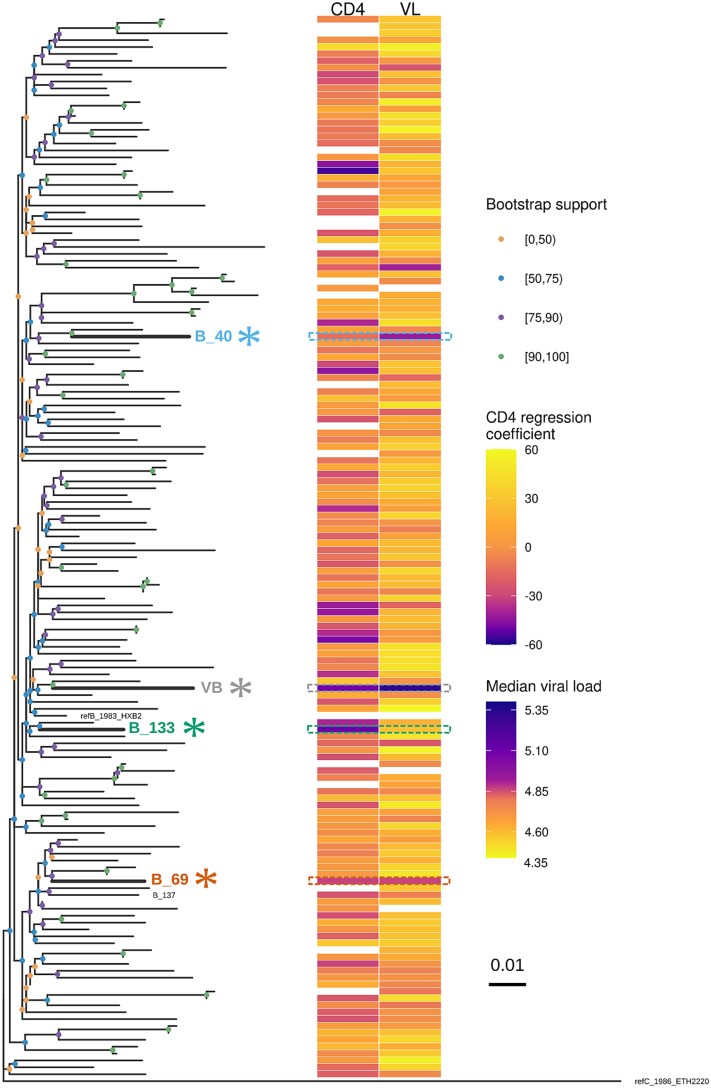 Figure 1
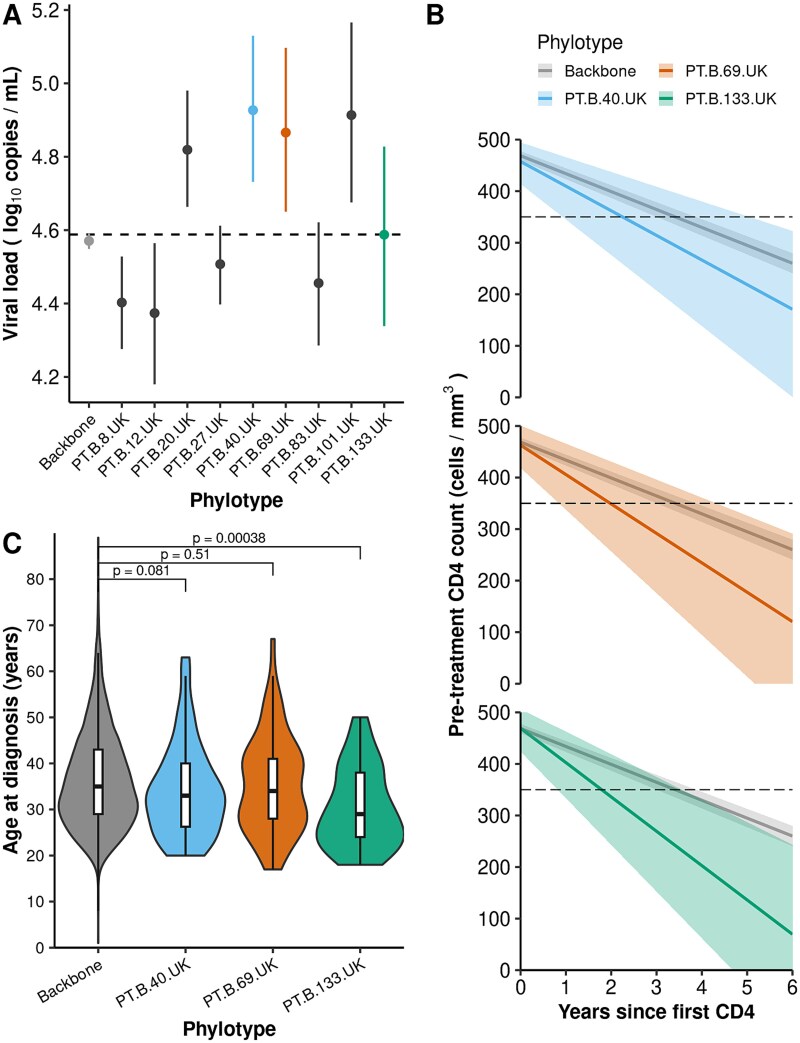 Figure 2
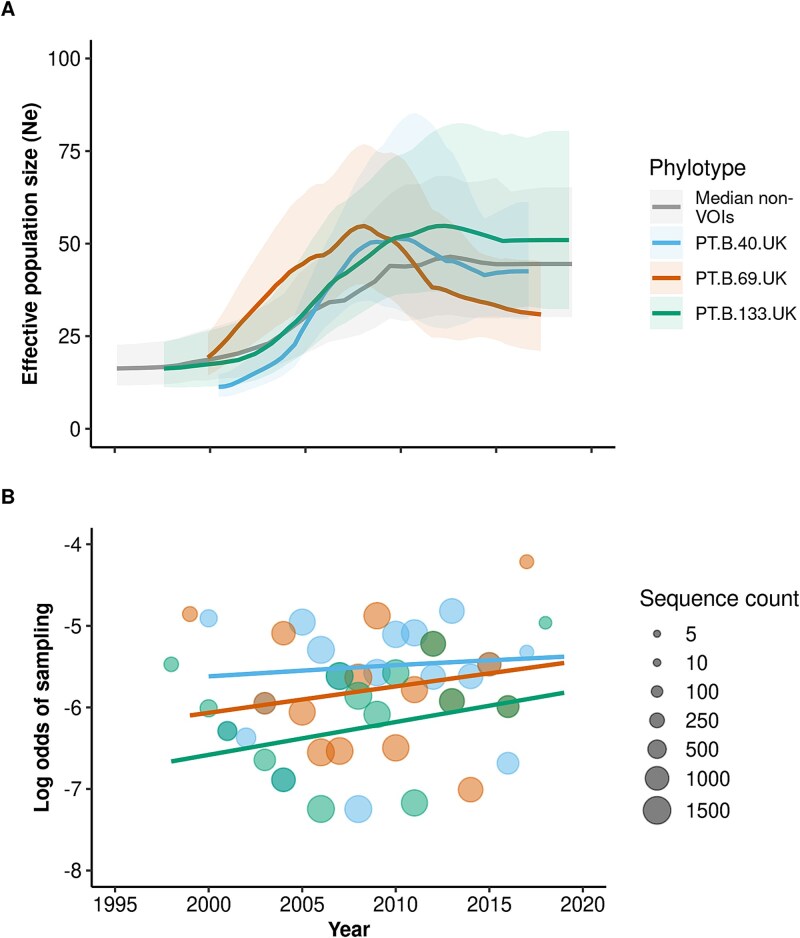 Figure 3
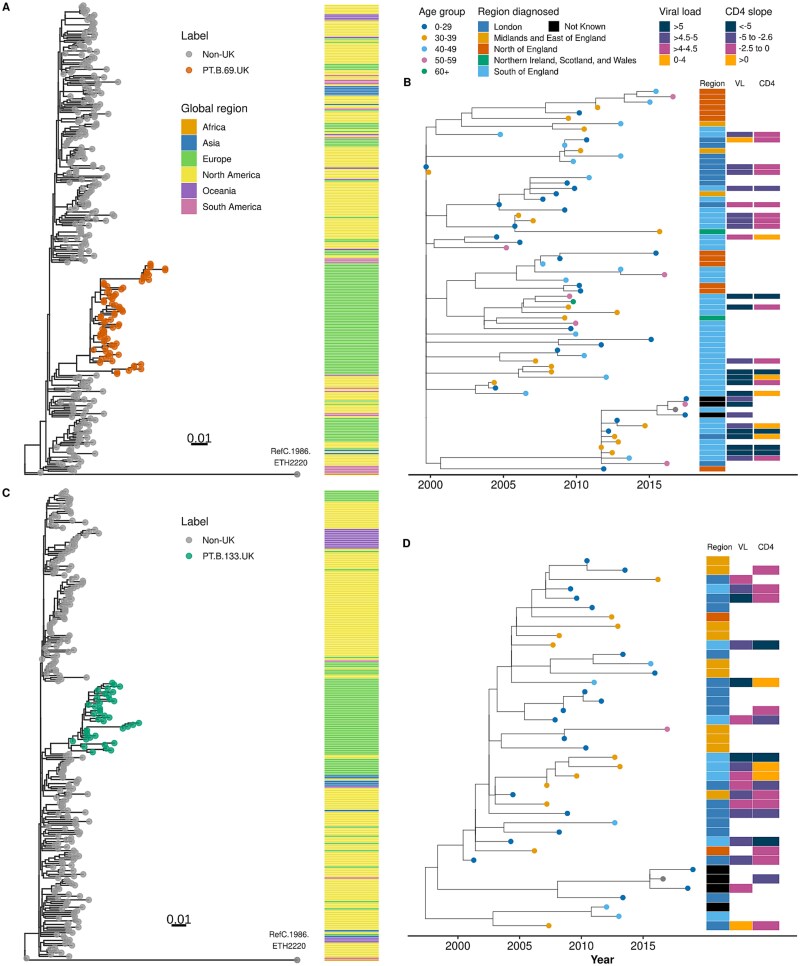 Figure 4
Peer Reviews
No public reviews on file for this paper yet. If you reviewed it on a platform where reviews are public (OpenReview, ICLR, NeurIPS, ICML), you can paste yours below so the community can read it here.
Videos
No videos yet. Explain this paper in a talk, walkthrough, or lecture? Add one.
Taxonomy
TopicsHIV Research and Treatment · HIV/AIDS Research and Interventions · HIV/AIDS drug development and treatment