Insights into the structure, function, and impact of Candida albicans UPC2 gene on azole resistance; a mini-review
Akbar Hoseinnejad, Amir Hossein Mahdizade, Maryam Erfaninejad, Firoozeh Kermani, Mona Ghazanfari, Aylar Arbabi, Seyed Sobhan Bahreiny, Arezoo Bozorgomid, Mojtaba Moradi, Iman Haghani, Mahdi Abastabar

TL;DR
This mini-review explores how the UPC2 gene in Candida albicans contributes to resistance against azole antifungal drugs.
Contribution
The paper provides a focused summary of the UPC2 gene's role in azole resistance mechanisms in C. albicans.
Findings
UPC2 enhances azole resistance by upregulating ergosterol biosynthesis genes like ERG2 and ERG11.
Increased ERG11 expression reduces azole susceptibility by boosting 14α-lanosterol demethylase production.
UPC2 also regulates sterol uptake and environmental adaptations, further supporting azole resistance.
Abstract
Candidiasis is a prevalent fungal infection caused by various species of Candida, especially, C. albicans. The emergence of resistance to azole medications, which are frequently prescribed for the treatment of Candida infections, presents a significant challenge in the management of these infections. The present mini-review summarizes findings from a comprehensive search of articles published between 1999 and 2024, retrieved from Scopus, PubMed, and Web of Science. Studies were selected using specific keywords based on relevance to UPC2 gene functions, azole resistance mechanisms, and C. albicans biology. The UPC2 gene has become crucial in regulating drug resistance in C. albicans. This gene encodes a zinc (II)-Cys (6) transcription factor involved in the biosynthesis of sterols and contributes to resistance against azole antifungal drugs. When exposed to azoles, UPC2 in C. albicans…
Genes, proteins, chemicals, diseases, species, mutations and cell lines named across the full text — each resolved to its canonical identifier and authoritative record.
Click any figure to enlarge with its caption.
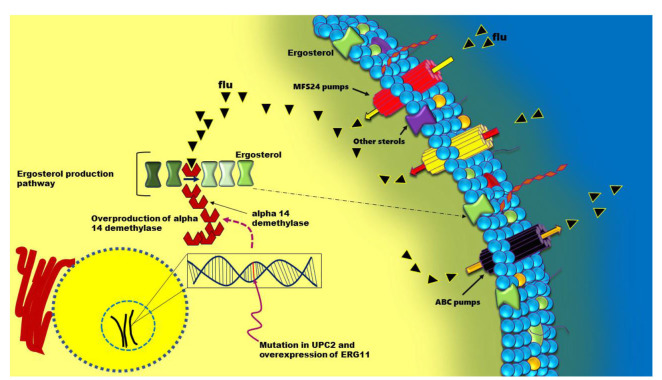 Figure 1
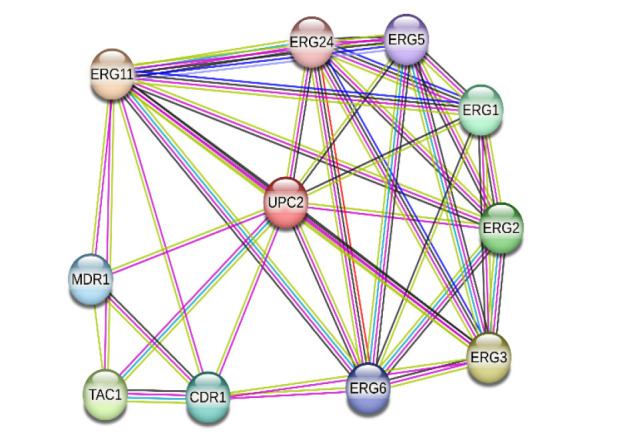 Figure 2
 Figure 3
Peer Reviews
No public reviews on file for this paper yet. If you reviewed it on a platform where reviews are public (OpenReview, ICLR, NeurIPS, ICML), you can paste yours below so the community can read it here.
Videos
No videos yet. Explain this paper in a talk, walkthrough, or lecture? Add one.
Taxonomy
TopicsAntifungal resistance and susceptibility · Parasitic Diseases Research and Treatment · Pharmacological Receptor Mechanisms and Effects