Working memory capacity and self‐cues: Consistent benefits in children and adults
Zahra Ahmed, Janet F. McLean, Kevin Allan, Sheila J. Cunningham

TL;DR
The study shows that using self-related cues improves working memory in both children and adults, regardless of attentional skills.
Contribution
This is the first direct evidence that self-referential cues enhance working memory capacity independently of attentional processing.
Findings
Self-referential cues significantly increased working memory span in both children and adults.
The memory boost from self-cues was not related to attentional processing or baseline memory capacity.
The effect of self-cues was consistent across age groups despite differences in baseline memory performance.
Abstract
From attentional prioritization to enhanced memory, self‐cues trigger a variety of effects within human cognition. Recent work suggests that self‐reference may also enhance working memory, possibly via attentional prioritization. However, there is no direct evidence that self‐cues enhance working memory capacity, or that such boosts covary with individuals' attentional function. Here, we provide the first direct evidence of enhanced working memory capacity for self‐referential cues, independent of attentional processing. We adapted a verbal working memory complex span to create a ‘Self’ condition (featuring the participant's own name), ‘Other’ condition (featuring a non‐self‐name), and Control condition (with no name), in 7–9‐year‐old children (Exp.1, N = 71) and adults (Exp.2, N = 52). In both experiments, the Self condition elicited significantly higher spans than the other conditions…
Genes, proteins, chemicals, diseases, species, mutations and cell lines named across the full text — each resolved to its canonical identifier and authoritative record.
Click any figure to enlarge with its caption.
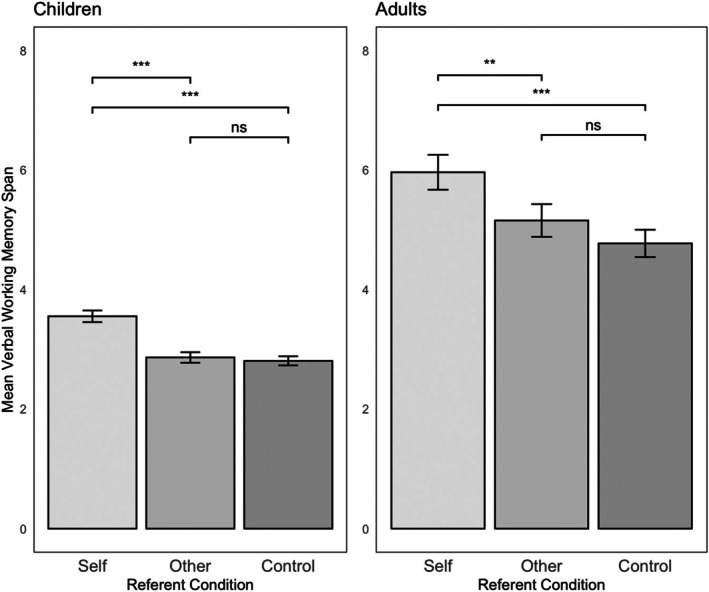 Figure 1
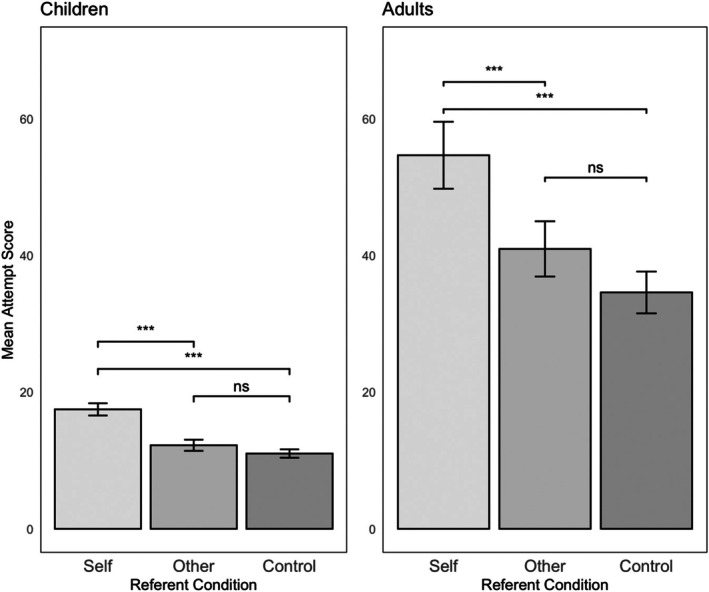 Figure 2
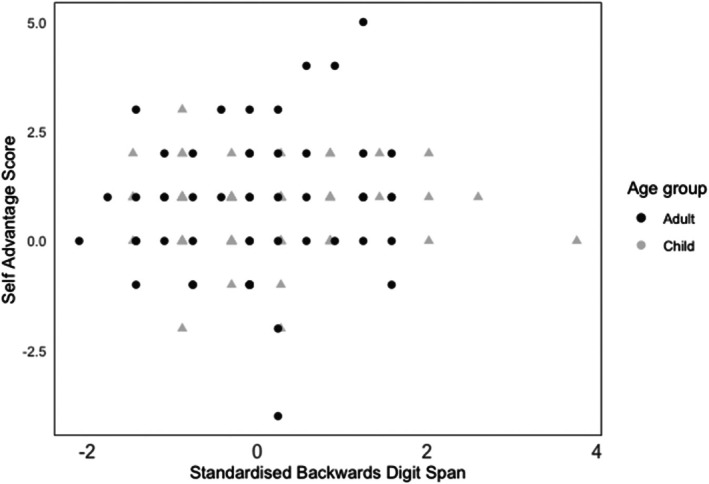 Figure 3
Peer Reviews
No public reviews on file for this paper yet. If you reviewed it on a platform where reviews are public (OpenReview, ICLR, NeurIPS, ICML), you can paste yours below so the community can read it here.
Videos
No videos yet. Explain this paper in a talk, walkthrough, or lecture? Add one.
Taxonomy
TopicsNeural and Behavioral Psychology Studies · Child and Animal Learning Development · Memory Processes and Influences