The Evolution and expression analysis of USP gene family in Solanum
Ruiqiang Xu, Zhongyu Wang, Zhaolong Chen, Zepeng Wang, Qingyuan Meng, Ning Li, Yong Qin

TL;DR
This study explores the USP gene family in Solanum species to understand how these genes help plants cope with environmental stress, providing insights for crop improvement.
Contribution
The study systematically identifies and analyzes USP genes in 13 Solanum species, revealing evolutionary patterns and gene expression under stress.
Findings
Phylogenetic analysis shows USP genes are conserved in Solanum, with interspecies differences due to copy number variation.
Five unique USP genes in S. pennellii suggest potential for stress resistance, and eight USPs are linked to domestication or improvement selection.
Structural variants in 12 USPs disrupt intron regions, affecting expression responses to salt stress.
Abstract
As natural environments degrade and extreme weather events become more frequent, humanity increasingly faces the challenge of producing crops under various complex and adverse conditions. Improving crop adaptability has become crucial. Universal stress proteins (USPs) are a class of small molecular proteins widely found in plants, capable of withstanding various biotic and abiotic environmental stresses, including temperature stress, drought, nutrient deficiency, oxidative imbalance, salt and heavy ion toxicity, and pathogenic infections. Enhancing our understanding of USPs holds significant potential for improving plant stress resilience. This study focuses on 13 species of Solanum, including cultivated and wild tomatoes, and systematically identified 438 members of the USP gene family through bioinformatics approaches. Phylogenetic analysis reveals that major USP members are conserved…
Genes, proteins, chemicals, diseases, species, mutations and cell lines named across the full text — each resolved to its canonical identifier and authoritative record.
Click any figure to enlarge with its caption.
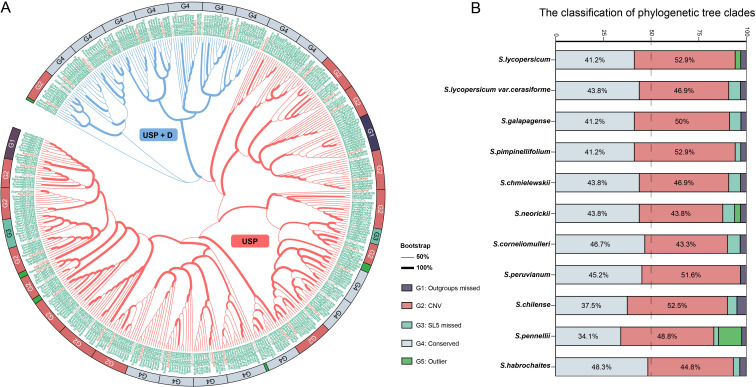 Figure 1
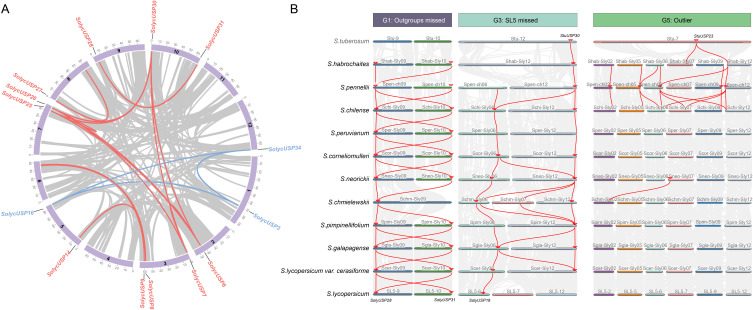 Figure 2
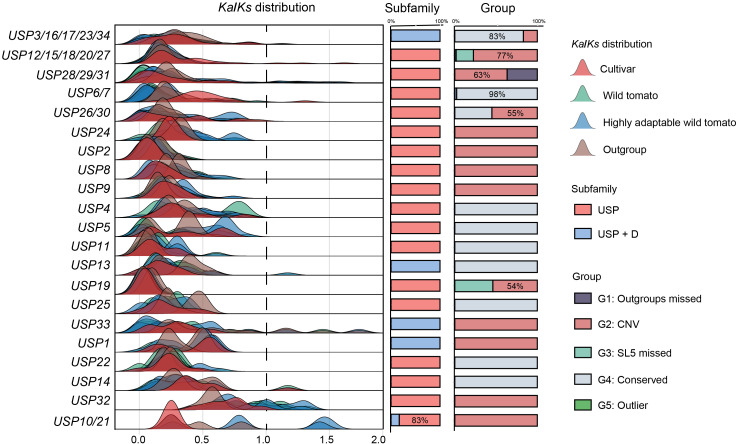 Figure 3
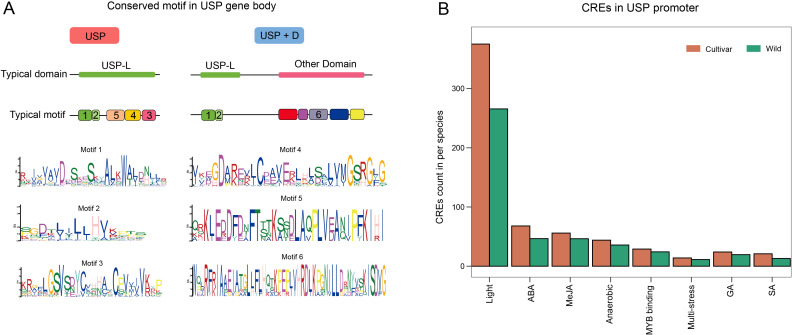 Figure 4
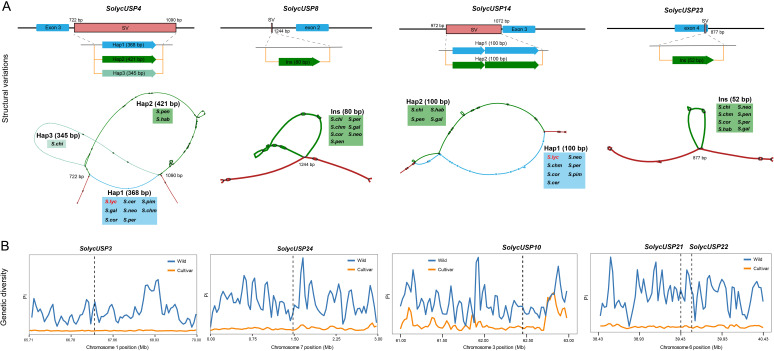 Figure 5
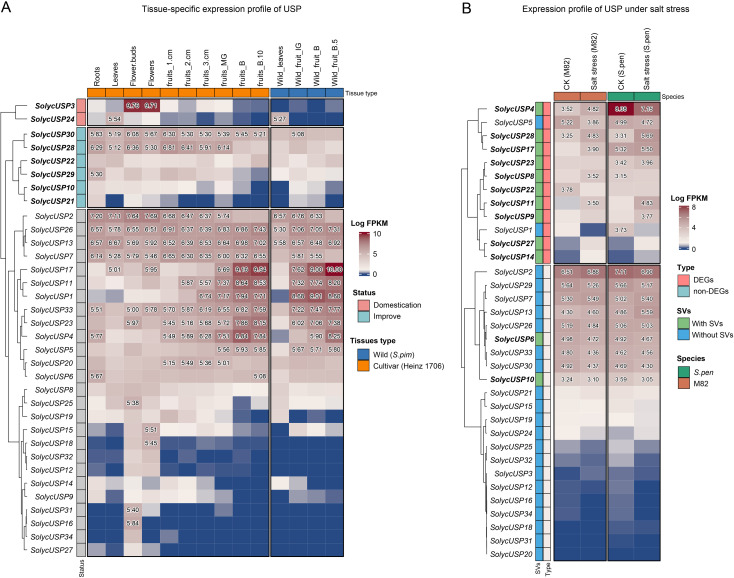 Figure 6
Peer Reviews
No public reviews on file for this paper yet. If you reviewed it on a platform where reviews are public (OpenReview, ICLR, NeurIPS, ICML), you can paste yours below so the community can read it here.
Videos
No videos yet. Explain this paper in a talk, walkthrough, or lecture? Add one.
Taxonomy
TopicsPhotosynthetic Processes and Mechanisms · Genomics and Phylogenetic Studies