Innovo GenMax MTB-RIF/INH: a moderate-complexity automated NAAT for rapid simultaneous detection of Mycobacterium tuberculosis complex and rifampin/isoniazid resistance
Xichao Ou, Bing Zhao, Huiwen Zheng, Ruida Xing, Qian Sun, Zhonghua Qin, Lixia Zhang, Kai Cui, Yuanyuan Song, Yang Zheng, Yang Zhou, Shengfen Wang, Hui Xia, Yanlin Zhao

TL;DR
This paper evaluates a new automated test for detecting tuberculosis and drug resistance, showing good sensitivity but needing improvement to meet global health targets.
Contribution
The study introduces and evaluates Innovo GenMax MTB-RIF/INH, a moderate-complexity NAAT for TB and drug resistance detection.
Findings
GenMax detected Mycobacterium tuberculosis complex with 97.52% sensitivity and 93.65% specificity.
Sensitivity for RIF and INH resistance detection was 88.46% and 85.19%, respectively.
The test's performance for resistance detection remains below WHO targets, requiring further optimization.
Abstract
Given the increase of treatment failure, relapse and acquired resistance observed in isoniazid (INH) resistance, there is an urgent to improve rifampin (RIF) -priority based diagnostic strategies. Therefore, we evaluated the performance of Innovo GenMax MTB-RIF/INH (GenMax), a moderate- complexity automated nucleic acid amplification test (NAAT), for detecting Mycobacterium tuberculosis complex (MTBC) and resistance to RIF and INH. Analytical sensitivity (limit of detection, LOD) was determined using serial dilutions of Mycobacterium tuberculosis H37Rv (ATCC 27249) strains. Diagnostic accuracy was assessed in clinical sputum specimens against microbiological reference standards (MRS: positive by smear microscopy, culture or Xpert MTB/RIF for diagnosis of TB) and phenotypic drug susceptibility testing (DST). Discordant results were resolved by sequencing resistance genes (IS6110, rpoB,…
Genes, proteins, chemicals, diseases, species, mutations and cell lines named across the full text — each resolved to its canonical identifier and authoritative record.
Click any figure to enlarge with its caption.
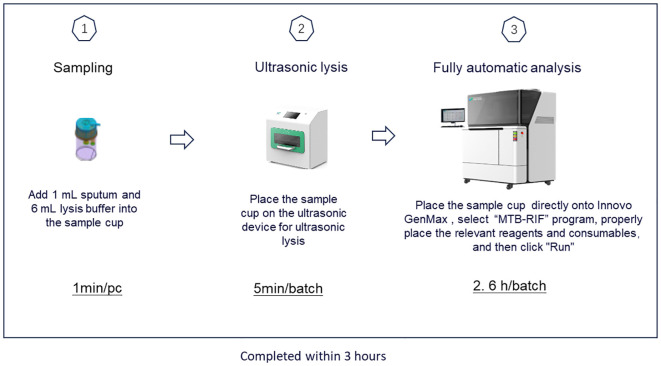 Figure 1
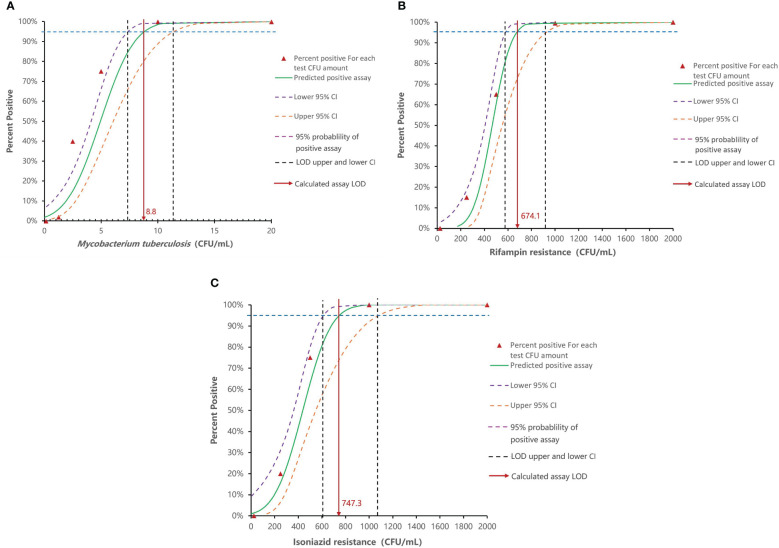 Figure 2
Peer Reviews
No public reviews on file for this paper yet. If you reviewed it on a platform where reviews are public (OpenReview, ICLR, NeurIPS, ICML), you can paste yours below so the community can read it here.
Videos
No videos yet. Explain this paper in a talk, walkthrough, or lecture? Add one.
Taxonomy
TopicsTuberculosis Research and Epidemiology · Mycobacterium research and diagnosis · Infectious Diseases and Tuberculosis