Influence of secretome from porcine cardiosphere-derived cells on porcine macrophage polarization and their possible implications for cardiac remodeling post-myocardial infarction in vitro
M. Pulido, M. A. de Pedro, A. M. Marchena, V. Alvarez, J. G. Casado, F. M. Sanchez-Margallo, E. López

TL;DR
This study shows that secretions from pig heart-derived cells can shift macrophages toward a healing state, promoting heart repair after a heart attack.
Contribution
The novel contribution is demonstrating how porcine cardio sphere-derived cell secretome modulates macrophage polarization and downstream effects on tissue repair.
Findings
S-CDC secretome induces a mixed M1/M2 macrophage phenotype, reducing pro-inflammatory responses.
Conditioned medium from S-CDC-treated M1 macrophages enhances endothelial cell migration and wound healing.
Transcriptomic analysis reveals pro-reparative cytokines like VEGFA and TGFB in S-CDC secretome.
Abstract
The inflammatory response plays a crucial role in tissue repair following myocardial infarction (MI), with macrophages being central regulators of inflammation and tissue remodeling. Macrophage polarization between pro-inflammatory M1 and anti inflammatory M2 phenotypes significantly influences inflammation and tissue repair. This study evaluates the effect of the secretome from porcine cardio sphere-derived cells (S-CDCs) on macrophage polarization and its downstream impact on endothelial cells (HUVECs) and cardiac fibroblasts (PCF). Macrophages were treated with the secretome from S-CDCs, and their polarization status was assessed. Conditioned media from treated macrophages were applied to HUVECs and PCFs to evaluate effects on migration, wound healing, and fibrotic activity. Additionally, transcriptomic profiling of S-CDCs was performed to identify relevant cytokines. S-CDCs induced…
Genes, proteins, chemicals, diseases, species, mutations and cell lines named across the full text — each resolved to its canonical identifier and authoritative record.
Click any figure to enlarge with its caption.
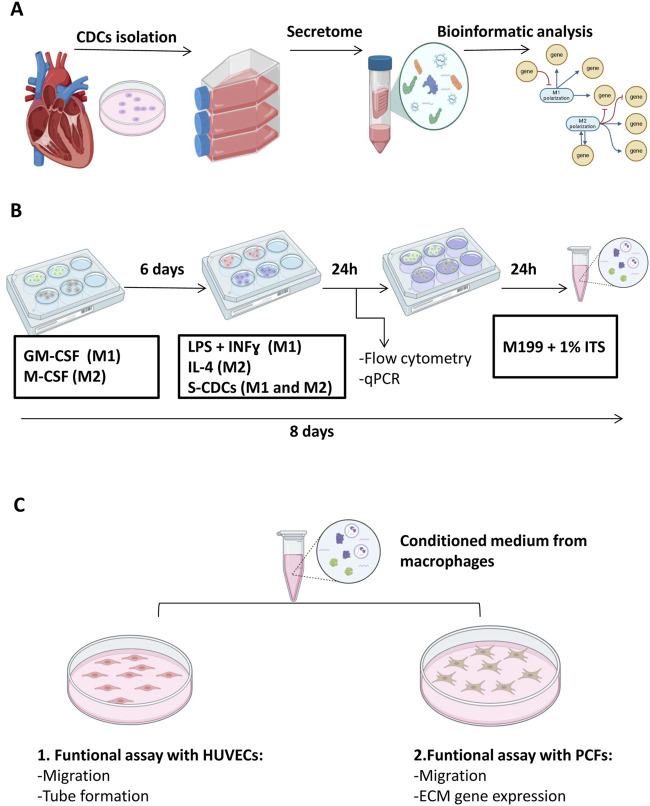 Figure 1
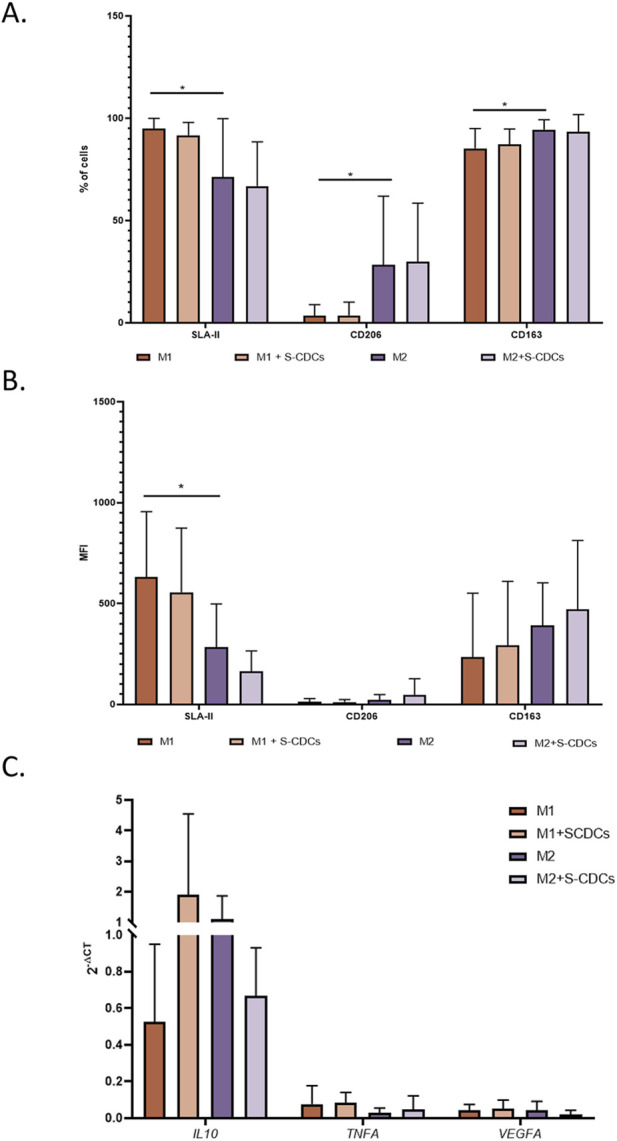 Figure 2
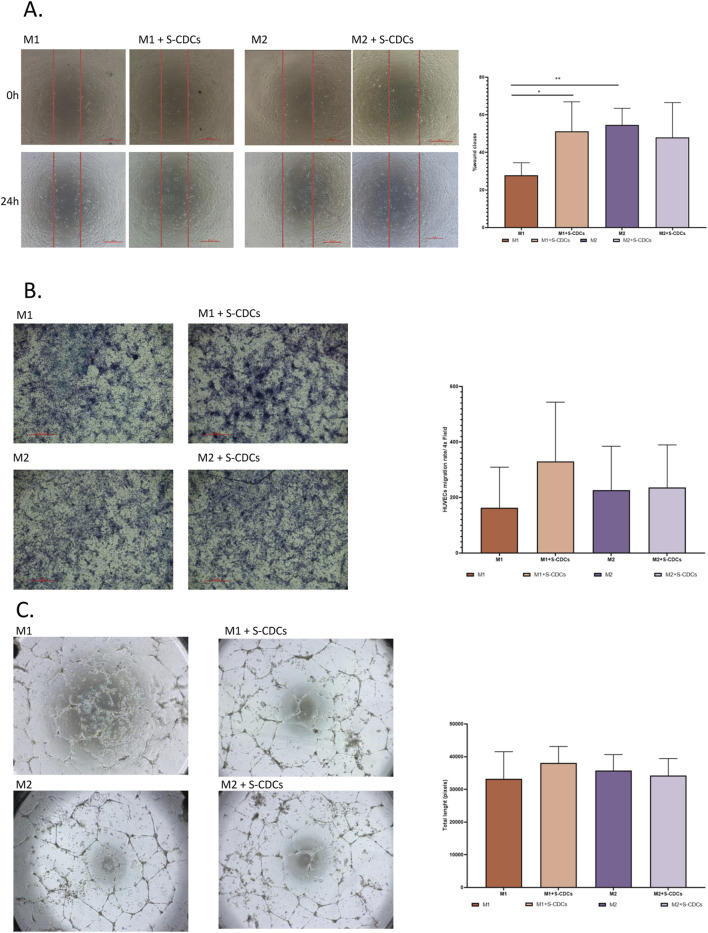 Figure 3
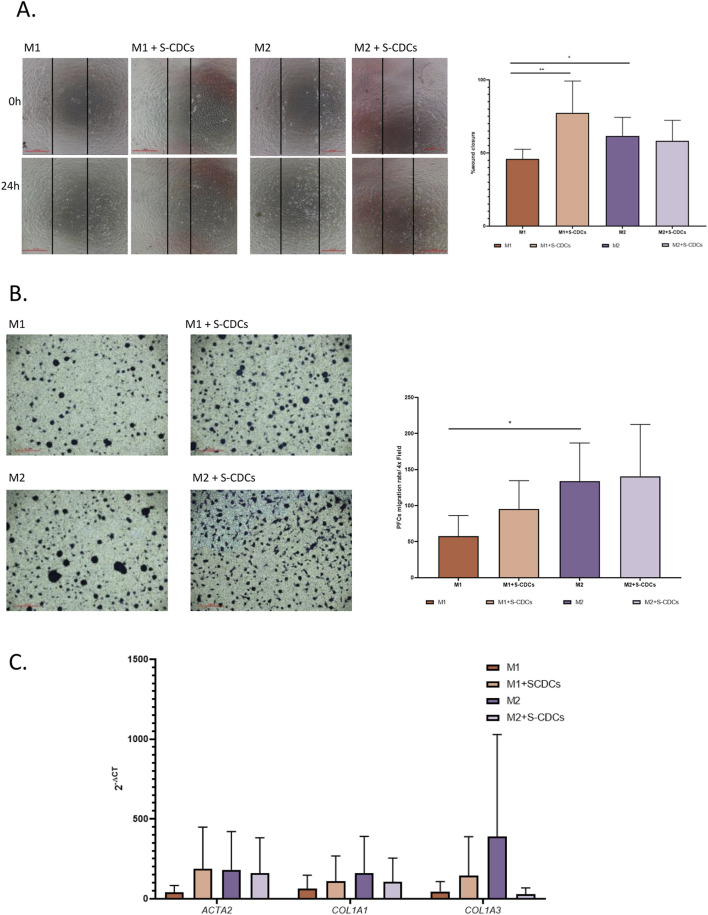 Figure 4
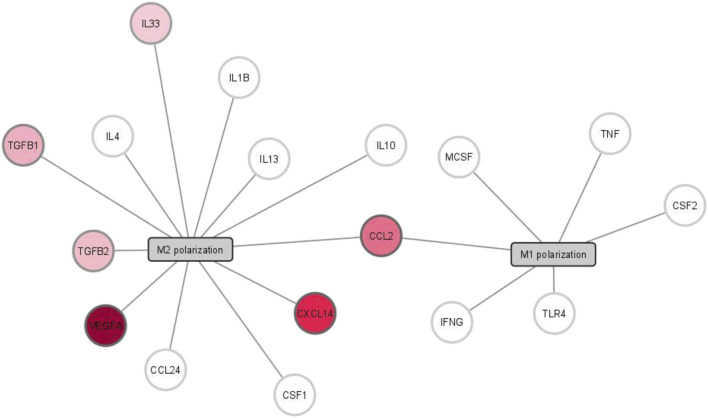 Figure 5
Peer Reviews
No public reviews on file for this paper yet. If you reviewed it on a platform where reviews are public (OpenReview, ICLR, NeurIPS, ICML), you can paste yours below so the community can read it here.
Videos
No videos yet. Explain this paper in a talk, walkthrough, or lecture? Add one.
Taxonomy
TopicsTissue Engineering and Regenerative Medicine · Cardiac Fibrosis and Remodeling · Electrospun Nanofibers in Biomedical Applications