Application and analysis of the arthroscopic remnant-preserving technique to rotator cuff tear: a retrospective study
Tao Bao, Yuxia Yang, Yangyang Hu, Wenyong Fei

TL;DR
This study found that preserving remnant tissue during rotator cuff surgery leads to better pain relief, mobility, and healing compared to removing the tissue.
Contribution
The study introduces evidence that remnant-preservation improves outcomes in arthroscopic rotator cuff repair.
Findings
The RP group had lower pain scores at 3 months compared to the RR group.
Shoulder mobility improved significantly more in the RP group at 6 and 24 months.
MRI showed better rotator cuff healing in the RP group at 24 months.
Abstract
Few studies have investigated the effect of remnant tissue in the footprint area on rotator cuff repair. This study aimed to compare the clinical and structural outcomes of remnant-preservation and remnant-removal techniques during arthroscopic rotator cuff repair. This study compared arthroscopic remnant-preservation (RP) and remnant-removal (RR) techniques for rotator cuff repair in 68 patients (2–5 cm tears) with footprint remnant tissue. Patients were divided into the RP group (n = 33) and the RR (n = 35) group. Outcomes were assessed preoperatively and at 3, 6, and 24 months postoperatively. Evaluations included visual analog scale (VAS) pain scores, American Shoulder and Elbow Surgeons (ASES) and Constant–Murley (CS) scores, shoulder mobility, and MRI-based healing (Sugaya grade). At 3 months, the RP group reported lower VAS scores than those in the RR group (1.4 ± 0.6 vs. 1.8 ±…
Genes, proteins, chemicals, diseases, species, mutations and cell lines named across the full text — each resolved to its canonical identifier and authoritative record.
Click any figure to enlarge with its caption.
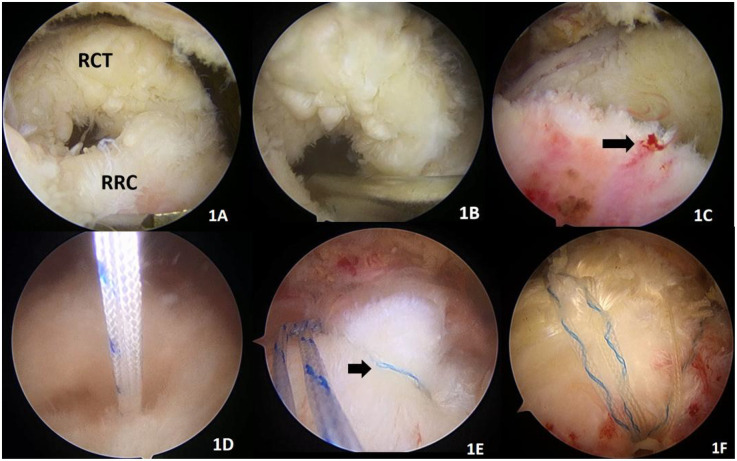 Figure 1
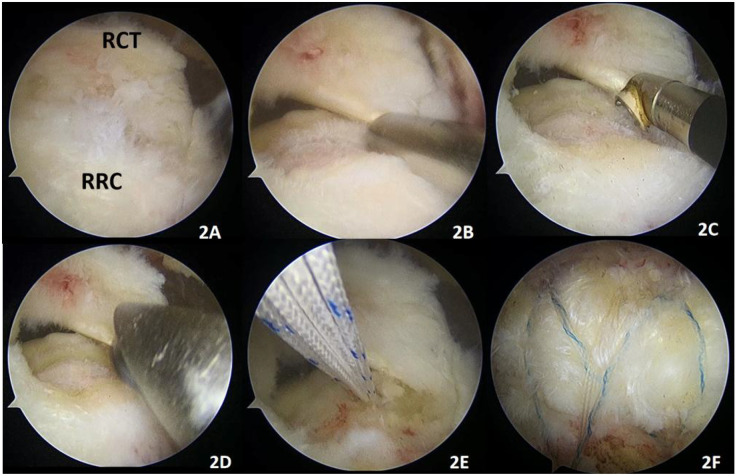 Figure 2
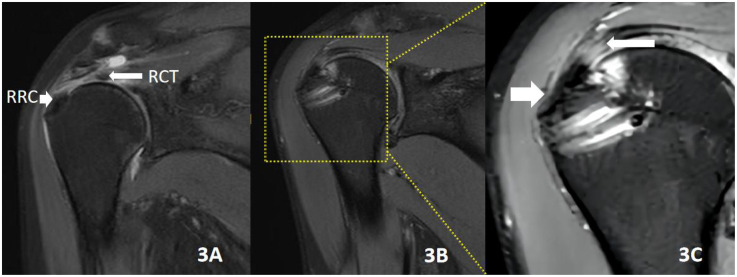 Figure 3
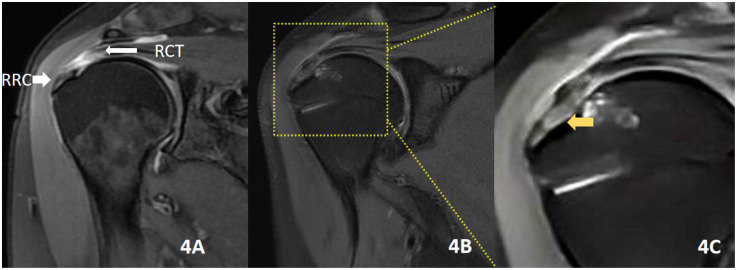 Figure 4
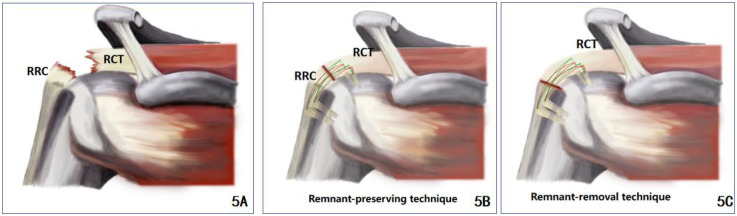 Figure 5
Peer Reviews
No public reviews on file for this paper yet. If you reviewed it on a platform where reviews are public (OpenReview, ICLR, NeurIPS, ICML), you can paste yours below so the community can read it here.
Videos
No videos yet. Explain this paper in a talk, walkthrough, or lecture? Add one.
Taxonomy
TopicsShoulder Injury and Treatment · Shoulder and Clavicle Injuries · Sports injuries and prevention