Evolution of spinal evoked compound action potential thresholds, visual motor thresholds, and impedances in a rodent spared nerve injury model
David L. Cedeño, Ricardo Vallejo, David C. Platt, Joseph M. Williams, Leonid M. Litvak, David A. Dinsmoor, Małgorzata Siorek

TL;DR
This study tracks how spinal cord stimulation affects nerve injury in rodents over time, focusing on changes in electrical thresholds and healing phases.
Contribution
The study introduces a method to track spinal evoked compound action potential thresholds relative to visual motor thresholds in a chronic nerve injury model.
Findings
ECAPT:vMT ratios increased significantly from day 0 to day 14 post-injury.
ECAPT:vMT ratios stabilized between days 14 and 16 during continuous spinal cord stimulation.
The increase averaged from 35% to 54% over the study period.
Abstract
The mechanisms of spinal cord stimulation (SCS) on neuropathic pain are commonly studied using the spared nerve injury (SNI) model, with stimulation amplitudes typically programed relative to the visual motor threshold (vMT). Recent work explored the relationship between vMTs and spinal evoked compound action potential thresholds (ECAPTs)—a sensed measure of neural activation—in SNI rodents to better translate towards clinical dosing. However, changes across chronic healing beyond two days and pain states is unknown. This study tracked ECAPs through a traditional SNI-SCS approach, where nine rats were implanted with an SCS lead to evaluate effects of acute healing (days 0 to 1), chronic healing (days 1 to 7), nerve injury (days 7 to 14), and continuous SCS (days 14 to 16) using differential target multiplexed programing (DTMP). ECAPT:vMT ratios significantly increased on subsequent…
Genes, proteins, chemicals, diseases, species, mutations and cell lines named across the full text — each resolved to its canonical identifier and authoritative record.
Click any figure to enlarge with its caption.
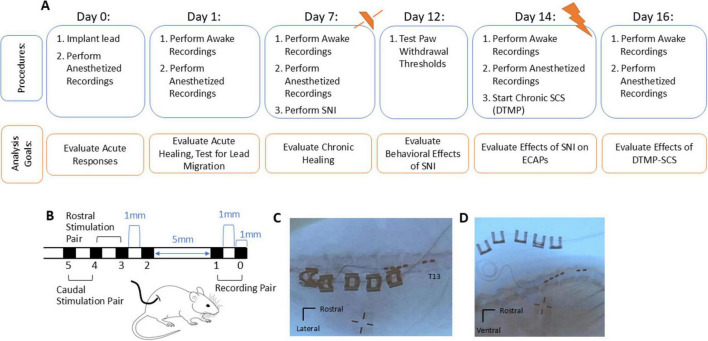 Figure 1
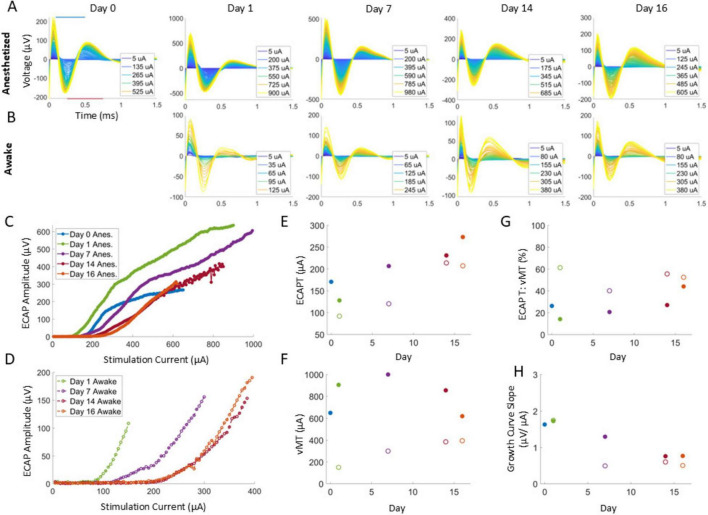 Figure 2
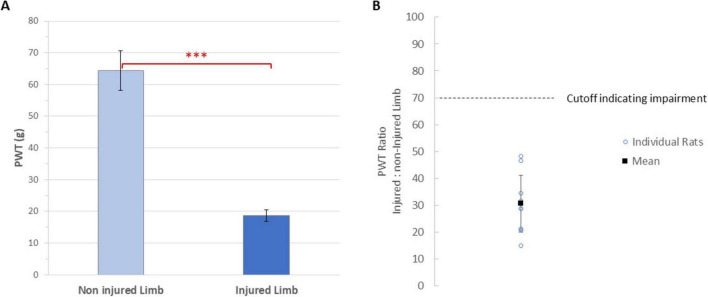 Figure 3
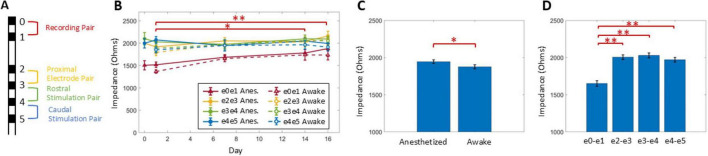 Figure 4
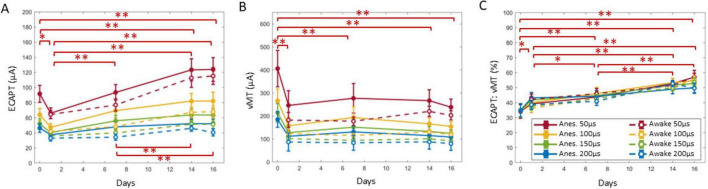 Figure 5
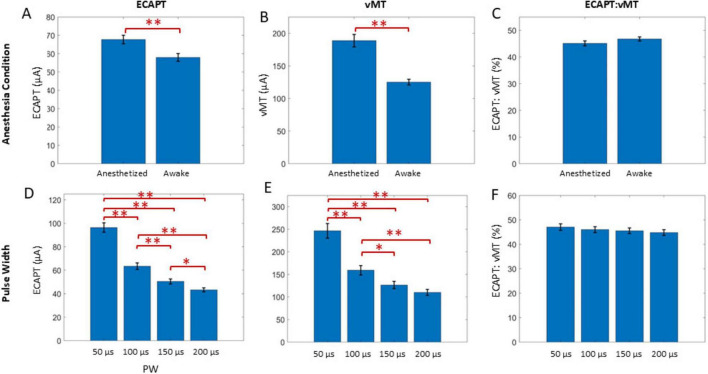 Figure 6
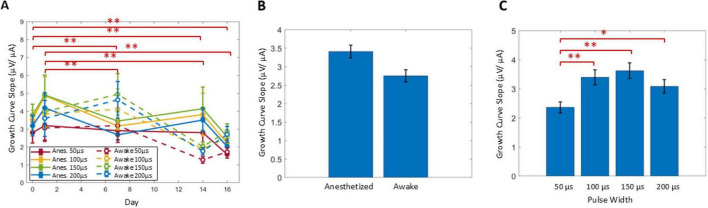 Figure 7
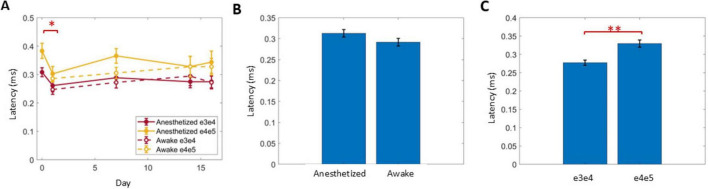 Figure 8
Peer Reviews
No public reviews on file for this paper yet. If you reviewed it on a platform where reviews are public (OpenReview, ICLR, NeurIPS, ICML), you can paste yours below so the community can read it here.
Videos
No videos yet. Explain this paper in a talk, walkthrough, or lecture? Add one.
Taxonomy
TopicsPain Mechanisms and Treatments · Pain Management and Treatment · Musculoskeletal pain and rehabilitation