A Hidden Cause of Chest Pain in Adolescence: First Rib Fracture Without Trauma
Koji Miura, Rica Tada

TL;DR
A 13-year-old boy experienced chest pain from a first rib fracture without obvious trauma, showing such injuries can occur from minor activities.
Contribution
Highlights first rib fractures as a potential cause of unexplained chest pain in adolescents without a history of trauma.
Findings
A first rib fracture was diagnosed in a 13-year-old after minor bicycle activity.
Physical examination showed localized tenderness without visible trauma.
Prompt imaging confirmed the fracture, emphasizing the need for careful evaluation of unexplained chest pain in adolescents.
Abstract
First rib fractures in adolescents are uncommon and typically result from high-impact trauma. However, they can also occur following low-energy mechanisms and may be easily overlooked in the absence of a clear traumatic event. We report the case of a 13-year-old boy with no prior medical history who presented with sudden-onset left-sided chest pain after pushing his bicycle while making a right turn. The physical examination revealed localized tenderness in the upper left chest, with no visible signs of trauma. A chest radiograph demonstrated a fracture of the left first rib. This case highlights the importance of considering first rib fractures in adolescents presenting with unexplained chest pain, even after seemingly benign activities. Prompt recognition and appropriate imaging can facilitate accurate diagnosis, avoid unnecessary testing, and alleviate anxiety for both patients and…
Genes, proteins, chemicals, diseases, species, mutations and cell lines named across the full text — each resolved to its canonical identifier and authoritative record.
Click any figure to enlarge with its caption.
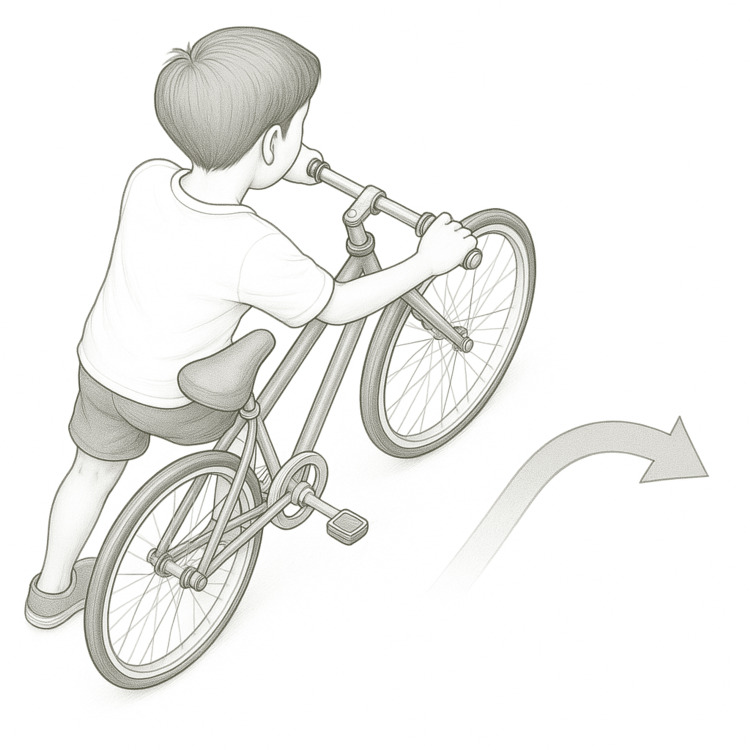 Figure 1
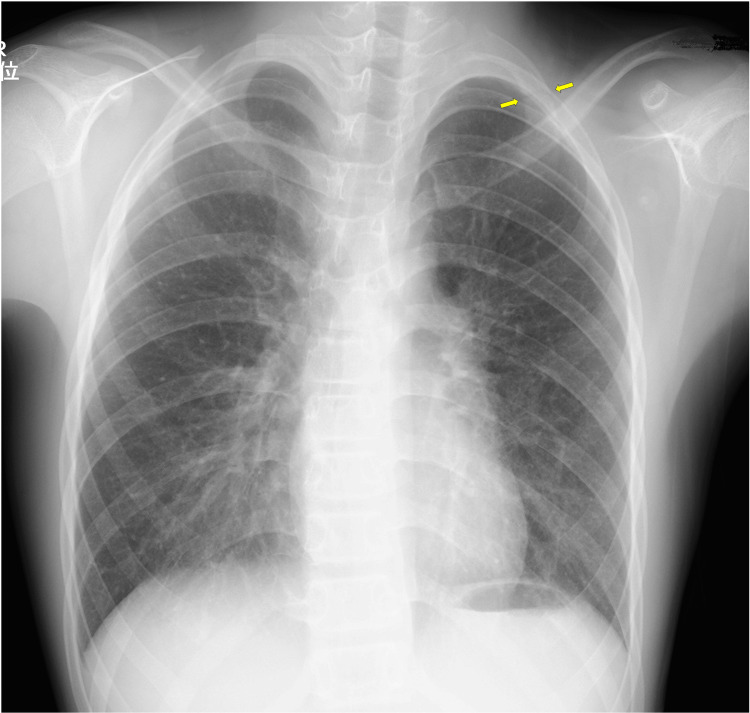 Figure 2
Peer Reviews
No public reviews on file for this paper yet. If you reviewed it on a platform where reviews are public (OpenReview, ICLR, NeurIPS, ICML), you can paste yours below so the community can read it here.
Videos
No videos yet. Explain this paper in a talk, walkthrough, or lecture? Add one.
Taxonomy
TopicsTrauma Management and Diagnosis · Traumatic Ocular and Foreign Body Injuries · Pleural and Pulmonary Diseases
Introduction
Fractures of the first rib in adolescents are rare and are typically associated with high-energy trauma, such as motor vehicle collisions, contact sports, or significant falls [1-3]. Due to the anatomical protection provided by the surrounding musculature and the clavicle, a considerable amount of force is generally required to produce such an injury. Nevertheless, several case reports have documented first rib fractures resulting from minor or non-traumatic activities, such as stretching or mild exertion [4-10].
In the emergency department, chest pain in adolescents is often perceived as non-urgent [11], and the absence of a clear traumatic mechanism may lead to misdiagnosis or delayed recognition of serious underlying injuries. This report describes an unusual case of a first rib fracture in a 13-year-old boy following a low-impact activity, underscoring the importance of considering this diagnosis even in the absence of trauma.
Case presentation
A previously healthy 13-year-old boy presented to the emergency department with sudden-onset, left-sided chest pain accompanied by a snapping sensation. The symptoms began while he was pushing his bicycle and making a right turn (Figure 1).
Proposed mechanism of injury.The boy is shown leaning forward while pushing the bicycle, with his left arm extended to turn the handlebar to the right.Image Credits: Koji Miura
He denied any history of trauma, falls, strenuous activity, or recent infections. He had no relevant past medical history and was not taking any medications.
On presentation, his vital signs were within normal limits: temperature 36.7°C, heart rate 84 beats per minute, respiratory rate 18 breaths per minute, blood pressure 112/68 mmHg, and oxygen saturation 99% on room air. The physical examination revealed localized tenderness in the upper left anterior chest wall, just beneath the medial clavicle. There were no visible signs of bruising, swelling, or deformity. Cardiac and pulmonary examinations were unremarkable.
Diagnostic assessment
In the absence of an external traumatic event, the initial differential diagnosis included spontaneous pneumothorax, musculoskeletal strain, costochondritis, and, less commonly, a stress fracture. Electrocardiography and pulse oximetry results were within normal limits. Comprehensive blood work, including serum calcium levels, was performed to evaluate for systemic causes, all of which were also within normal limits. A chest radiograph revealed a distinct fracture line through the left first rib (Figure 2), with no other osseous or soft tissue abnormalities noted.
Chest radiograph.A fracture line is visible in the left first rib (yellow arrows).
Treatment and outcome
The patient was diagnosed with a non-traumatic first rib fracture and was managed conservatively. Acetaminophen was prescribed for pain control, and he was advised to avoid heavy lifting, contact sports, and other strenuous physical activities for several weeks. At the one-month follow-up, the patient reported significant improvement in symptoms, with no residual pain or functional limitations, indicating satisfactory healing without complications.
Discussion
Because of their deep anatomical location and the protection provided by surrounding structures such as the clavicle, scapula, and dense musculature, first rib fractures in adolescents are typically associated with significant blunt trauma. These injuries most commonly result from high-impact accidents or substantial falls that transmit considerable force to the thoracic cage [1-3]. However, as this case illustrates, such fractures can also occur in the absence of direct trauma, following minimal exertion [4-10]. The proposed mechanism involves a sudden, forceful contraction of muscles attached to the first rib, namely, the scalene and serratus anterior, which may generate sufficient stress to cause a fracture, particularly in a developing adolescent skeleton [10]. In this instance, the patient developed symptoms while walking alongside his bicycle and making a right turn, an activity that involved a slightly forward-leaning posture with substantial extension of the left arm but without any impact or fall.
Adolescents occasionally present to the emergency department with chest pain as their primary complaint. These cases are often perceived as non-urgent, especially in the absence of trauma or abnormal vital signs, which can lead to underestimation of potentially significant injuries [11]. In rare cases, even routine physical activity can result in structural injuries such as rib fractures, which may be overlooked without a high index of suspicion. When undiagnosed, such injuries can lead to prolonged pain, anxiety, and delayed recovery.
Importantly, when a first rib fracture is suspected, a standard chest radiograph is often sufficient for diagnosis. In our case, imaging promptly revealed a clear fracture line, enabling conservative management and timely reassurance. Early recognition not only prevents unnecessary investigations, such as cardiac or pulmonary imaging, but also minimizes the risk of misdiagnosis and reduces distress for both the patient and their family.
Clinicians should maintain a high index of suspicion for first rib fractures in adolescents presenting with deep, localized chest pain beneath the medial clavicle, even in the absence of obvious trauma. Although rare, these fractures are readily identifiable with simple imaging and typically heal well with conservative treatment. Incorporating awareness of such atypical presentations into clinical practice can enhance diagnostic accuracy and improve patient outcomes.
Conclusions
First rib fractures can occur in adolescents even in the absence of major trauma. Clinicians should consider this diagnosis when evaluating unexplained chest pain, particularly in the area beneath the medial clavicle. Early recognition using basic imaging not only facilitates appropriate management but also provides reassurance to patients and families while avoiding unnecessary escalation of care.
The reference list from the paper itself. Each links out to its DOI / PubMed record.
- 1Traumatic first rib fracture: an indication of life-threatening injuries J Orthop Case Rep Dhaniwala NS Dhaniwala MN Shah P Khan KK Jadawala V Jadhav S 545712202210.13107/jocr.2022.v 12.i 04.2764 PMC 963437736381010 · doi ↗ · pubmed ↗
- 2Bilateral first rib fracture in a dive with life vest Rev Bras Ortop Sandri Pde A de Almeida JC Sandri JL 3023054520102702255710.1016/S 2255-4971(15)30373-6PMC 4799112 · doi ↗ · pubmed ↗
- 3Acute traumatic first-rib fracture in the contact athlete: a case report Am J Sports Med Colosimo AJ Byrne E Heidt RS Jr Carlonas RL Wyatt H 131013123220041526265810.1177/0363546503261352 · doi ↗ · pubmed ↗
- 4First-rib stress fracture in two adolescent swimmers: a case report J Sports Sci Low S Kern M Atanda A 126612703420162653973610.1080/02640414.2015.1108452 · doi ↗ · pubmed ↗
- 5Non-traumatic first rib fracture in university wrestler Int J Sports Exerc Med Allen TW 19372021
- 6Point break: atraumatic first rib fracture in a surfer Arch Dis Child Bradford J Raval K Jacoby J Andrews E 43510920243837377610.1136/archdischild-2023-326660 · doi ↗ · pubmed ↗
- 7Stress fracture of the first rib. A case report J Bone Joint Surg Am Lankenner PA Micheli LJ 159160671985 https://journals.lww.com/jbjsjournal/citation/1985/67010/stress_fracture_of_the_first_rib__a_case_report_.22.aspx 3968096 · pubmed ↗
- 8First-rib stress fracture in a high-school lacrosse player: a case report and short clinical review Sports Health Wild AT Begly JP Garzon-Muvdi J Desai P Mc Farland EG 547549320112301605710.1177/1941738111416189 PMC 3445230 · doi ↗ · pubmed ↗