A New High Penetrant Intronic Pathogenic Variant Related to Long QT Syndrome Type 2
Manuel Rodríguez-Junquera, Alberto Alén, Francisco González-Urbistondo, José Julián Rodríguez-Reguero, Bárbara Fernández, Rut Álvarez-Velasco, Daniel Vazquez-Coto, Lorena M. Vega-Prado, Pablo Avanzas, Eliecer Coto, Juan Gómez, Rebeca Lorca

TL;DR
A new genetic variant in the KCNH2 gene is linked to Long QT Syndrome type 2, increasing the risk of heart rhythm problems and sudden cardiac death.
Contribution
Identification of a novel high-penetrance splice site variant in KCNH2 associated with Long QT Syndrome type 2.
Findings
The KCNH2 c.77-2del variant was identified in 12 carriers and is predicted to disrupt splicing.
Segregation analysis supports the classification of the c.77-2del variant as pathogenic.
The study highlights the clinical significance of splice site variants in LQT2.
Abstract
Background/Objectives: Long QT Syndrome type 2 (LQT2) is a cardiac channelopathy linked to pathogenic variants in the KCNH2 gene, which encodes the Kv11.1 potassium channel, essential for cardiac repolarization. Variants affecting splice sites disrupt potassium ion flow, prolong QT interval, and increase the risk of arrhythmias and sudden cardiac death (SCD). Understanding genotype–phenotype correlations is key, given the variability of clinical manifestations even within families sharing the same variant. We aimed to evaluate new pathogenic variants by analyzing genotype–phenotype correlations in informative families. Methods: Genetic and clinical assessments were performed on index cases and family members carrying KCNH2 pathogenic variants, referred for genetic testing between 2010 and June 2023. The next-generation sequencing (NGS) of 210 cardiovascular-related genes was conducted.…
Genes, proteins, chemicals, diseases, species, mutations and cell lines named across the full text — each resolved to its canonical identifier and authoritative record.
Click any figure to enlarge with its caption.
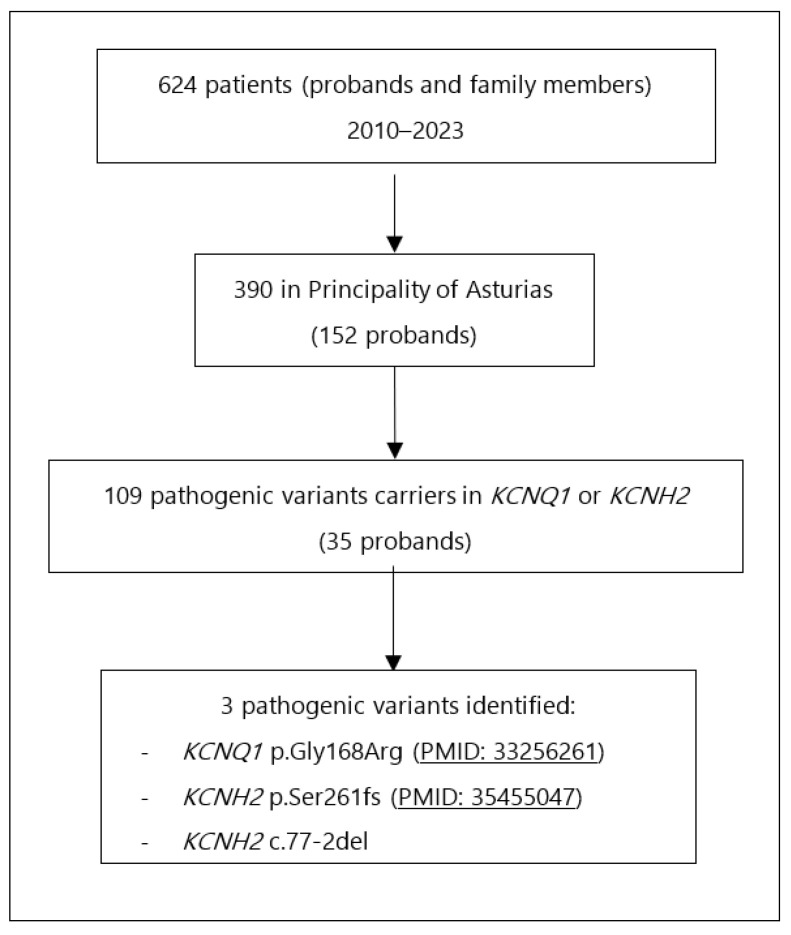 Figure 1
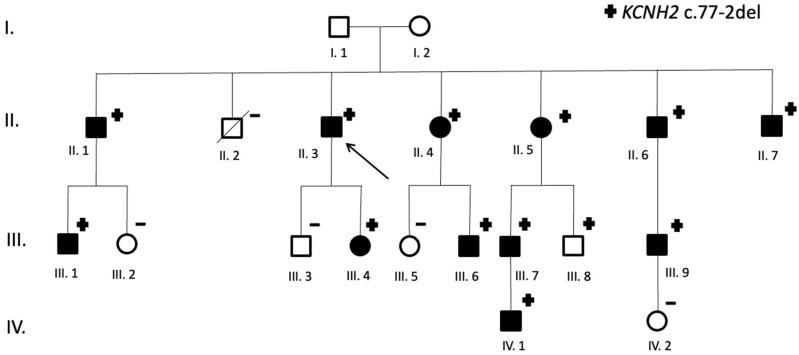 Figure 2
 Figure 3
Peer Reviews
No public reviews on file for this paper yet. If you reviewed it on a platform where reviews are public (OpenReview, ICLR, NeurIPS, ICML), you can paste yours below so the community can read it here.
Videos
No videos yet. Explain this paper in a talk, walkthrough, or lecture? Add one.
Taxonomy
TopicsCardiac electrophysiology and arrhythmias · Ion channel regulation and function · Cardiac pacing and defibrillation studies