Trifluoromethoxy- and Fluorobenzhydryl-Tuned Nickel Catalysts for Polyethylene Elastomers
Ming Liu, Min Sun, Yanping Ma, Yizhou Wang, Mingfeng Li, Wen-Hua Sun

TL;DR
This paper introduces nickel catalysts with fluorinated groups that produce high-performance polyethylene elastomers with tunable properties.
Contribution
The design of nickel catalysts with trifluoromethoxy and fluorobenzhydryl groups for enhanced ethylene polymerization and elastomer production.
Findings
Nickel complexes showed high catalytic activity (up to 22.0 × 10⁶ g PE mol⁻¹ (Ni) h⁻¹) for ethylene polymerization.
Produced polyethylenes exhibited excellent tensile strength (up to 20.7 MPa) and elastic recovery (up to 58%).
Polymer properties were tunable via temperature, solvent, and co-catalyst choice.
Abstract
A series of para-trifluoromethoxy-substituted and fluorobenzhydryl-functionalized 1,2-bis(imine)acenaphthene ligands: 1-[2,6-{(4-F-C6H4)2CH}2-4-F3COC6H2N]-2-(ArN)C2C10H6 (Ar = 2,6-Me2C6H3 L1, 2,6-Et2C6H3 L2, 2,6-iPr2C6H3 L3, 2,4,6-Me3C6H2 L4, 2,6-Et2-4-MeC6H2 L5), were synthesized and used to generate their corresponding nickel(II) bromide complexes (Ni1–Ni5). Elemental analysis, 19F NMR, and FT-IR spectroscopy were employed to characterize these five nickel complexes. Single-crystal X-ray diffraction of Ni2 and Ni4 confirmed distorted tetrahedral geometries. Upon activation with either EtAlCl2 (ethylaluminum dichloride) or EASC (ethyl aluminum sesquichloride), these complexes showed exceptional high activities (up to 22.0 × 10⁶ g PE mol−1 (Ni) h−1) and remarkable thermal stability (4.82 × 10⁶ g PE mol−1(Ni) h−1 at 80 °C) towards ethylene polymerization. The resulting polyethylenes are…
Genes, proteins, chemicals, diseases, species, mutations and cell lines named across the full text — each resolved to its canonical identifier and authoritative record.
Click any figure to enlarge with its caption.
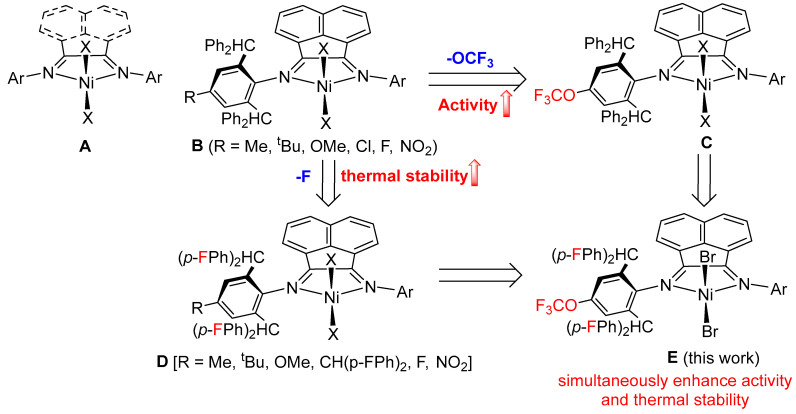 Figure 1
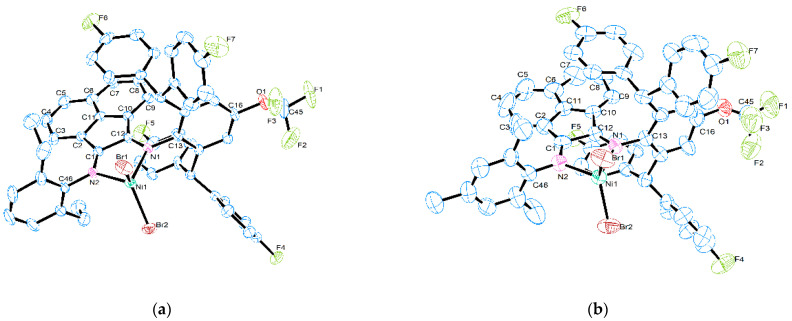 Figure 2
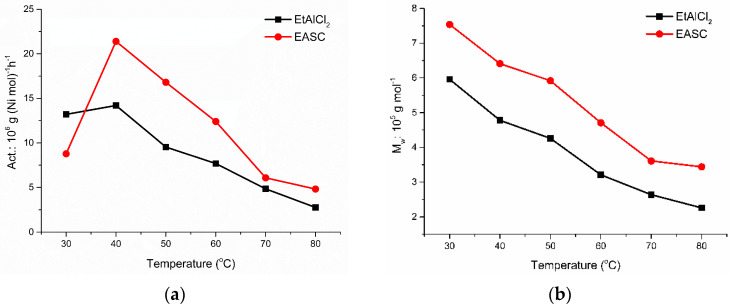 Figure 3
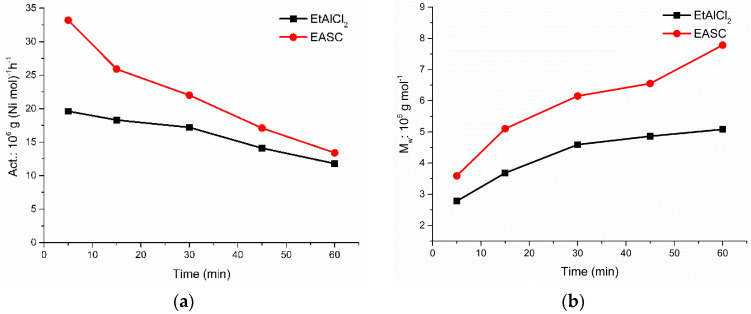 Figure 4
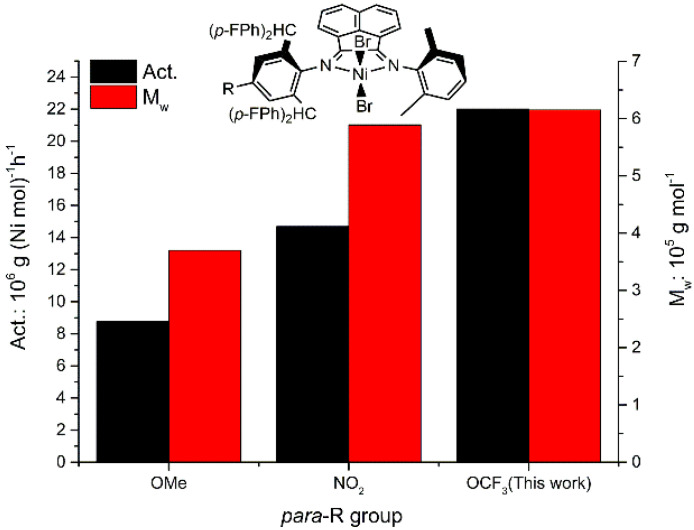 Figure 5
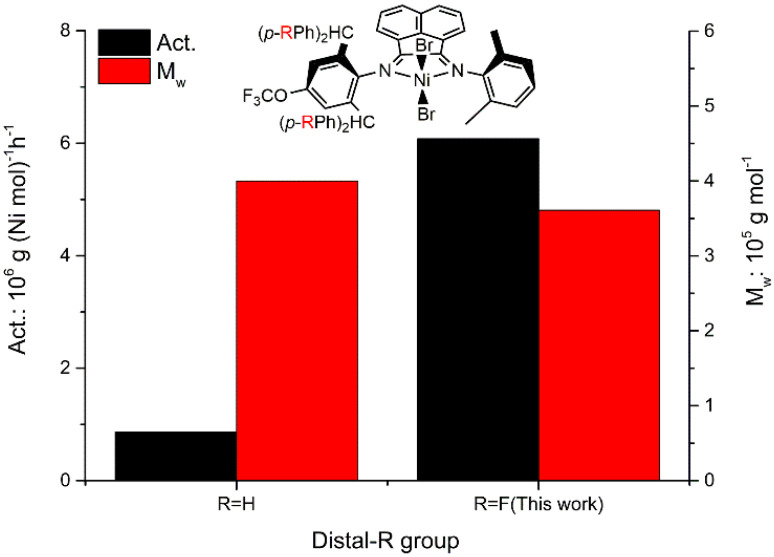 Figure 6
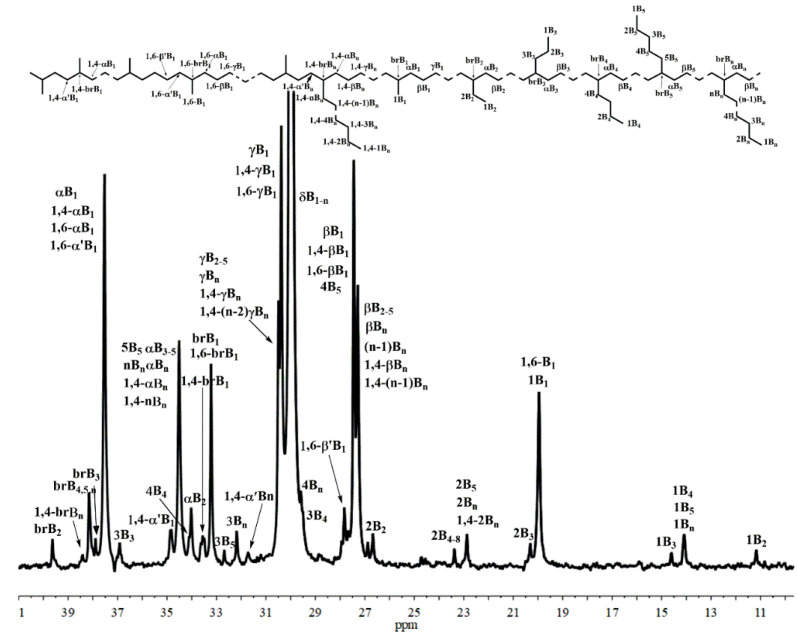 Figure 7
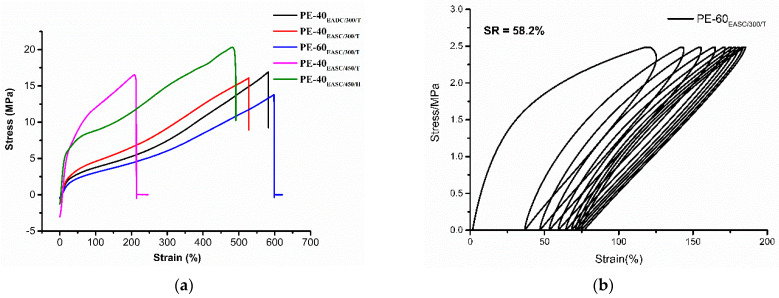 Figure 8
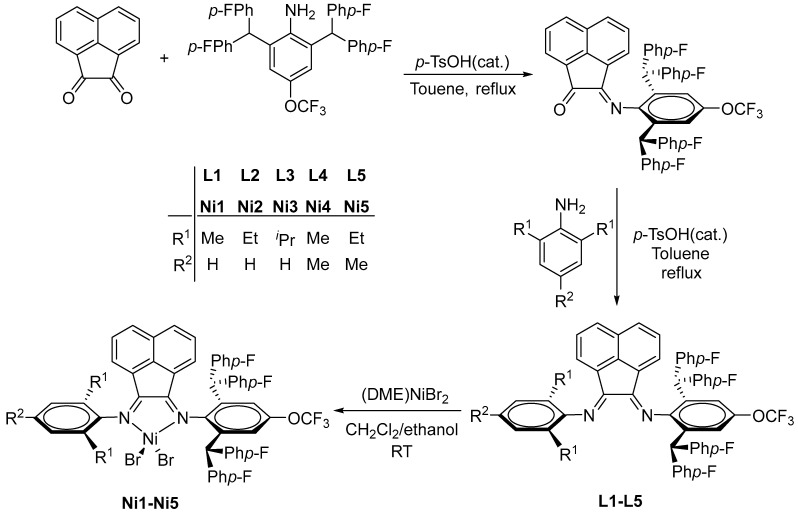 Figure 9
Peer Reviews
No public reviews on file for this paper yet. If you reviewed it on a platform where reviews are public (OpenReview, ICLR, NeurIPS, ICML), you can paste yours below so the community can read it here.
Videos
No videos yet. Explain this paper in a talk, walkthrough, or lecture? Add one.
Taxonomy
TopicsOrganometallic Complex Synthesis and Catalysis · Carbon dioxide utilization in catalysis · Catalytic Processes in Materials Science