Phytochemical Profile and Selective Anticancer Activity of Parietaria judaica L. Extracts
Izabela Bielecka, Dorota Natorska-Chomicka, Wioleta Dołomisiewicz, Arlindo Rodrigues Fortes, Katarzyna Dos Santos Szewczyk

TL;DR
This study explores Parietaria judaica as a natural source of anticancer compounds, showing that its ethanolic extract is effective against cancer cells while being less toxic to normal cells.
Contribution
The study identifies the ethanolic extract of Parietaria judaica as a selective anticancer agent with potential for further therapeutic development.
Findings
The ethanolic extract (PJ-E) showed strong cytotoxicity against HeLa cells with an IC50 of 11.82 µg/mL.
PJ-E had significantly higher IC50 (139.42 µg/mL) against noncancerous HEK-293 cells, indicating tumor selectivity.
The water extract (PJ-W) showed selective activity against lung cancer cells with minimal toxicity toward normal cells.
Abstract
Parietaria judaica L. (alfavaca-de-cobra) was investigated as a potential source of anticancer compounds. Leaf extracts obtained using solvents of different polarities were evaluated for their phytochemical profiles and cytotoxic activities against a panel of human cancer cell lines (glioblastoma LN-229, lung NCI-H1563, breast MDA-MB-231, liver HepG2, renal 769-P, cervical HeLa, and melanoma A-375) and a noncancerous HEK-293 cell line. LC-ESI-MS/MS analysis confirmed that the extracts are rich in polyphenols, including phenolic acids and flavonoids. Cytotoxicity was assessed via MTT and SRB assays, demonstrating dose-dependent antiproliferative effects. Among the extracts, the ethanolic fraction (PJ-E) exhibited the strongest cytotoxicity, with an IC50 of 11.82 µg/mL against HeLa cells, while displaying a significantly higher IC50 (139.42 µg/mL) against HEK-293, indicating tumor…
Genes, proteins, chemicals, diseases, species, mutations and cell lines named across the full text — each resolved to its canonical identifier and authoritative record.
Click any figure to enlarge with its caption.
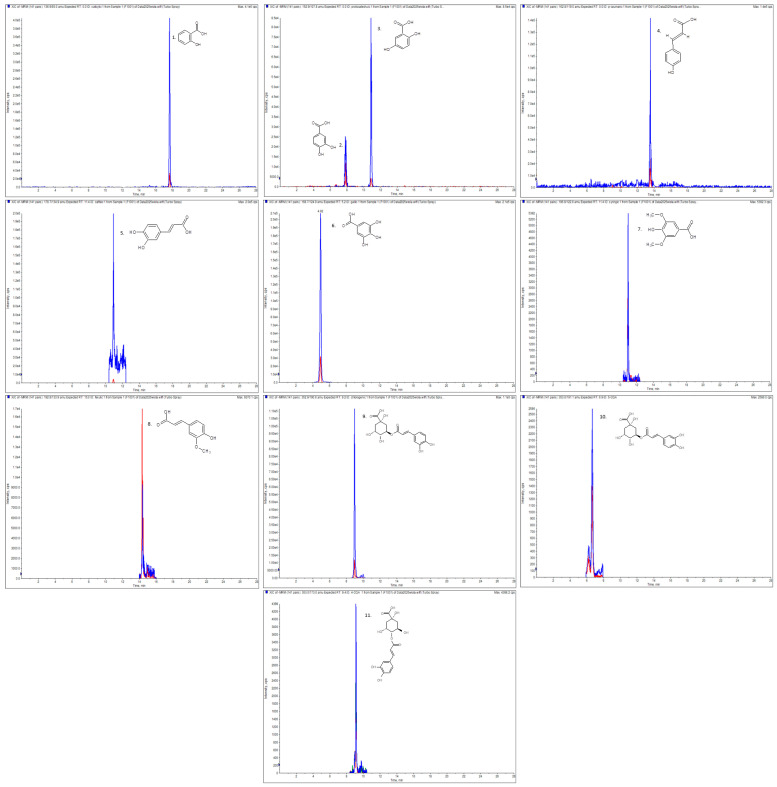 Figure 1
Peer Reviews
No public reviews on file for this paper yet. If you reviewed it on a platform where reviews are public (OpenReview, ICLR, NeurIPS, ICML), you can paste yours below so the community can read it here.
Videos
No videos yet. Explain this paper in a talk, walkthrough, or lecture? Add one.
Taxonomy
TopicsPhytochemicals and Antioxidant Activities · Natural product bioactivities and synthesis · Plant Toxicity and Pharmacological Properties