Composite Polymer Electrolytes with Tailored Ion-Conductive Networks for High-Performance Sodium-Ion Batteries
Caizhen Yang, Zongyou Li, Qiyao Yu, Jianguo Zhang

TL;DR
This paper introduces a new composite polymer electrolyte that improves the performance of sodium-ion batteries by enhancing ion conductivity and stability.
Contribution
The novel composite structure combines a perovskite material with a polymer matrix to achieve high ionic conductivity and electrochemical stability.
Findings
The GPE-Eh formulation achieved an ionic conductivity of 2.14 × 10⁻³ S·cm−1 and a sodium-ion transference number of 0.66.
GPE-Eh enabled stable sodium plating/stripping for over 600 hours with low polarization in symmetric cells.
In Na|GPE|NVP cells, GPE-Eh retained ~79% of its capacity after 500 cycles and recovered ~89% after high-rate cycling.
Abstract
Gel-polymer electrolytes offer a promising route toward safer and more stable sodium-ion batteries, but conventional polymer systems often suffer from low ionic conductivity and limited voltage stability. In this study, we developed composite GPEs by embedding methylammonium lead chloride (CH3NH3PbCl3, MPCl) into a UV-crosslinked ethoxylated trimethylolpropane triacrylate (ETPTA) matrix, with sodium alginate (SA) as an ionic conduction enhancer. Three types of membranes—GPE-P, GPE-El, and GPE-Eh—were synthesized and systematically compared. Among them, the high-MPCl formulation (GPE-Eh) exhibited the best performance, achieving a high ionic conductivity of 2.14 × 10⁻³ S·cm−1, a sodium-ion transference number of 0.66, and a wide electrochemical window of approximately 4.9 V vs. Na+/Na. In symmetric Na|GPE|Na cells, GPE-Eh enabled stable sodium plating/stripping for over 600 h with low…
Genes, proteins, chemicals, diseases, species, mutations and cell lines named across the full text — each resolved to its canonical identifier and authoritative record.
Click any figure to enlarge with its caption.
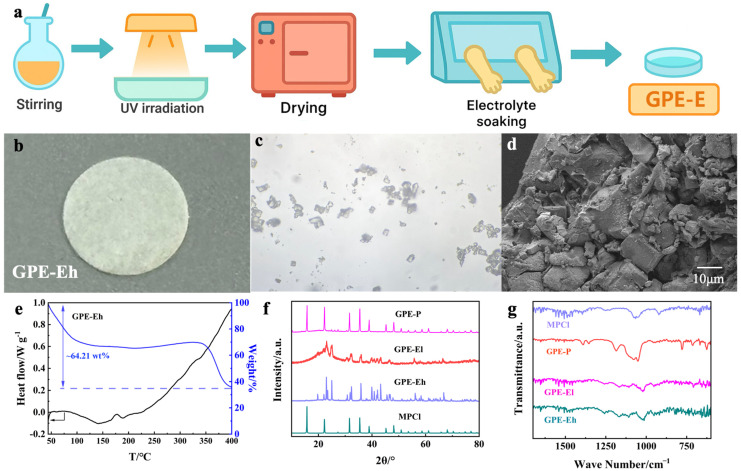 Figure 1
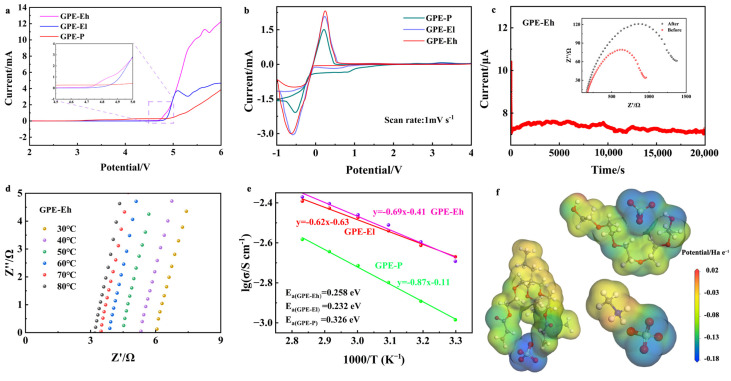 Figure 2
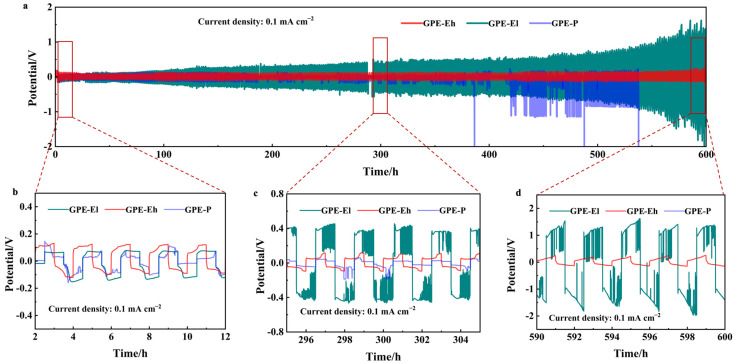 Figure 3
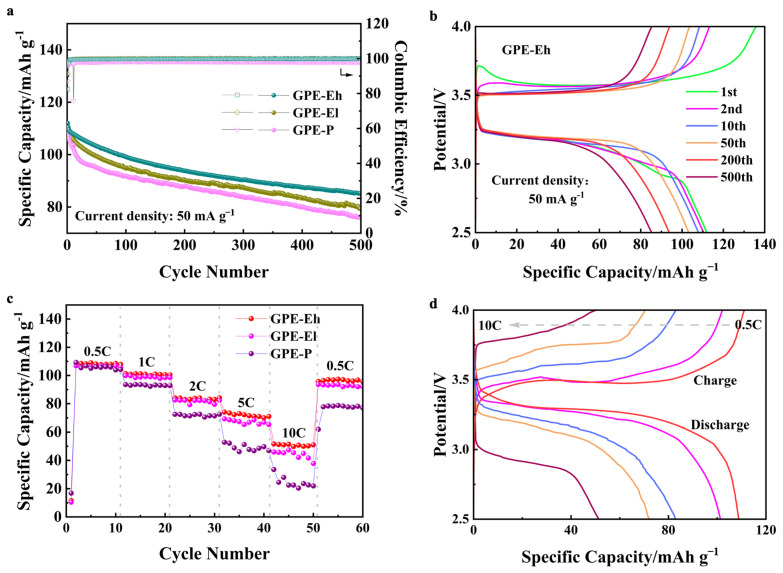 Figure 4
Peer Reviews
No public reviews on file for this paper yet. If you reviewed it on a platform where reviews are public (OpenReview, ICLR, NeurIPS, ICML), you can paste yours below so the community can read it here.
Videos
No videos yet. Explain this paper in a talk, walkthrough, or lecture? Add one.
Taxonomy
TopicsAdvancements in Battery Materials · Advanced Battery Materials and Technologies · Advanced battery technologies research