Photophysical Properties and Protein Binding Studies of Piperazine-Substituted Anthracene-BODIPY Dyads for Antimicrobial Photodynamic Therapy
Stephen O’Sullivan, Leila Tabrizi, Kaja Turzańska, Ian P. Clark, Deirdre Fitzgerald-Hughes, Mary T. Pryce

TL;DR
This paper describes the design and testing of two new BODIPY-anthracene compounds for antimicrobial photodynamic therapy, focusing on their light absorption, protein binding, and effectiveness against bacteria.
Contribution
The novel BODIPY-anthracene dyad BDP-2 introduces alkyne-piperazine substituents, offering improved photophysical and biocompatible properties for photodynamic therapy.
Findings
BDP-2 shows a red-shifted absorption and a long-lived triplet state, indicating efficient energy transfer.
BDP-2 binds strongly to bovine serum albumin and is more hemocompatible than BDP-1.
Both compounds show potent antimicrobial activity under 370 nm irradiation, though BDP-2 is less effective against Staphylococcus aureus.
Abstract
This work presents the synthesis, characterisation, photophysical properties, time-resolved spectroscopic behaviour, and biological evaluation of two structurally distinct heavy-atom-free BODIPY-anthracene dyads (BDP-1) and the newly designed 2,6-bis[1-(tert-butyl) 4-(prop-2-yn-1-yl) piperazine-1,4-dicarboxylate] BODIPY-anthracene (BDP-2), incorporating 2,6-alkynyl-piperazine substituents for potential application in antimicrobial photodynamic therapy. BDP-1 exhibits absorption and emission maxima at 507 nm and 516 nm, respectively, with a Stokes shift of 344 cm−1 in dichloromethane (DCM), characteristic of unsubstituted BODIPYs. In contrast, BDP-2 undergoes a red-shift in the absorption maximum to 552 nm (Stokes shift of 633 cm−1), which is attributed to the extended conjugation from the introduction of the alkyne groups. Time-resolved infrared spectroscopy confirmed efficient…
Genes, proteins, chemicals, diseases, species, mutations and cell lines named across the full text — each resolved to its canonical identifier and authoritative record.
Click any figure to enlarge with its caption.
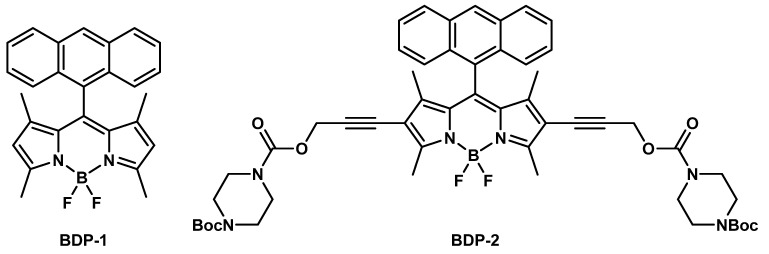 Figure 1
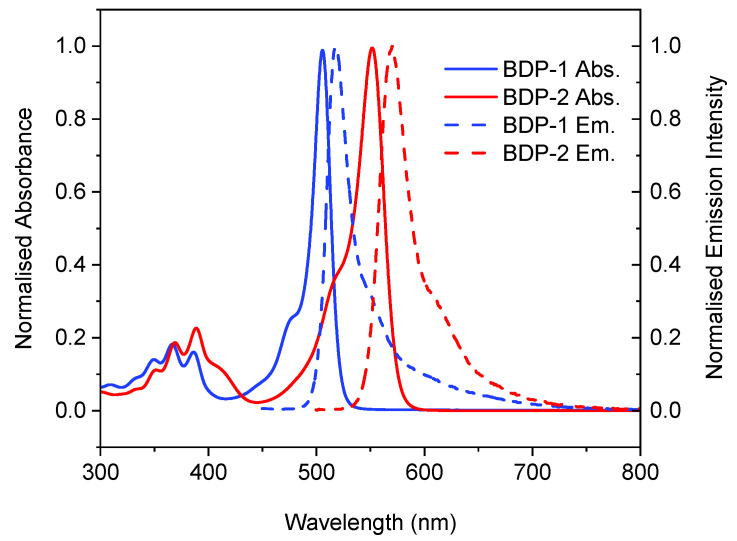 Figure 2
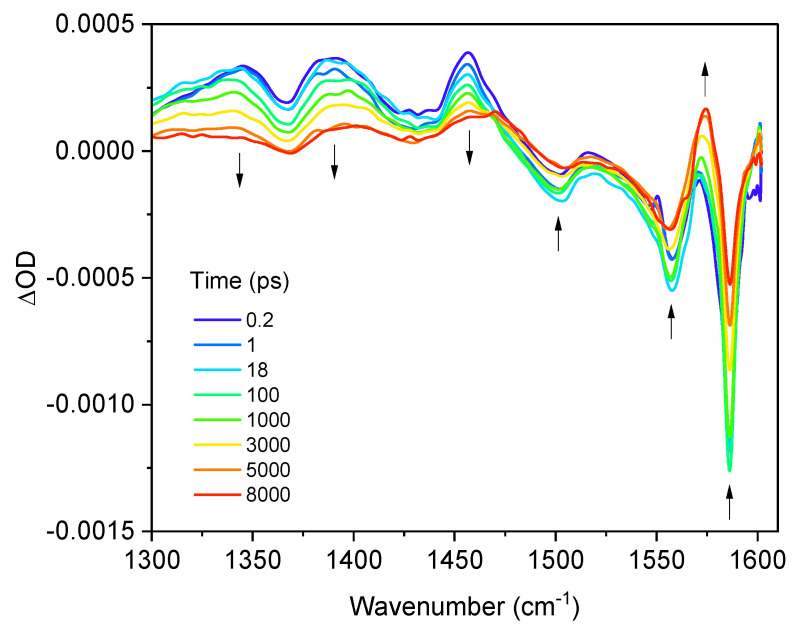 Figure 3
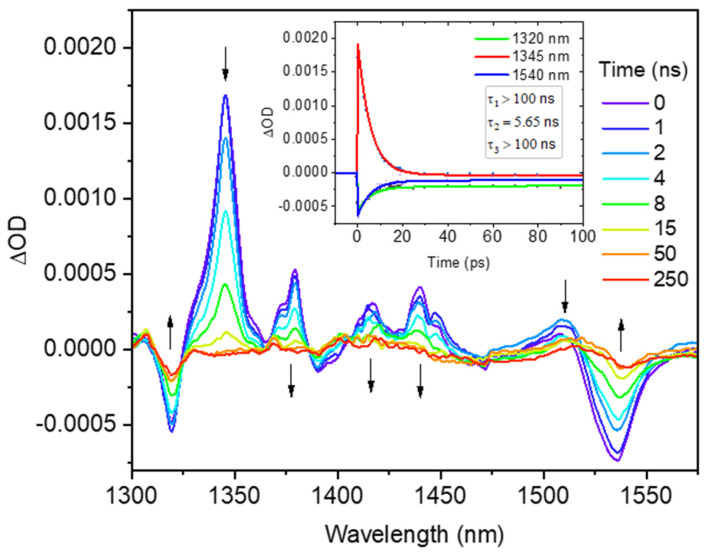 Figure 4
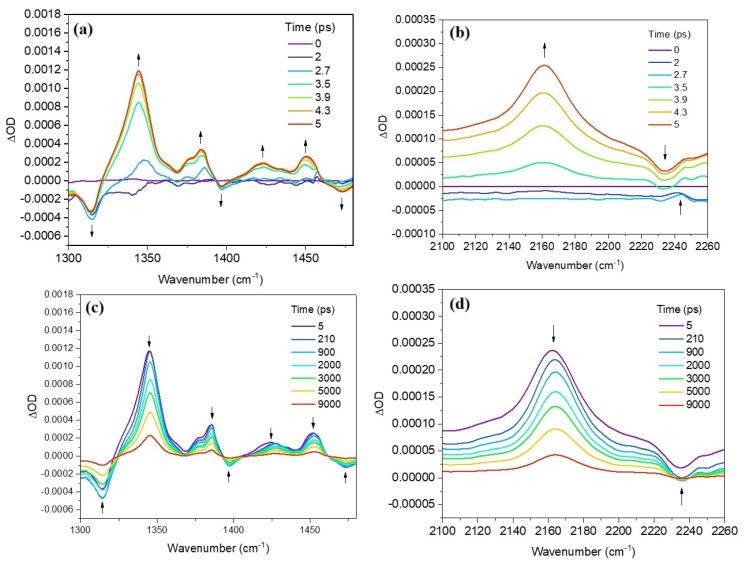 Figure 5
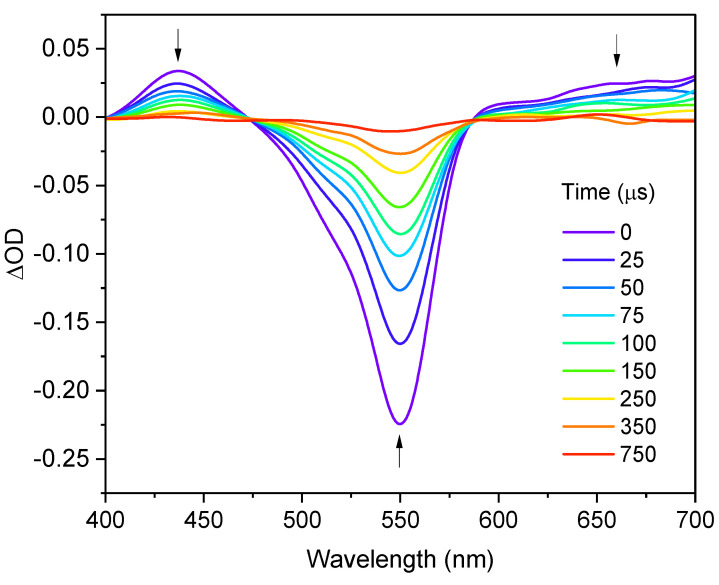 Figure 6
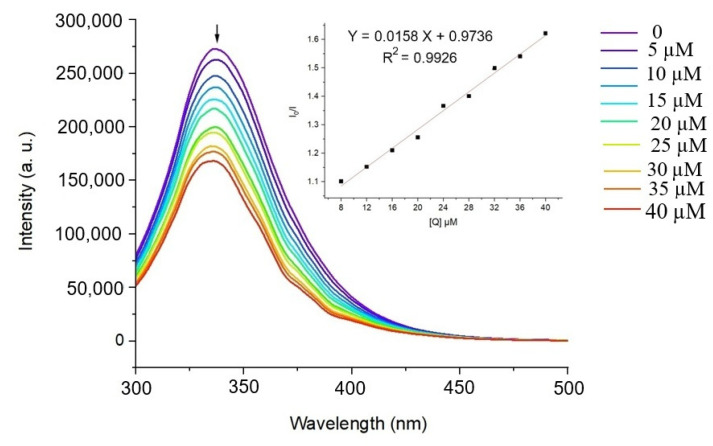 Figure 7
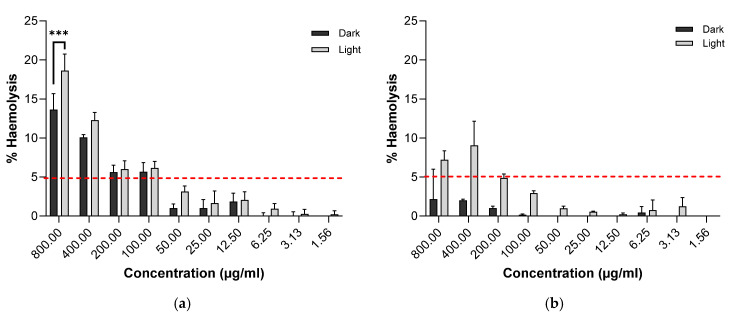 Figure 8
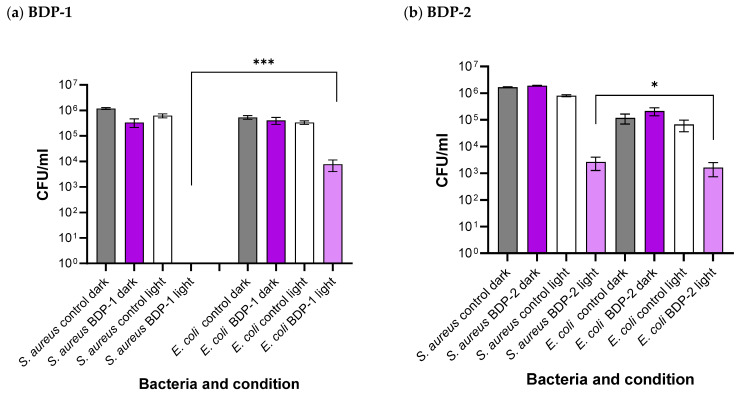 Figure 9
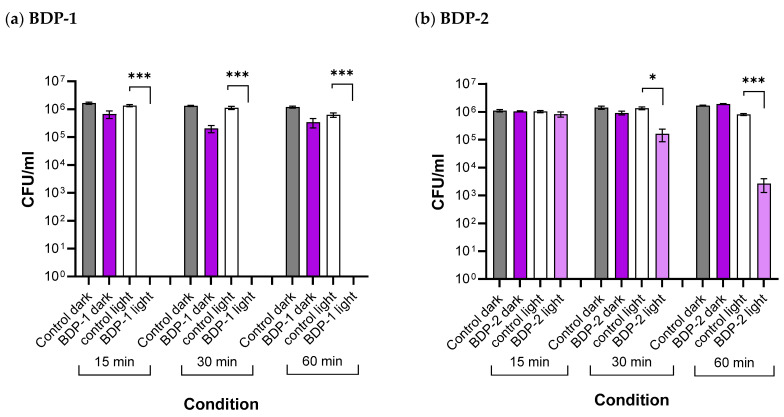 Figure 10
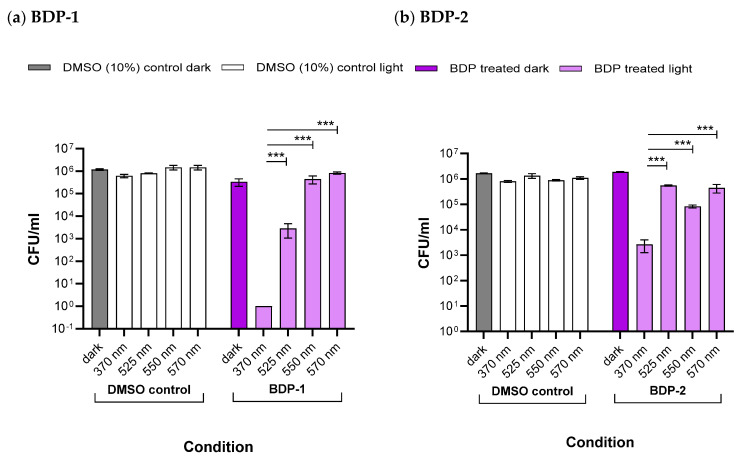 Figure 11
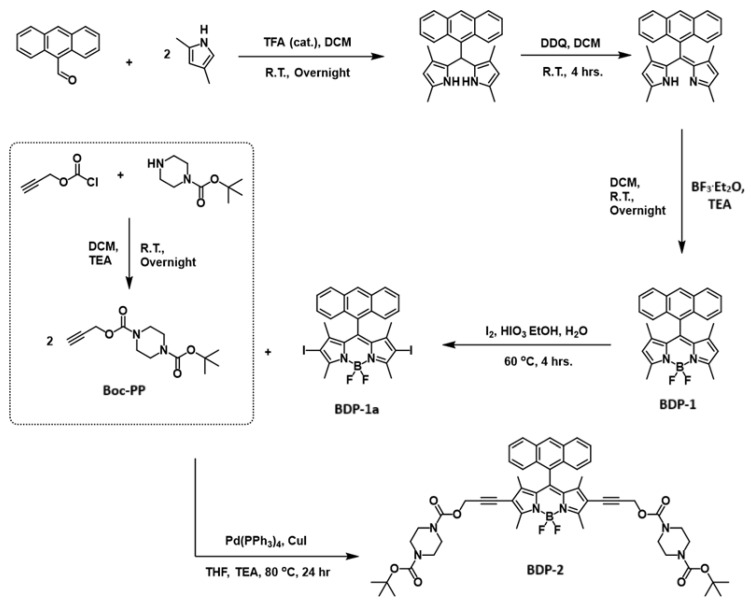 Figure 12
Peer Reviews
No public reviews on file for this paper yet. If you reviewed it on a platform where reviews are public (OpenReview, ICLR, NeurIPS, ICML), you can paste yours below so the community can read it here.
Videos
No videos yet. Explain this paper in a talk, walkthrough, or lecture? Add one.
Taxonomy
TopicsLuminescence and Fluorescent Materials · Nanoplatforms for cancer theranostics · Photodynamic Therapy Research Studies