APAV: An advanced pangenome analysis and visualization toolkit
Xiaorui Dong, Du Jiao, Hongzhang Xue, Shiyu Fan, Chaochun Wei

TL;DR
APAV is a new toolkit for detailed pangenome analysis that detects and visualizes genetic variations at a finer scale than traditional gene-level methods.
Contribution
APAV introduces element-level PAV analysis and interactive visualization for arbitrary genomic regions, improving detection of small but significant variations.
Findings
Element-level analysis in rice genomes identified over 20,000 distributed genes and more than 50,000 genetic elements.
Tumor genome analysis using APAV revealed three times as many phenotype-related genes compared to gene-level analysis.
APAV supports interactive reports and subsequent analyses like clustering and genome size estimation based on PAV profiles.
Abstract
Traditional pangenome analysis focuses on gene presence/absence variations (gene PAVs). However, the current methods for gene PAV analysis are insensitive to detect small but valuable mutations within gene regions, and they overlook variations in intergenic regions. Additionally, the visual inspection of PAVs is an important but time-consuming step for pangenome analysis and result interpretation. To address these issues, we present APAV, an advanced toolkit designed for comprehensive PAV analysis and visualization. It integrates gene element-level PAV analysis and provides PAV analysis for arbitrary given regions in a genome. The resulted PAV profile can be visualized and investigated interactively with reports in HTML format, enabling researchers to conveniently verify sequencing read depth, target region coverage, and intervals of absence for each PAV. Furthermore, APAV offers…
Genes, proteins, chemicals, diseases, species, mutations and cell lines named across the full text — each resolved to its canonical identifier and authoritative record.
Click any figure to enlarge with its caption.
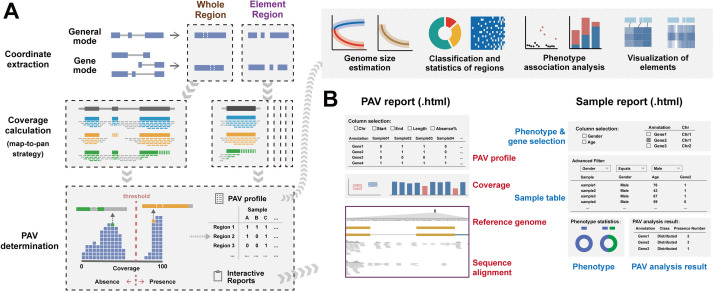 Figure 1
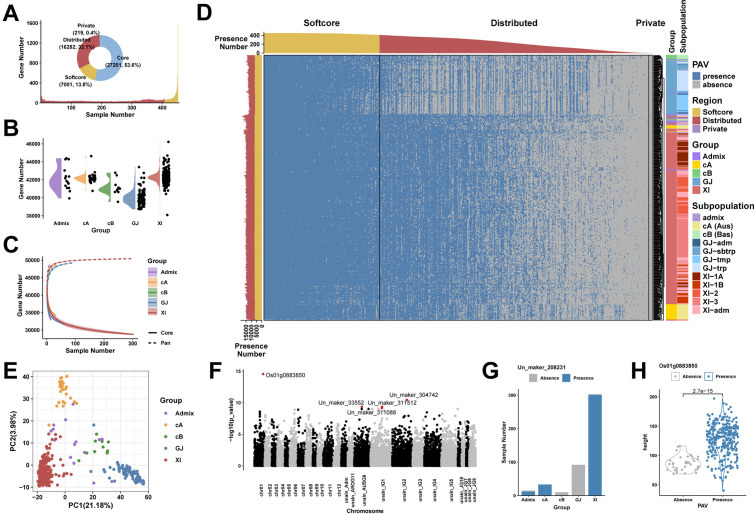 Figure 2
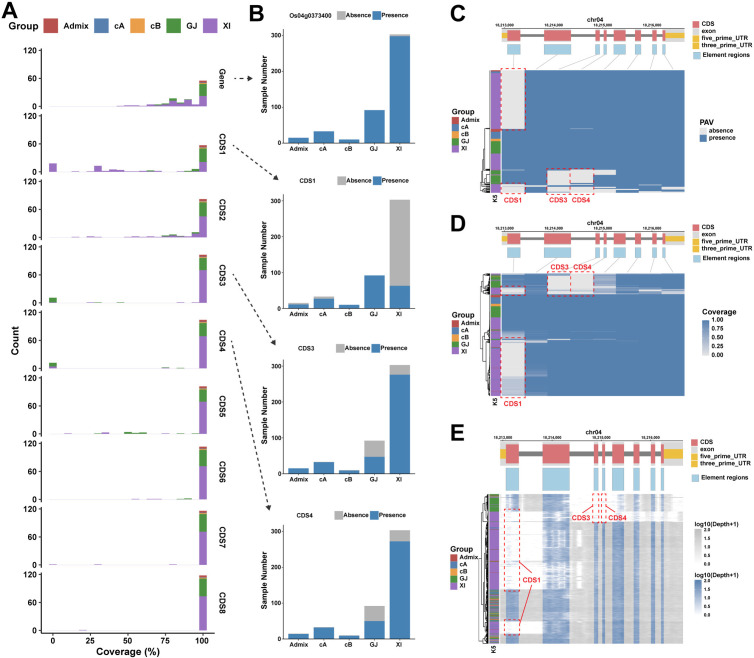 Figure 3
Peer Reviews
No public reviews on file for this paper yet. If you reviewed it on a platform where reviews are public (OpenReview, ICLR, NeurIPS, ICML), you can paste yours below so the community can read it here.
Videos
No videos yet. Explain this paper in a talk, walkthrough, or lecture? Add one.
Taxonomy
TopicsGenomics and Phylogenetic Studies · Gene expression and cancer classification · Chromosomal and Genetic Variations