SpoIIIL is a forespore factor required for efficient cell-cell signalling during Bacillus subtilis sporulation
Danae Morales Angeles, Kaitlyn Coleman, Chimezie Progress Odika, Chris L. B. Graham, Helena Chan, Michael Gilmore, Najwa Taib, Elda Bauda, Christine Moriscot, Benoit Gallet, Hannah Fisher, Per A. Bullough, Cécile Morlot, Darius Köster, Simonetta Gribaldo, Felipe Cava

TL;DR
This study shows that SpoIIIL is a forespore factor involved in cell-cell signaling during spore formation in Bacillus subtilis, not part of the A-Q complex.
Contribution
SpoIIIL is redefined as a forespore-specific signaling factor, not an A-Q complex component, and its role in σK activation is revealed.
Findings
SpoIIIL is required for efficient cell-cell signaling leading to late mother cell transcription.
SpoIIIL contributes to the activity of SpoIVB, a protease that processes pro-σK into active σK.
SpoIIIL is restricted to a subset of Bacillales species, indicating evolutionary specialization.
Abstract
During endospore formation, the mother cell and developing spore establish cell-cell signalling pathways that lead to compartment-specific transcription and key steps in morphogenesis. Endospore-forming bacteria also assemble a highly conserved essential membrane complex, called the A-Q complex, that physically connects these cells and may serve as a molecular conduit between them. While SpoIIIL was previously identified as a putative A-Q complex component in Bacillus subtilis, its exact role remains unclear. Here, we found that SpoIIIL does not function in the A-Q complex but instead acts as a forespore-specific factor required for efficient cell-cell signalling that leads to late mother cell transcription. Quantitative image analysis revealed that spoIIIL mutant spores do not exhibit hallmark phenotypes of A-Q complex mutants. Furthermore, unlike well-characterized A-Q complex…
Genes, proteins, chemicals, diseases, species, mutations and cell lines named across the full text — each resolved to its canonical identifier and authoritative record.
Click any figure to enlarge with its caption.
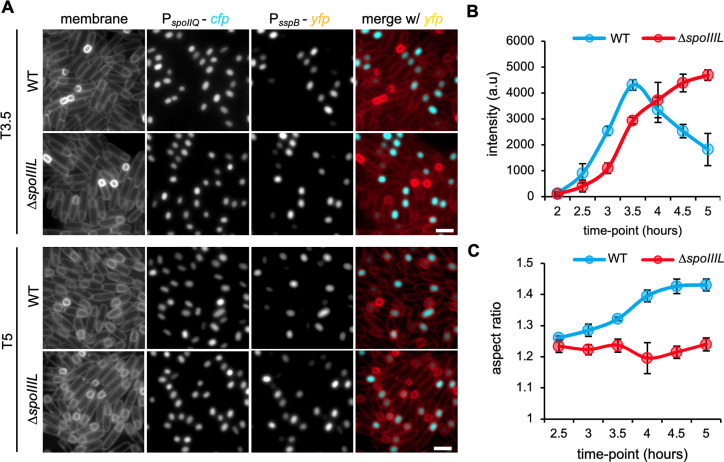 Figure 1
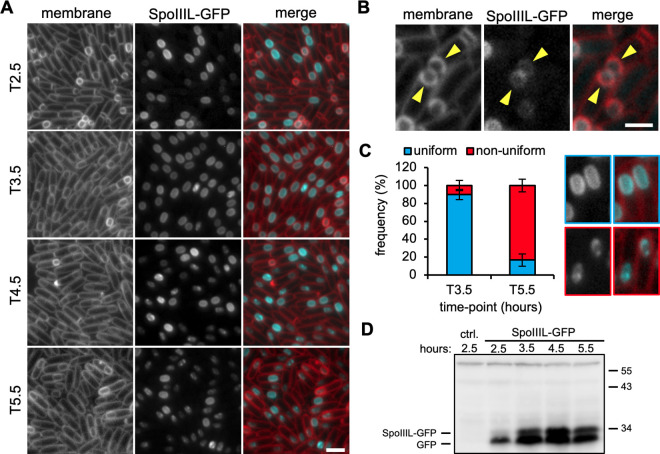 Figure 2
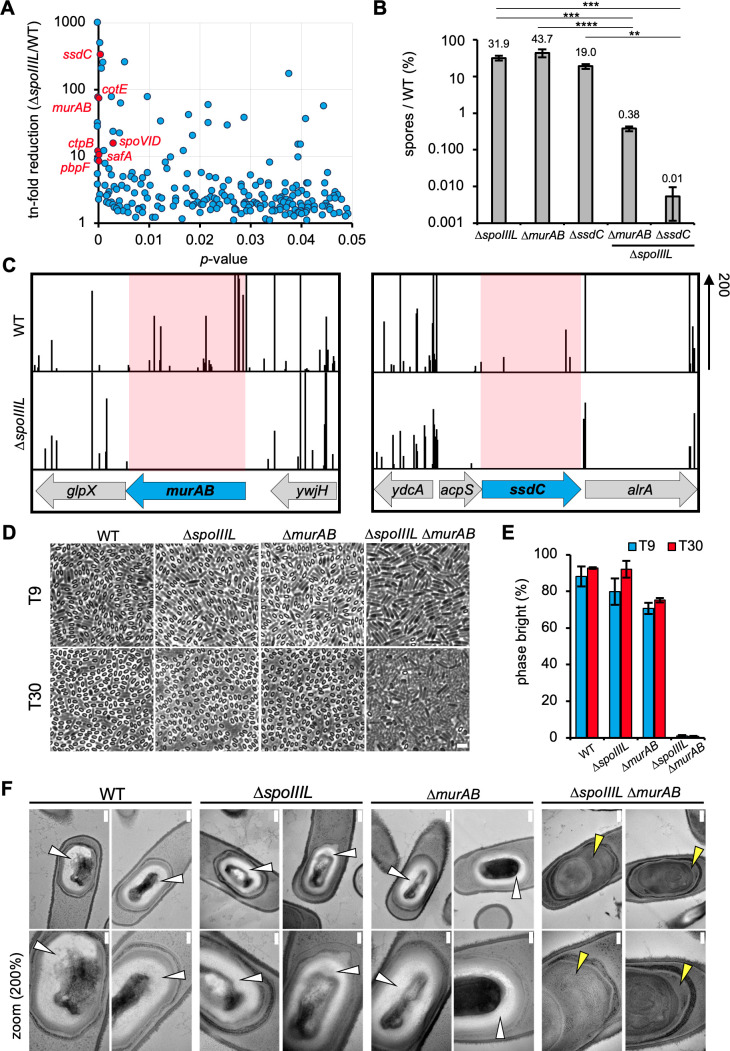 Figure 3
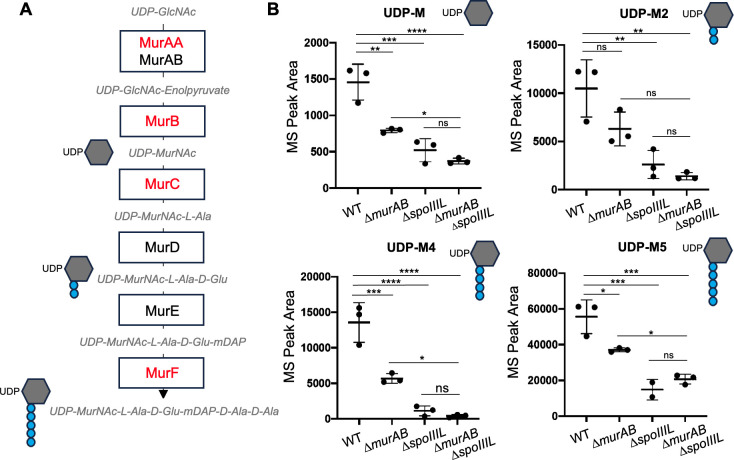 Figure 4
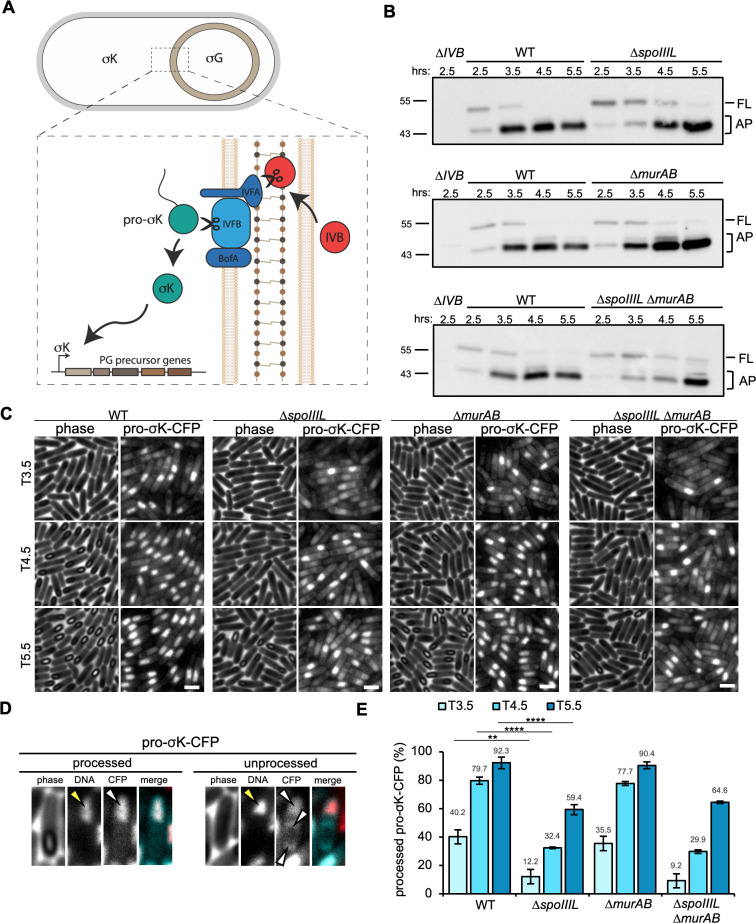 Figure 5
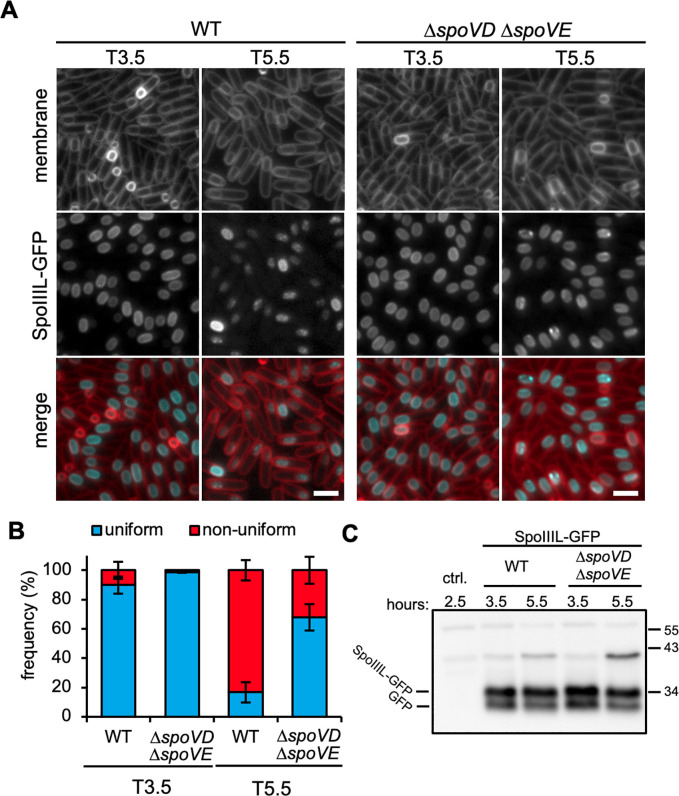 Figure 6
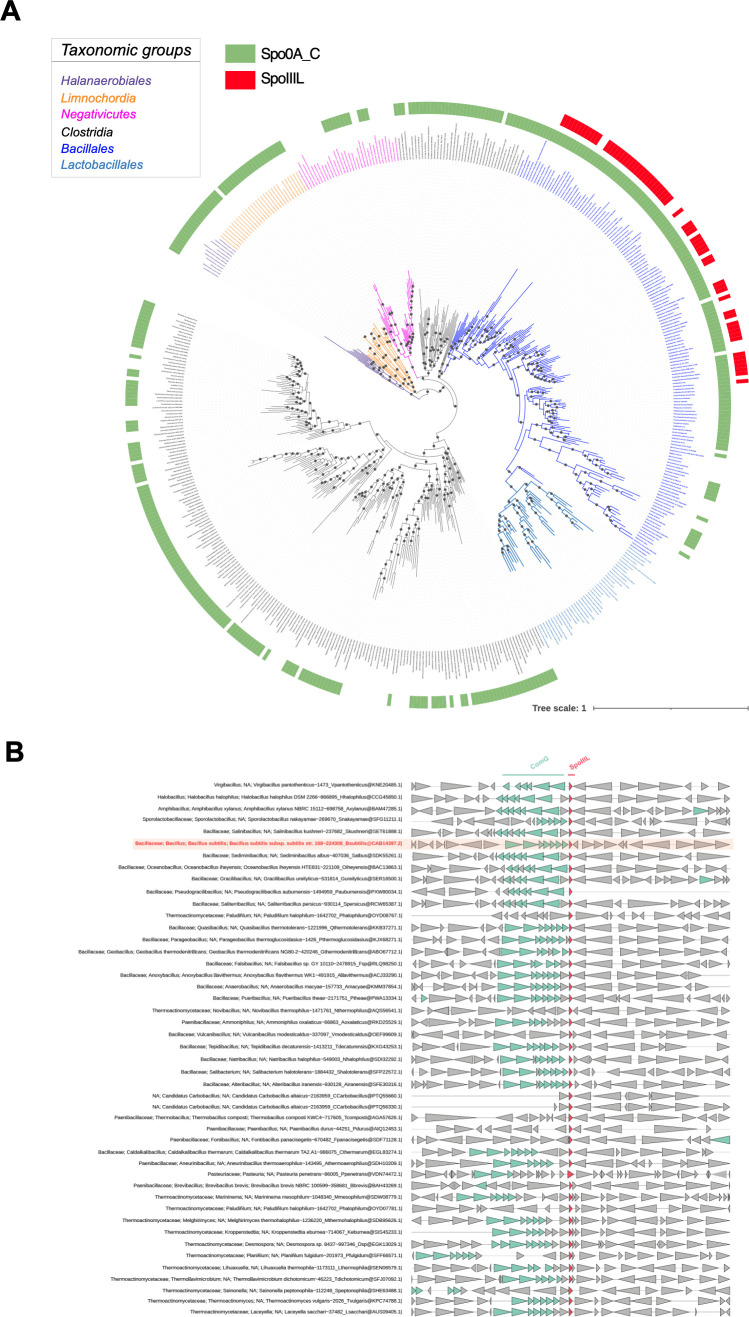 Figure 7
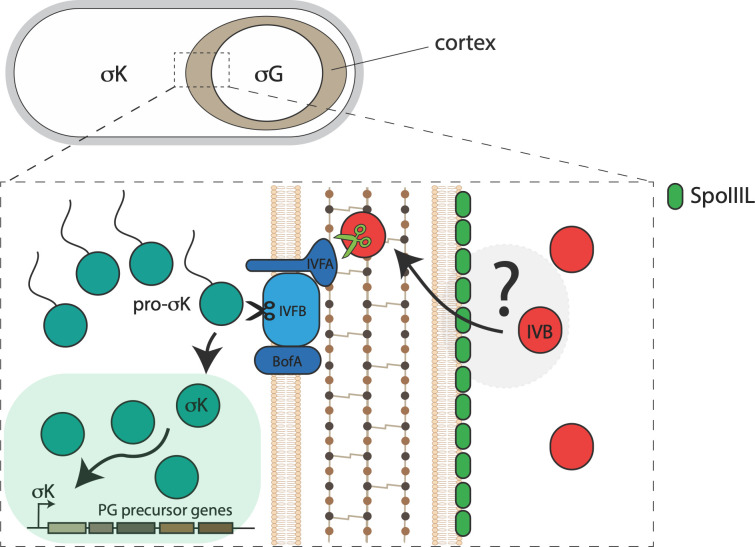 Figure 8
Peer Reviews
No public reviews on file for this paper yet. If you reviewed it on a platform where reviews are public (OpenReview, ICLR, NeurIPS, ICML), you can paste yours below so the community can read it here.
Videos
No videos yet. Explain this paper in a talk, walkthrough, or lecture? Add one.
Taxonomy
TopicsBacterial Genetics and Biotechnology · Bacteriophages and microbial interactions · Probiotics and Fermented Foods