Vibrational Spectroscopic and Quantum-Chemical Study of Indole–Ketone Hydrogen-Bonded Complexes
Branislav Jović, Nataša Negru, Dušan Dimić, Branko Kordić

TL;DR
This study combines spectroscopy and quantum chemistry to analyze hydrogen bonds between indole and various ketones, revealing how structural and electronic factors influence binding strength.
Contribution
The study introduces a multivariate regression model linking experimental binding constants to quantum-chemical descriptors for hydrogen-bonded complexes.
Findings
Cyclohexanone forms the strongest hydrogen-bonded complex with indole, while benzophenone forms the weakest.
Quantum-chemical calculations confirmed hydrogen bonds and additional weak interactions that stabilize the complexes.
Strong correlations (R² = 0.928 and 0.957) were found between experimental binding constants and theoretical descriptors like binding energy and electrophilicity index.
Abstract
This study investigates the structural and energetic properties of hydrogen-bonded complexes between indole and a range of aliphatic, cyclic, and aromatic ketones using a combined vibrational spectroscopic and quantum-chemical approach. FTIR measurements in CCl4 revealed redshifts in the N-H stretching vibration of indole upon complexation, with formation constants (Ka) ranging from 0.3 to 6.6 M−1. Cyclohexanone displayed the strongest binding, while benzophenone exhibited the weakest interaction. Quantum-chemical calculations, employing CREST and MMFF94 conformational sampling, along with M06-2X/6-311++G(d,p) optimizations, confirmed the formation of hydrogen bonds and additional weak interactions that govern the stability of the complex. QTAIM analysis revealed moderate closed-shell hydrogen bonds with electron densities at the bond critical points (ρ) ranging from 0.010 to 0.019 a.u.…
Genes, proteins, chemicals, diseases, species, mutations and cell lines named across the full text — each resolved to its canonical identifier and authoritative record.
Click any figure to enlarge with its caption.
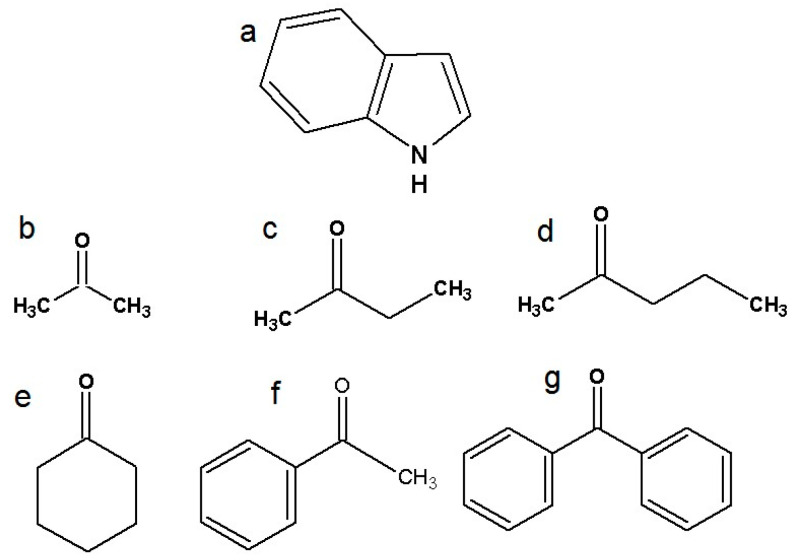 Figure 1
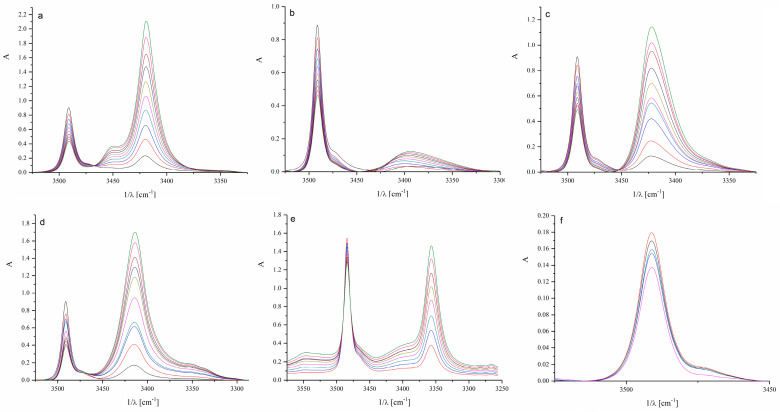 Figure 2
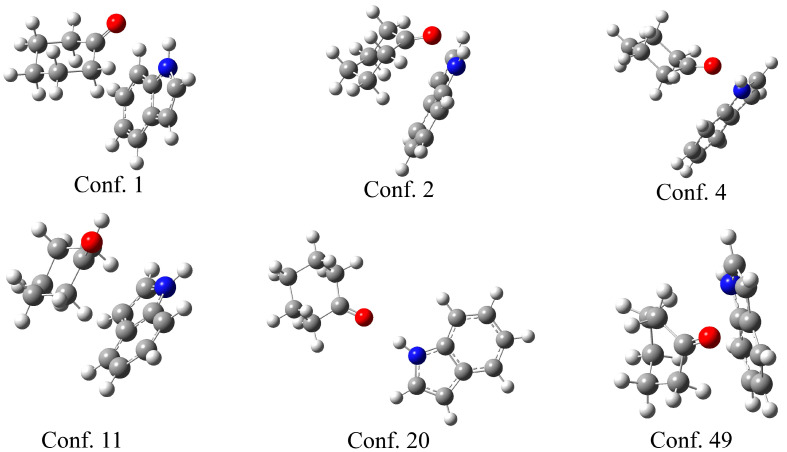 Figure 3
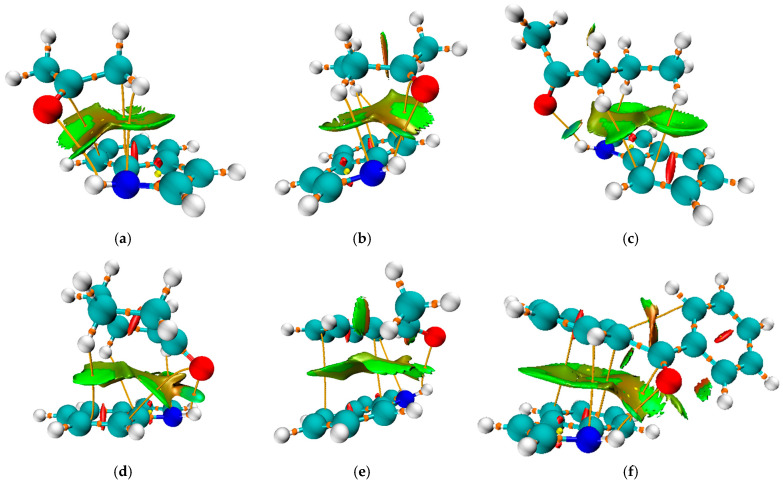 Figure 4
Peer Reviews
No public reviews on file for this paper yet. If you reviewed it on a platform where reviews are public (OpenReview, ICLR, NeurIPS, ICML), you can paste yours below so the community can read it here.
Videos
No videos yet. Explain this paper in a talk, walkthrough, or lecture? Add one.
Taxonomy
TopicsCrystallography and molecular interactions · Free Radicals and Antioxidants · Chemical Reaction Mechanisms