Mean Corpuscular Volume Is Correlated with Liver Fibrosis Defined by Noninvasive Blood Biochemical Indices in Individuals with Metabolic Disorders Aged 60 Years or Older
Yousuke Kaneko, Yutaka Kawano, Saki Kawata, Kensuke Mori, Minae Hosoki, Taiki Hori, Kohsuke Miyataka, Seijiro Tsuji, Tomoyo Hara, Hiroki Yamagami, Toshiki Otoda, Tomoyuki Yuasa, Akio Kuroda, Takeshi Harada, Hirokazu Miki, Shingen Nakamura, Itsuro Endo, Munehide Matsuhisa

TL;DR
Higher red blood cell volume is linked to liver fibrosis in older people with metabolic disorders, suggesting it could be a useful indicator.
Contribution
Identifies MCV as a potential biomarker for liver fibrosis in elderly individuals with metabolic disorders.
Findings
MCV was positively associated with liver fibrosis markers in individuals aged 60 or older.
The association between MCV and fibrosis indices was not observed in those under 60 years old.
MCV may serve as a simple, noninvasive tool to assess liver fibrosis risk in the elderly.
Abstract
Background: Metabolic dysfunction-associated steatotic liver disease (MASLD) causes progressive liver fibrosis. Although erythrocyte mean corpuscular volume (MCV) has been shown to have a positive correlation with all-cause mortality, the association between MCV and the development of MASLD has not been fully elucidated. Here, we examined the clinical significance of the association between MCV and MASLD. Methods: A cross-sectional study was carried out in 1009 Japanese individuals (including 186 individuals aged < 60 years and 823 individuals aged ≥ 60 years) with metabolic disorders. The relationships between MCV and noninvasive clinical markers of liver fibrosis, including fibrosis-4 (FIB-4) index, aspartate aminotransferase-to-platelet ratio index (APRI), and non-alcoholic fatty liver disease (NAFLD) fibrosis score (NFS), were statistically evaluated. Results: Using multiple and…
Genes, proteins, chemicals, diseases, species, mutations and cell lines named across the full text — each resolved to its canonical identifier and authoritative record.
Click any figure to enlarge with its caption.
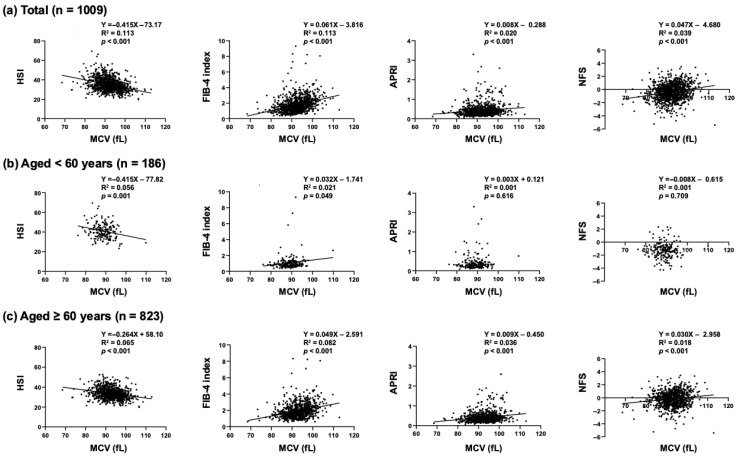 Figure 1
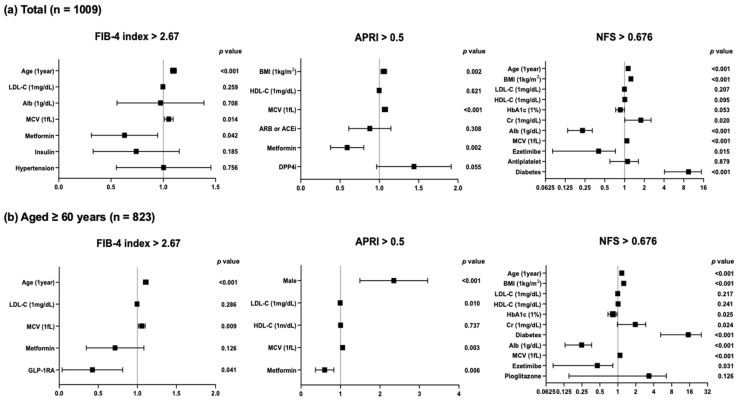 Figure 2
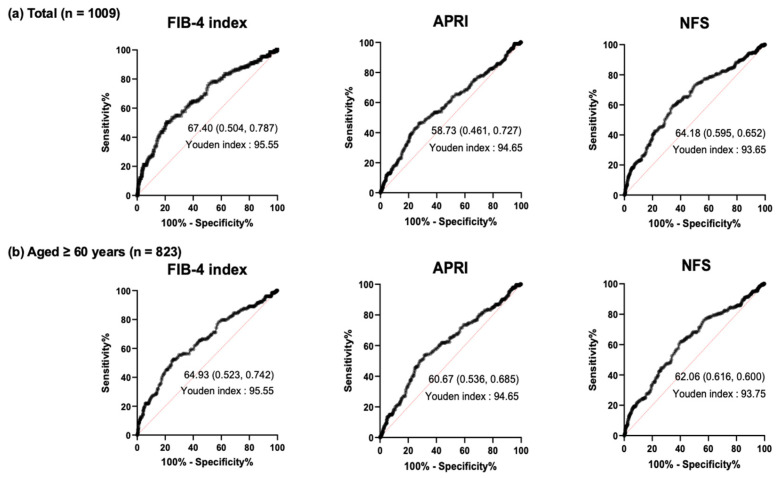 Figure 3
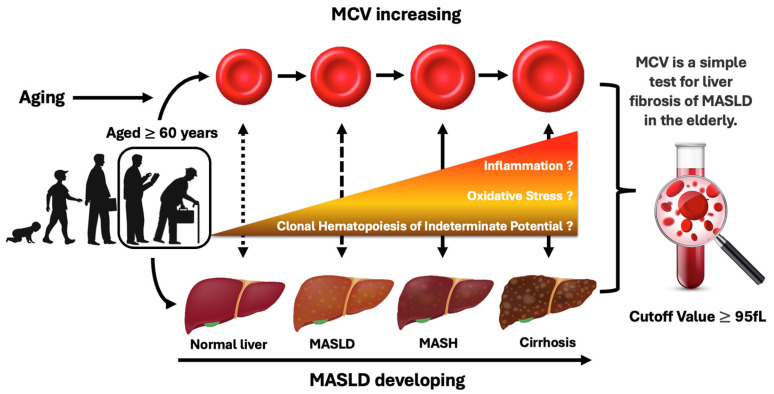 Figure 4
Peer Reviews
No public reviews on file for this paper yet. If you reviewed it on a platform where reviews are public (OpenReview, ICLR, NeurIPS, ICML), you can paste yours below so the community can read it here.
Videos
No videos yet. Explain this paper in a talk, walkthrough, or lecture? Add one.
Taxonomy
TopicsLiver Disease Diagnosis and Treatment · Liver Disease and Transplantation · Pancreatitis Pathology and Treatment