Humidity Sensing in Graphene-Trenched Silicon Junctions via Schottky Barrier Modulation
Akeel Qadir, Munir Ali, Afshan Khaliq, Shahid Karim, Umar Farooq, Hongsheng Xu, Yiting Yu

TL;DR
This paper introduces a new graphene-based sensor that detects humidity by changing the electrical properties of a silicon junction.
Contribution
The novel use of suspended and supported graphene regions in a silicon junction to modulate the Schottky barrier for humidity sensing.
Findings
Humidity affects the Schottky barrier height, ideality factor, and series resistance in the sensor.
Larger trench widths reduce graphene's density of states, influencing sensor performance.
The sensor works under both forward and reverse bias with high selectivity and low power consumption.
Abstract
In this study, we develop a graphene-trenched silicon Schottky junction for humidity sensing. This novel structure comprises suspended graphene bridging etched trenches on a silicon substrate, creating both free-standing and substrate-contacting regions of graphene that enhance water adsorption sensing. Suspended graphene is intrinsically insensitive to water adsorption, making it difficult for adsorbed H2O to effectively dope the graphene. In contrast, when graphene is supported on the silicon substrate, water molecules can effectively dope the graphene by modifying the silicon’s impurity bands and their hybridization with graphene. This humidity-induced doping leads to a significant modulation of the Schottky barrier at the graphene–silicon interface, which serves as the core sensing mechanism. We investigate the current–voltage (I–V) characteristics of these devices as a function of…
Genes, proteins, chemicals, diseases, species, mutations and cell lines named across the full text — each resolved to its canonical identifier and authoritative record.
Click any figure to enlarge with its caption.
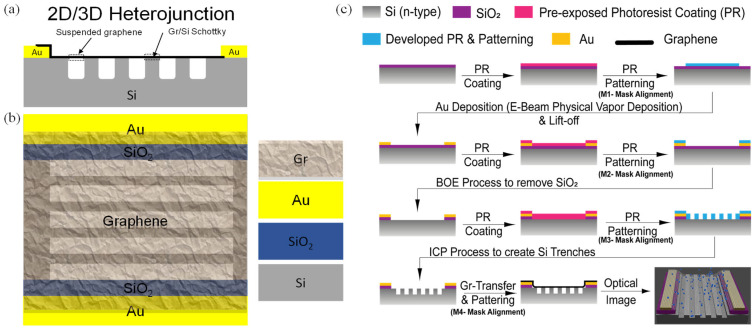 Figure 1
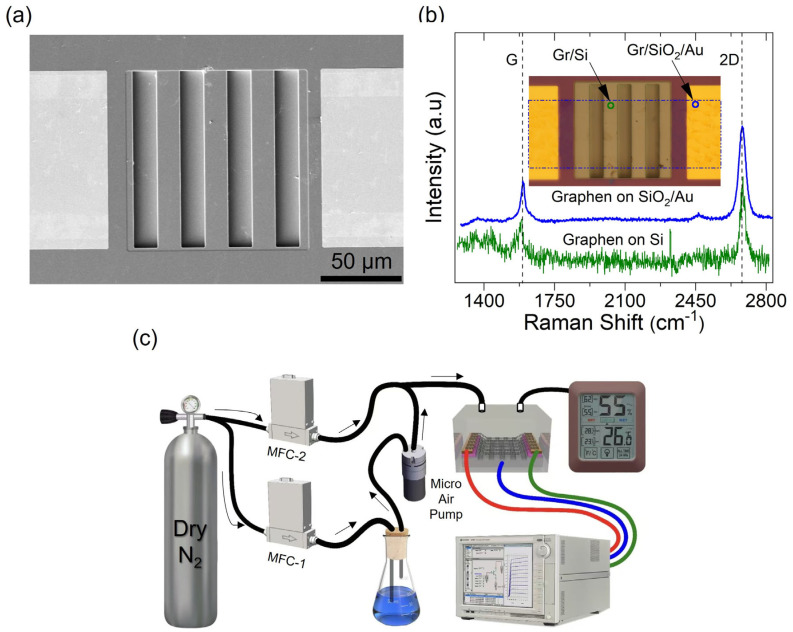 Figure 2
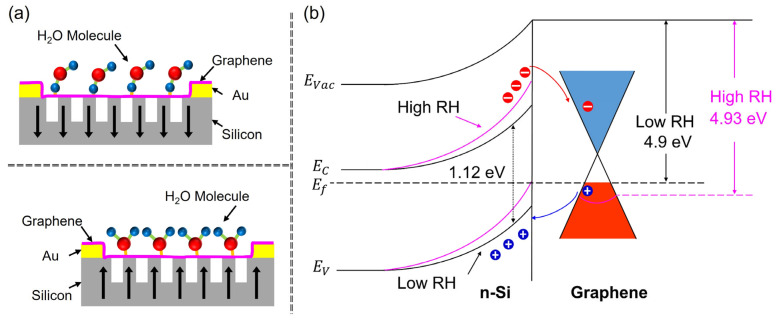 Figure 3
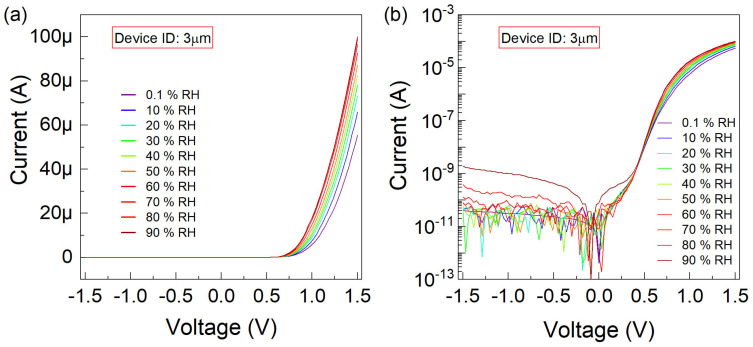 Figure 4
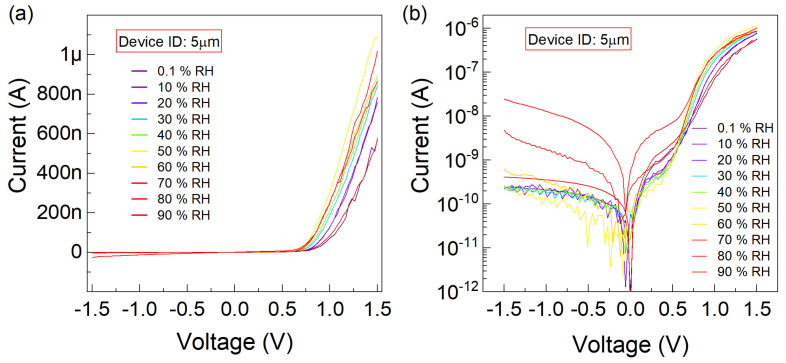 Figure 5
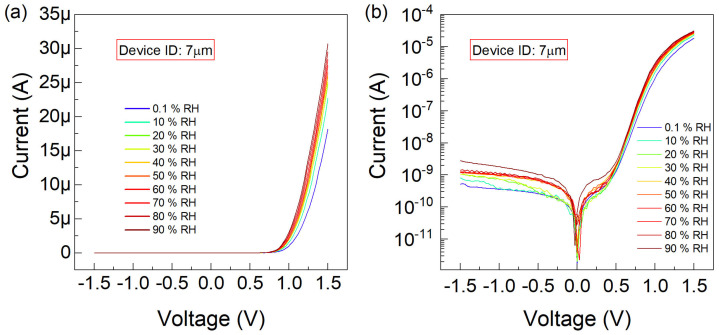 Figure 6
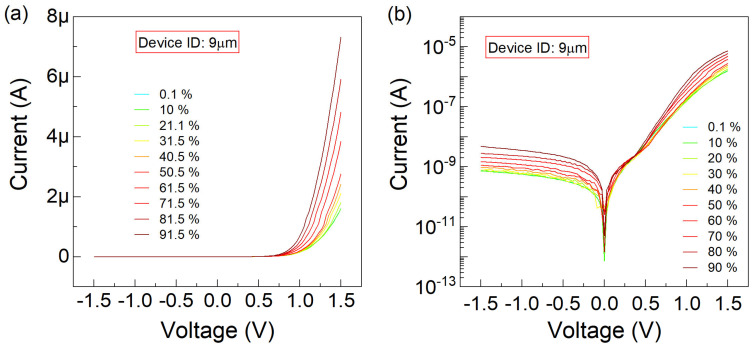 Figure 7
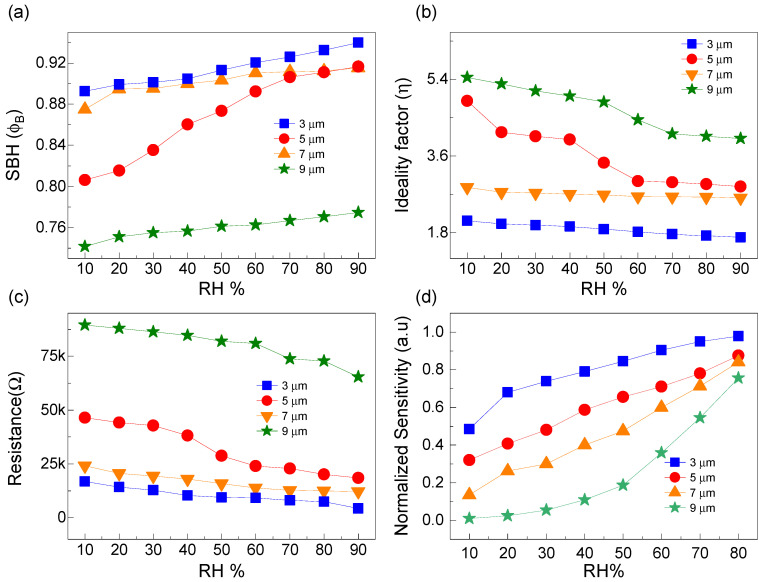 Figure 8
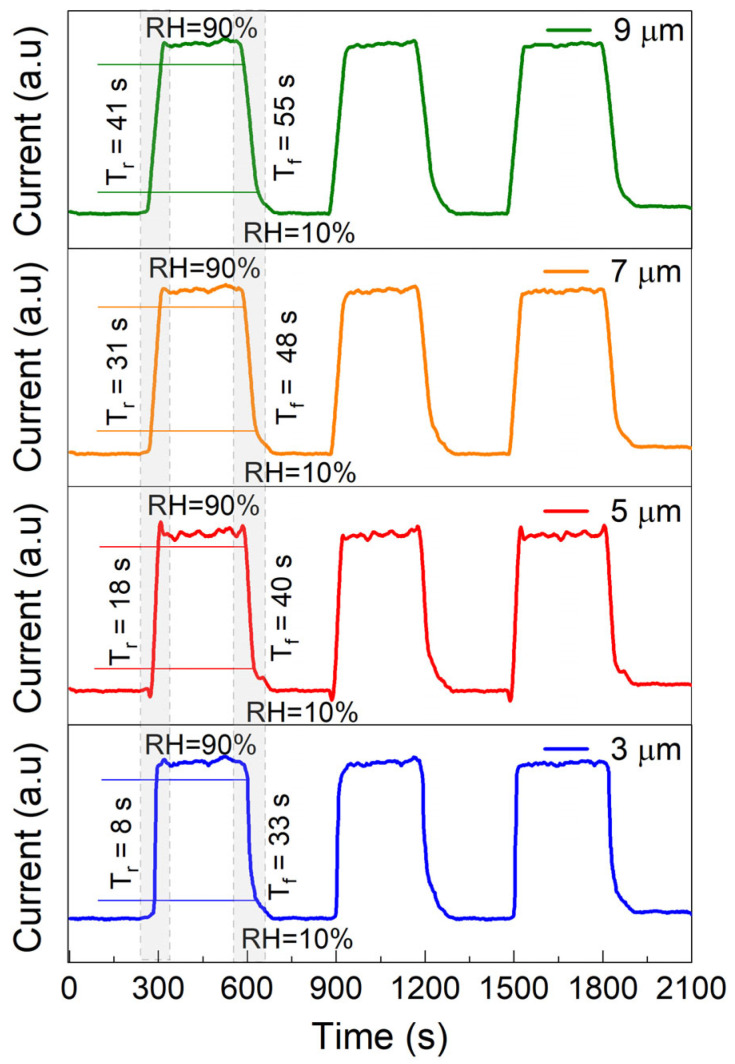 Figure 9
Peer Reviews
No public reviews on file for this paper yet. If you reviewed it on a platform where reviews are public (OpenReview, ICLR, NeurIPS, ICML), you can paste yours below so the community can read it here.
Videos
No videos yet. Explain this paper in a talk, walkthrough, or lecture? Add one.
Taxonomy
TopicsGraphene research and applications · Nanowire Synthesis and Applications · Advanced Memory and Neural Computing