CO2 Methanation over Ni Catalysts Supported on Pr-Doped CeO2 Nanostructures Synthesized via Hydrothermal and Co-Precipitation Methods
Anastasios I. Tsiotsias, Nikolaos D. Charisiou, Aasif A. Dabbawala, Aseel G. S. Hussien, Victor Sebastian, Steven J. Hinder, Mark A. Baker, Samuel Mao, Kyriaki Polychronopoulou, Maria A. Goula

TL;DR
This study compares different synthesis methods for Ni catalysts supported on Pr-doped CeO2 for CO2 methanation, finding that a co-precipitation method yields the most effective and stable catalyst.
Contribution
A co-precipitation method using NH3-based buffer produces a superior Ni/Pr-CeO2 catalyst for CO2 methanation due to its unique structural and surface properties.
Findings
The Ni/CP_NH3 catalyst achieves 75% CO2 conversion and 99% CH4 selectivity at 350 °C.
The catalyst exhibits high stability with minimal deactivation during operation.
Structured nanorod and nanocube supports contain residual Na, which inhibits catalytic performance.
Abstract
The synthesis method of the Pr-doped CeO2 catalyst support in Ni/Pr-CeO2 CO2 methanation catalysts is varied by changing the type/basicity of the precipitating solution and the hydrothermal treatment temperature. The use of highly basic NaOH as the precipitating agent and elevated hydrothermal treatment temperature (100 or 180 °C) leads to the formation of structured Pr-doped CeO2 nanorods and nanocubes, respectively, whereas the use of a mildly basic NH3-based buffer in the absence of hydrothermal treatment (i.e., co-precipitation) leads to an unstructured mesoporous morphology with medium-sized supported Ni nanoparticles. The latter catalyst (Ni/CP_NH3) displays a high surface area, high population of moderately strong basic sites, high oxygen vacancy population, and favorable Ni dispersion. These properties lead to a higher catalytic activity for CO2 methanation (75% CO2 conversion…
Genes, proteins, chemicals, diseases, species, mutations and cell lines named across the full text — each resolved to its canonical identifier and authoritative record.
Click any figure to enlarge with its caption.
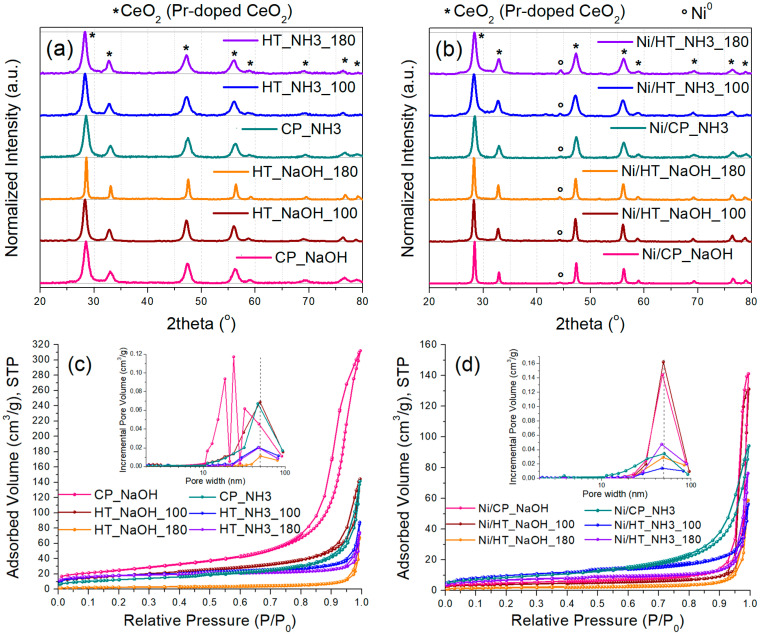 Figure 1
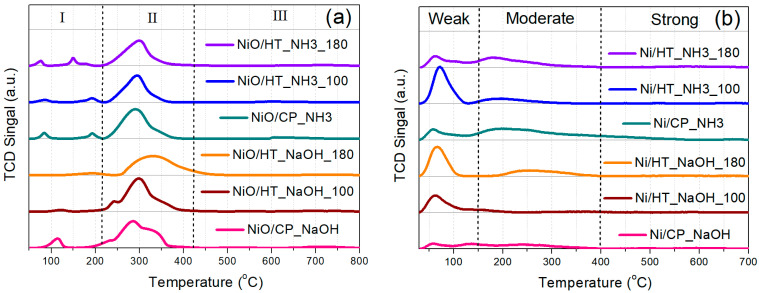 Figure 2
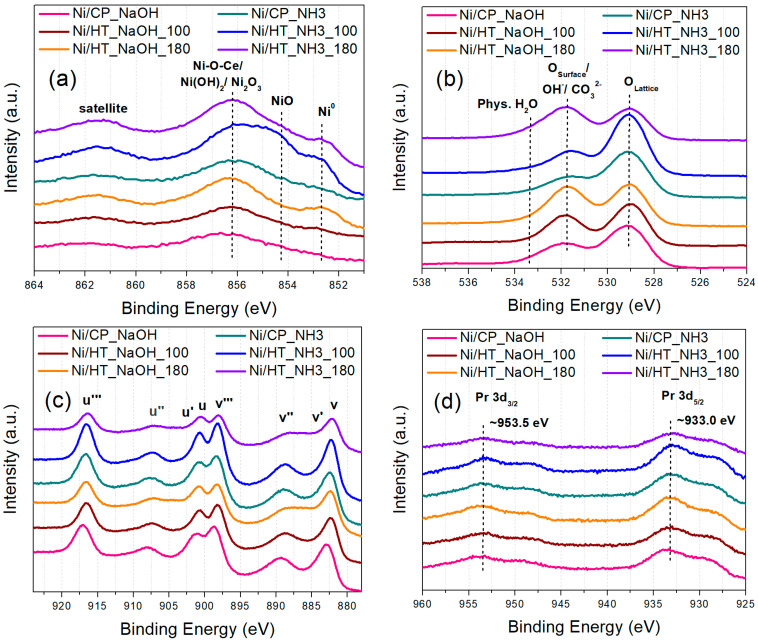 Figure 3
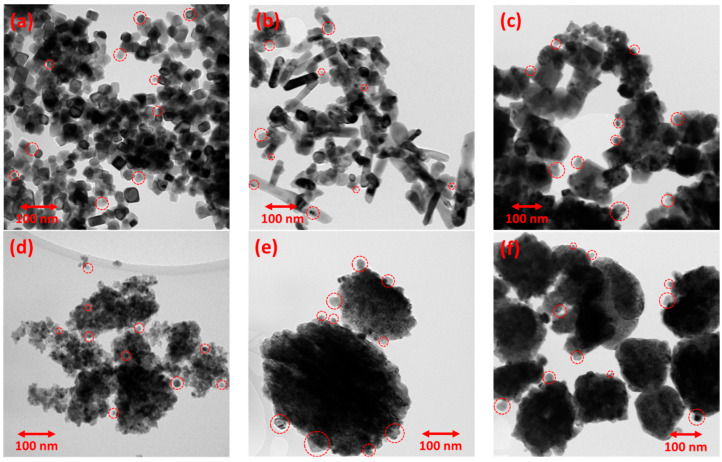 Figure 4
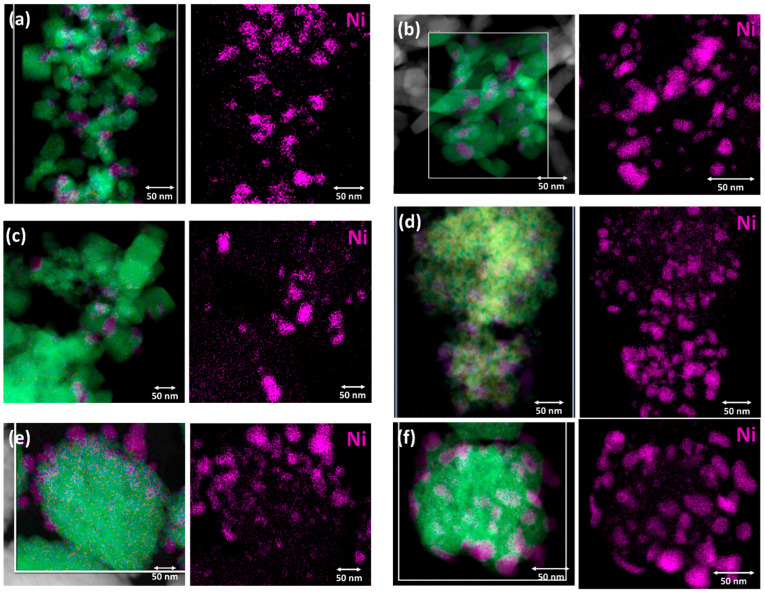 Figure 5
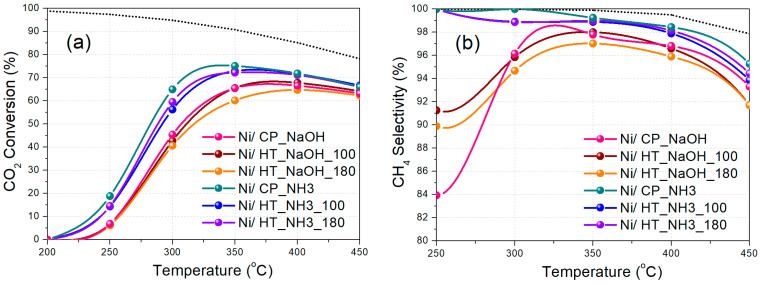 Figure 6
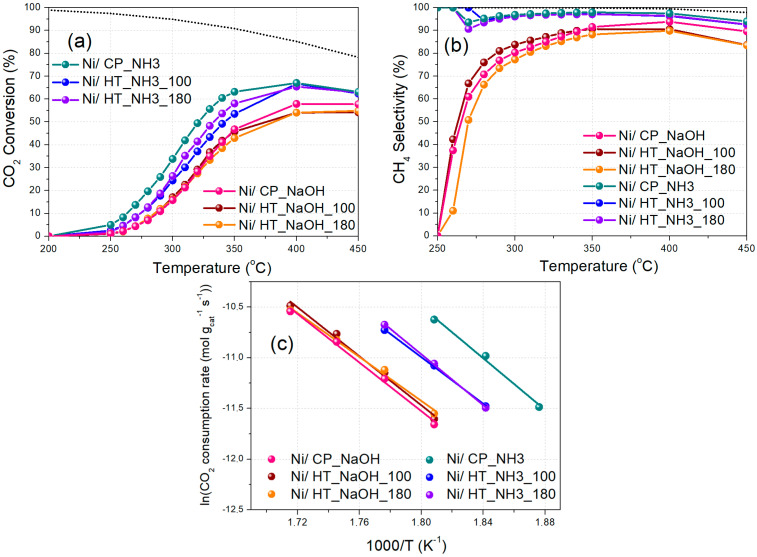 Figure 7
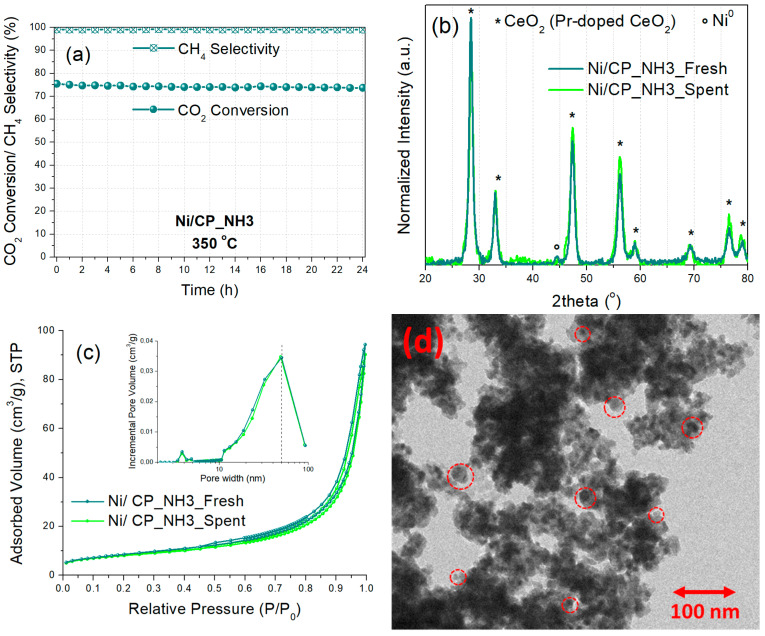 Figure 8
Peer Reviews
No public reviews on file for this paper yet. If you reviewed it on a platform where reviews are public (OpenReview, ICLR, NeurIPS, ICML), you can paste yours below so the community can read it here.
Videos
No videos yet. Explain this paper in a talk, walkthrough, or lecture? Add one.
Taxonomy
TopicsCatalytic Processes in Materials Science · Catalysts for Methane Reforming · Carbon dioxide utilization in catalysis