Portable and Rapid Smartphone-Based Colorimetric Assay of Peracetic Acid for Point-of-Use Medical/Pharmaceutical Disinfectant Preparation
Suphakorn Katib, Sutasinee Apichai, Jutamas Jiaranaikulwanitch, Busaban Sirithunyalug, Fumihiko Ogata, Naohito Kawasaki, Kate Grudpan, Chalermpong Saenjum

TL;DR
A smartphone app was developed to quickly and accurately measure peracetic acid concentration in disinfectants using color changes, making it easier to prepare safe disinfectants on-site.
Contribution
A portable, smartphone-based colorimetric assay for peracetic acid with green analytical and sustainability advantages is introduced.
Findings
The colorimetric reaction's green intensity is directly proportional to peracetic acid concentration between 0.15 to 3.0 µg/mL.
The method achieved detection and quantitation limits of 0.11 µg/mL and 0.34 µg/mL, respectively.
Results matched traditional acid–base titration methods at the 95% confidence level.
Abstract
A simple and rapid smartphone-based colorimetric assay for peracetic acid concentration was developed to facilitate point-of-use disinfectant preparations for infection prevention and control. The colorimetric detection was based on the oxidation of N,N-diethyl-phenylenediamine by peracetic acid through an intermediate reaction with potassium iodide, resulting in pink-magenta products. The colorimetric reaction was performed on a 96-well plate; then, the color products were photographed in one image. The color intensity was evaluated to determine the peracetic acid concentration using a custom-built mobile application named Modern Peracetic Acid Analysis. The relative green intensity of the pink-magenta products was directly proportional to the peracetic acid concentration in the range of 0.15 to 3.0 µg/mL. The detection and quantitation limits were 0.11 µg/mL and 0.34 µg/mL,…
Genes, proteins, chemicals, diseases, species, mutations and cell lines named across the full text — each resolved to its canonical identifier and authoritative record.
Click any figure to enlarge with its caption.
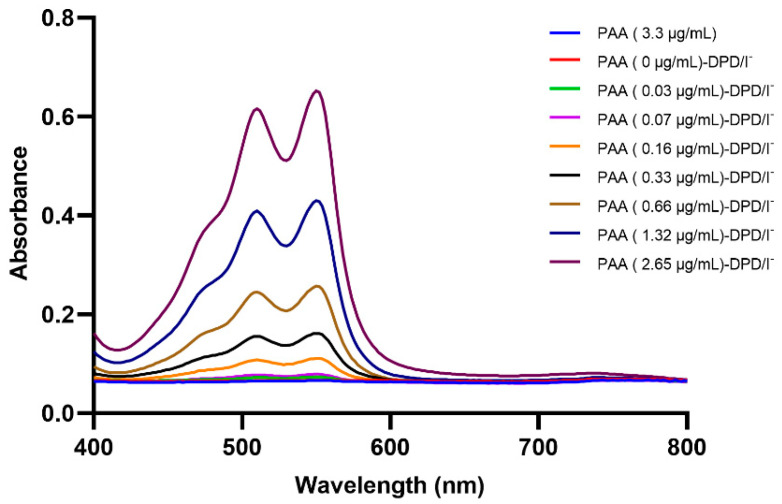 Figure 1
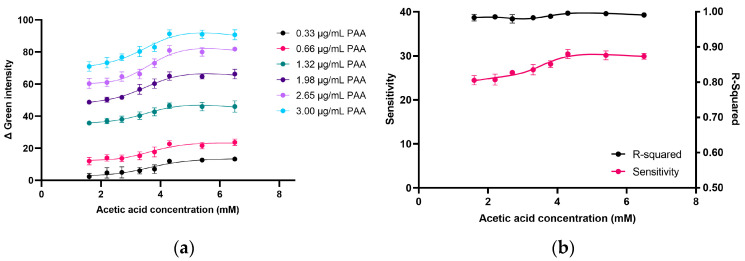 Figure 2
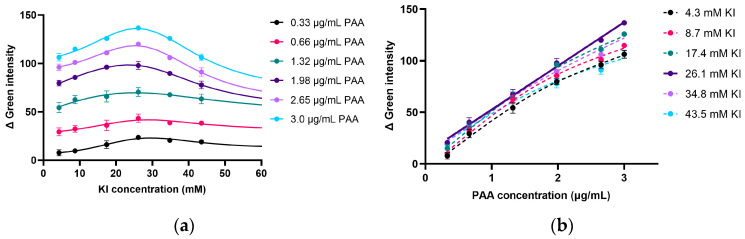 Figure 3
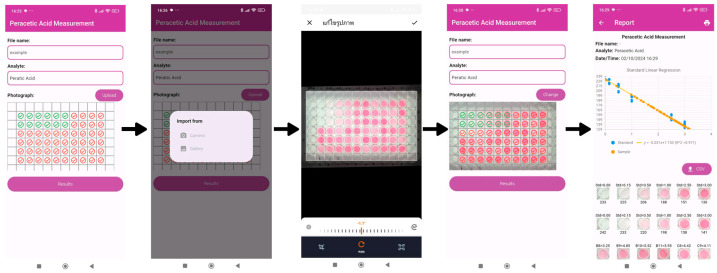 Figure 4
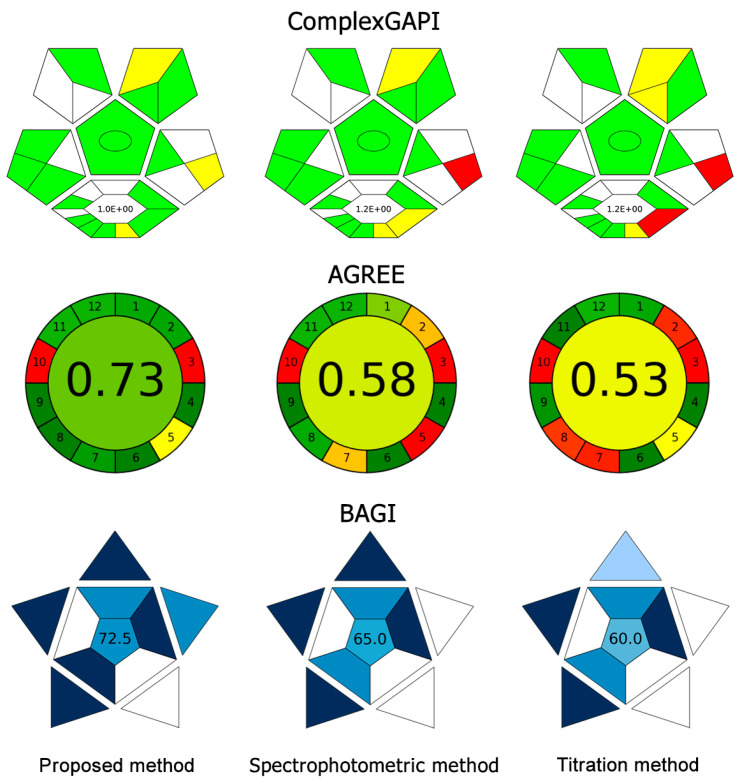 Figure 5
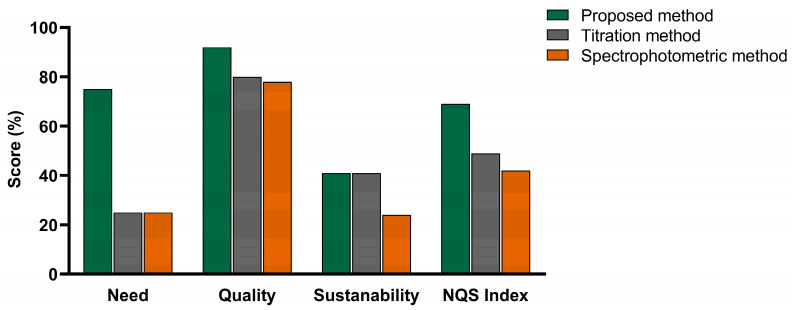 Figure 6
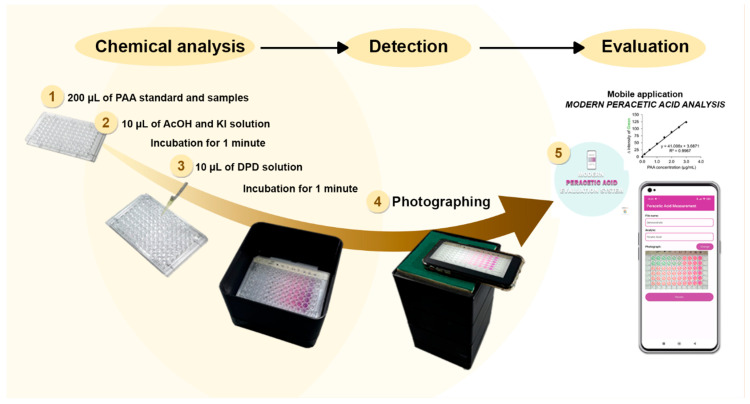 Figure 7
Peer Reviews
No public reviews on file for this paper yet. If you reviewed it on a platform where reviews are public (OpenReview, ICLR, NeurIPS, ICML), you can paste yours below so the community can read it here.
Videos
No videos yet. Explain this paper in a talk, walkthrough, or lecture? Add one.
Taxonomy
TopicsBiosensors and Analytical Detection · Advanced Chemical Sensor Technologies · SARS-CoV-2 detection and testing