Clinical Predictors of Inpatient Mortality and Poor Postoperative Course After aSAH Microsurgical Clipping: A 10-Year Experience from a Peruvian Tertiary Care Center
Fernando Terry, Alejandro Enríquez-Marulanda, Nathaly Chinchihualpa-Paredes, Meiling Carbajal-Galarza, Claudia L Vidal-Cuellar, Guiliana Mas-Ubillus, Bruno Diaz-Llanes, Carlos Quispe-Vicuña, Niels Pacheco-Barrios, Rommel Arbulu-Zuazo, Ziev B. Moses, Joel Sequeiros, Evan Luther

TL;DR
This study identifies clinical factors that predict inpatient mortality and poor recovery after surgery for aSAH in a Peruvian hospital over 10 years.
Contribution
The study provides region-specific predictors of mortality and recovery outcomes for aSAH patients in a developing country setting.
Findings
Severe WFNS scale scores and postoperative complications significantly increase inpatient mortality risk.
Moderate or severe Glasgow scores and postoperative complications are linked to a poor postoperative course.
The study highlights the need for region-focused guidelines to improve outcomes for aSAH patients in developing countries.
Abstract
Background/Objectives: Aneurysmal subarachnoid hemorrhage (aSAH) is a medical emergency with a high mortality rate requiring urgent treatment. This study aimed to identify clinical predictors of inpatient mortality and poor postoperative course after aSAH surgical clipping. Methods: We performed a retrospective review of medical records for 210 patients with aSAH treated via surgical clipping at our institution between 2010 and 2019. Baseline demographic data and clinical characteristics related to aSAH were collected. To identify factors associated with inpatient mortality and a poor postoperative course after aSAH microsurgical clipping, we conducted a univariate and bivariate analysis, as well as a multivariate analysis via the Poisson regression model. Results: The overall cumulative mortality over the 10-year study period was 11.43%. A severe WFNS scale score (aRR: 2.86; 95% CI:…
Genes, proteins, chemicals, diseases, species, mutations and cell lines named across the full text — each resolved to its canonical identifier and authoritative record.
Click any figure to enlarge with its caption.
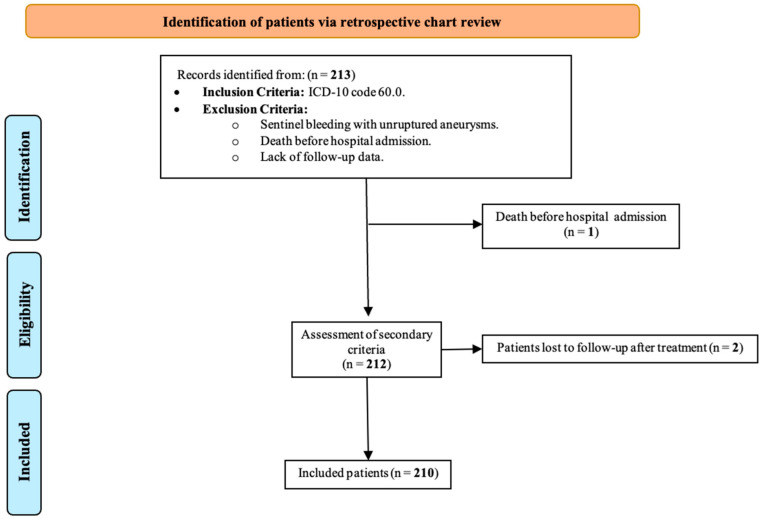 Figure 1
 Figure 2
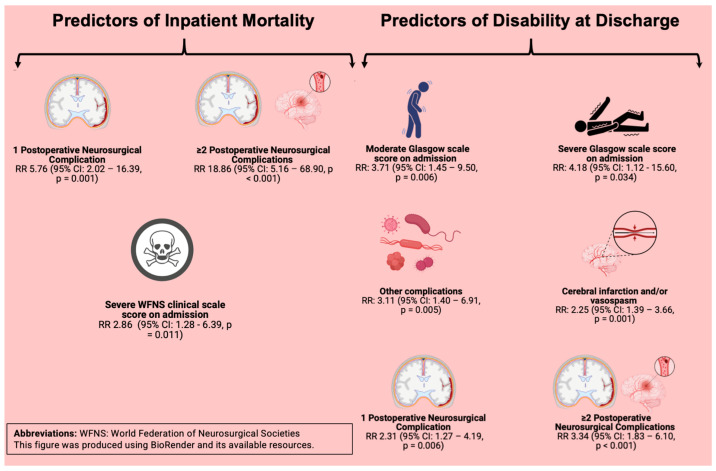 Figure 3
Peer Reviews
No public reviews on file for this paper yet. If you reviewed it on a platform where reviews are public (OpenReview, ICLR, NeurIPS, ICML), you can paste yours below so the community can read it here.
Videos
No videos yet. Explain this paper in a talk, walkthrough, or lecture? Add one.
Taxonomy
TopicsCardiovascular and Diving-Related Complications · Intracranial Aneurysms: Treatment and Complications · Cerebrovascular and Carotid Artery Diseases