DNA Type Influence on Properties of Thin Layer of DNA Complexes
Aleksandra Radko, Katarzyna Makyła-Juzak, Robert Ekiert, Julia Chudzik, Dagmara Sokołowska, Sebastian Lalik, Monika Marzec

TL;DR
This paper explores how different DNA types affect the structure of DNA-surfactant thin layers, which could be useful for creating new eco-friendly materials.
Contribution
The study reveals how DNA type and surfactant choice influence the morphology of thin DNA layers during Langmuir-Blodgett deposition.
Findings
The thickness of stripes and minimum surface pressures differ between plasmid and linear DNA-based layers.
Elongated structures form along the lifting direction, influenced by DNA type and surfactant.
AFM and FFT analysis confirmed structural differences in the DNA-surfactant complexes.
Abstract
In the search for new functional materials, strong emphasis is placed on the ecological aspect, which is why thin layers of materials based on deoxyribonucleic acid (DNA) are fascinating from the point of view of applications. Thin layers of DNA–cationic surfactant complexes were created on mica slices using the Langmuir–Blodgett deposition technique. Three cationic surfactants (CTMA, BAC, HDP) and two types of DNA (linear dsDNA and plasmid pDNA) were used to synthesise the complexes. It was shown that the pattern of the obtained layer depended on the lifting conditions, type of DNA, and type of surfactant. The elongated structures that formed along the layer lifting direction were examined by AFM imaging and fast Fourier transform analysis. The main difference between the layers formed by plasmid pDNA-based and linear dsDNA-based complexes was the thickness of the stripes and the…
Genes, proteins, chemicals, diseases, species, mutations and cell lines named across the full text — each resolved to its canonical identifier and authoritative record.
Click any figure to enlarge with its caption.
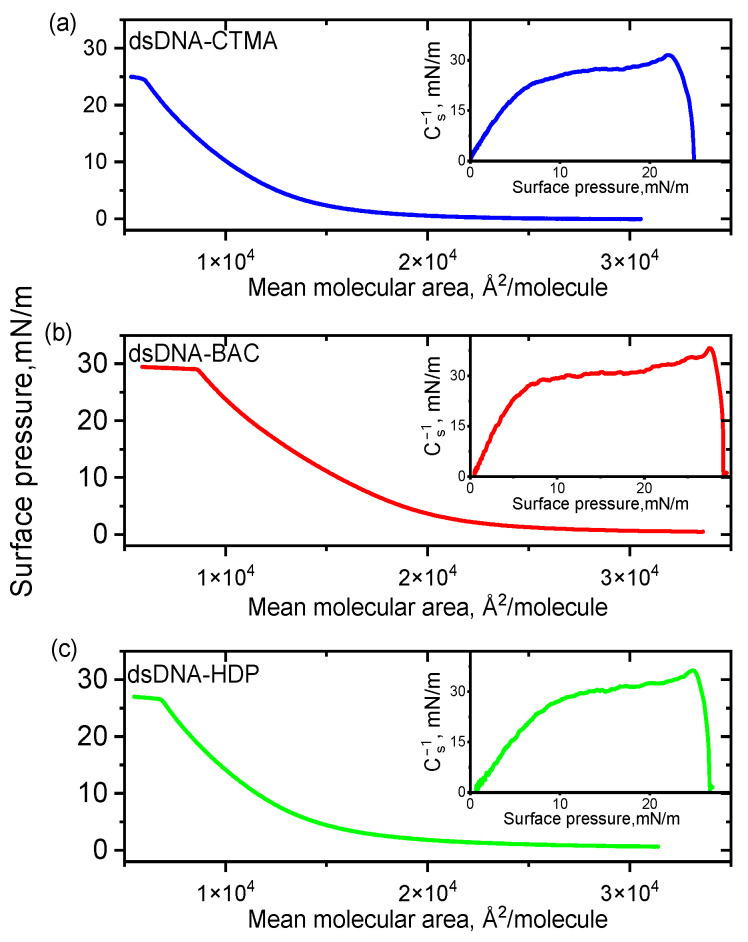 Figure 1
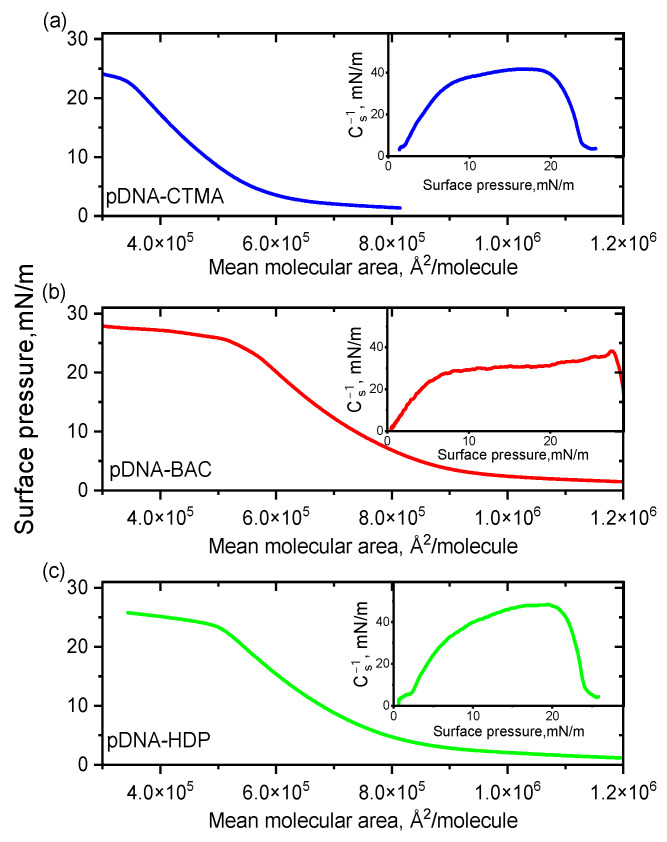 Figure 2
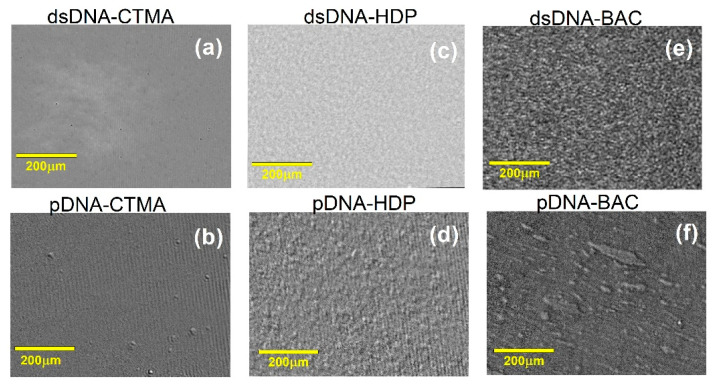 Figure 3
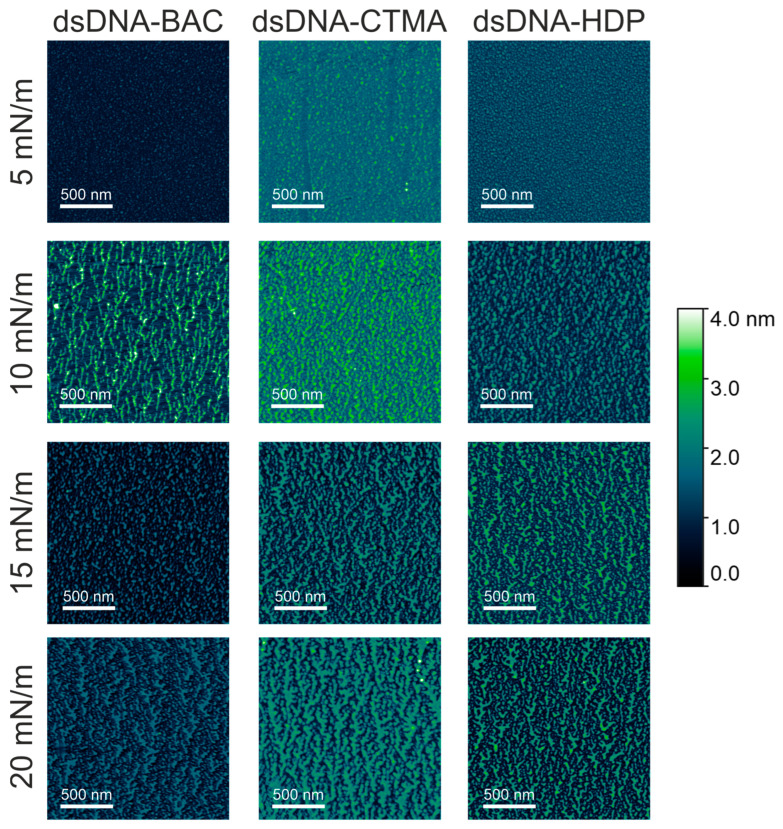 Figure 4
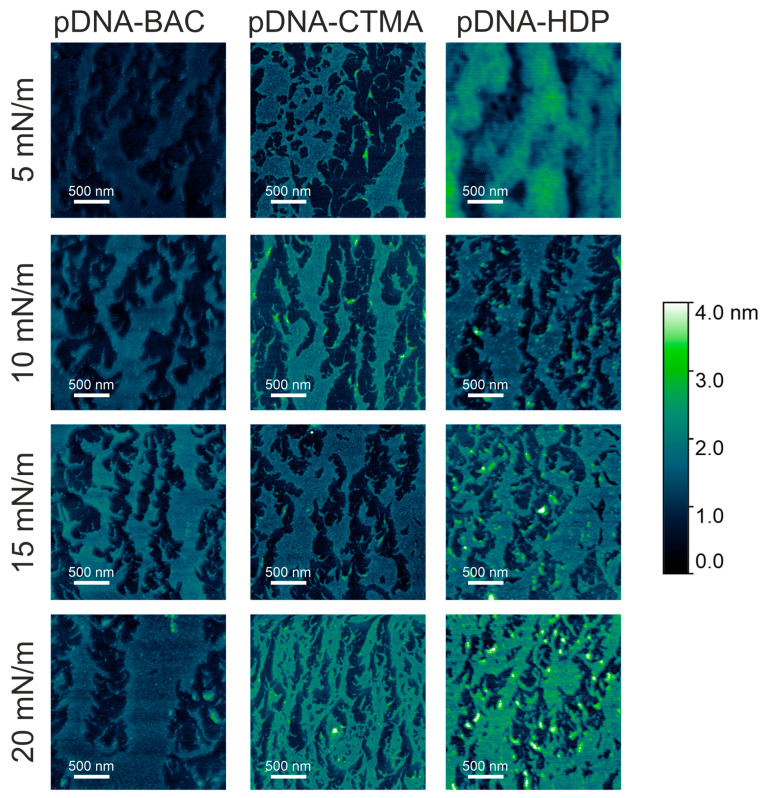 Figure 5
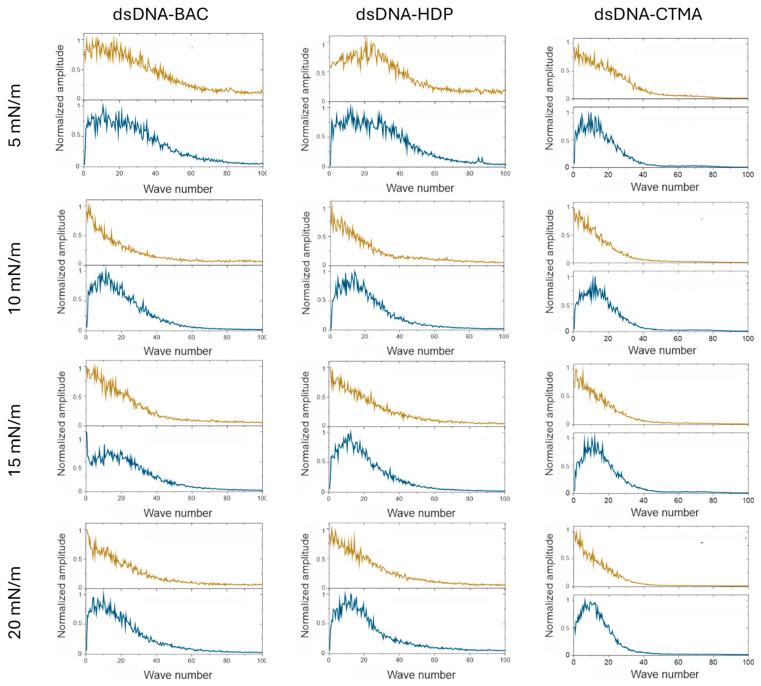 Figure 6
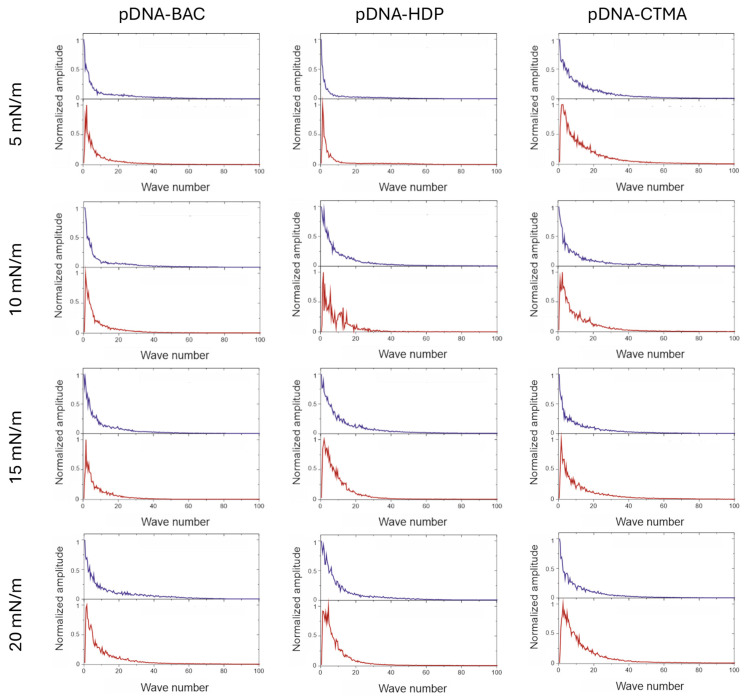 Figure 7
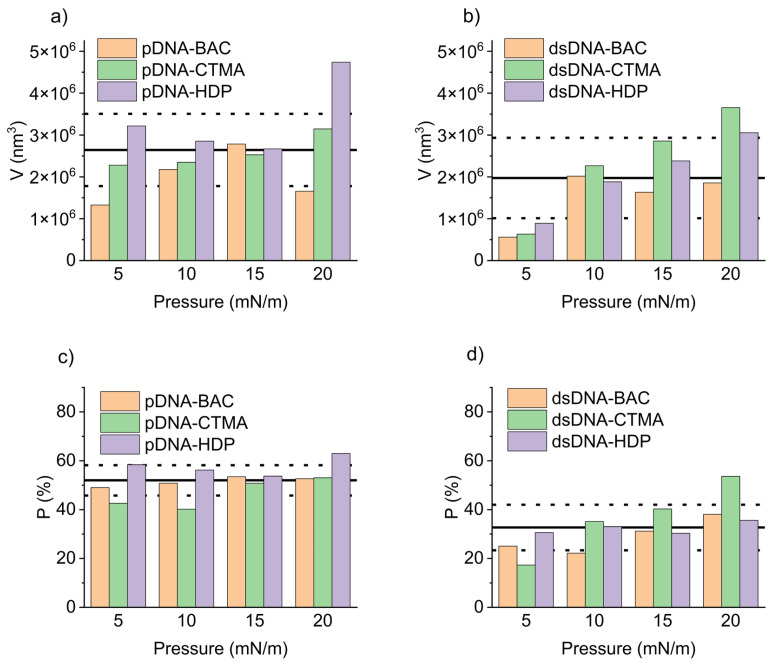 Figure 8
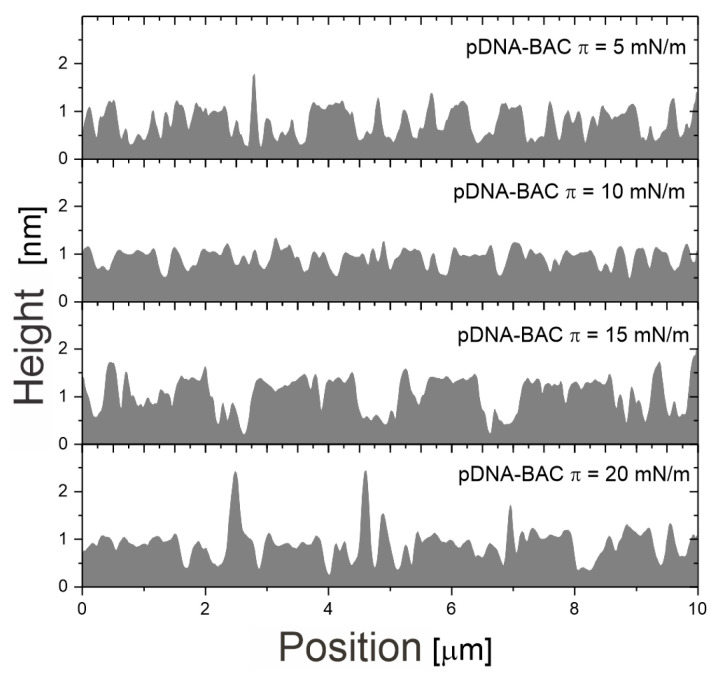 Figure 9
Peer Reviews
No public reviews on file for this paper yet. If you reviewed it on a platform where reviews are public (OpenReview, ICLR, NeurIPS, ICML), you can paste yours below so the community can read it here.
Videos
No videos yet. Explain this paper in a talk, walkthrough, or lecture? Add one.
Taxonomy
TopicsAdvanced biosensing and bioanalysis techniques · DNA and Nucleic Acid Chemistry · DNA and Biological Computing