Polyethyleneimine Modified Expanded Vermiculite-Supported Nano Zero-Valent Iron for Cr(VI) Removal from Aqueous Solution
Xinyu Yang, Yan Mu, Lina Zhang, Dan Sun, Tiantian Jian, Weiliang Tian

TL;DR
This paper introduces a new material for removing toxic chromium from water, combining nano iron and modified clay for efficient and reusable adsorption.
Contribution
A novel amino-modified clay-supported nano iron composite for Cr(VI) removal with high efficiency and reusability is developed.
Findings
The material achieved a maximum Cr(VI) adsorption capacity of 116.2 mg/g at pH 2 and 30°C.
The adsorption process followed pseudo-second-order kinetics and the Langmuir isotherm model.
The composite retained 40.1 mg/g adsorption capacity after four reuse cycles.
Abstract
In order to develop an efficient, environmentally friendly heavy metal ions adsorbent, the amino-modified expanded vermiculite-supported nano zero-valent iron (nZVI@PEI/EVMT) was prepared by using polyethyleneimine (PEI) as the functional reagent and expanded vermiculite (EVMT) as the carrier. The characterization results of nZVI@PEI/EVMT confirm that the PEI modification did not destroy the crystal configuration of EVMT, and when nano zero-valent iron (nZVI) was successfully loaded onto the PEI/EVMT surface, the value of saturation magnetic field was 41.5 emu/g, which could be separated from solution with magnet. The performance of Cr(VI) adsorption onto nZVI@PEI/EVMT was studied, showing that the ideal mass ratio for nZVI@PEI/EVMT was 1:1, and the removal capacity was largest when solution pH was 2. After four adsorption–desorption cycles, the adsorption amounts remained 40.1 mg/g.…
Genes, proteins, chemicals, diseases, species, mutations and cell lines named across the full text — each resolved to its canonical identifier and authoritative record.
Click any figure to enlarge with its caption.
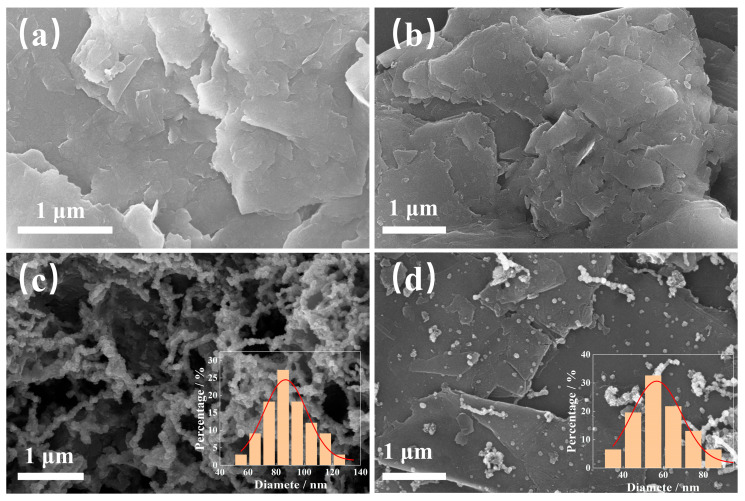 Figure 1
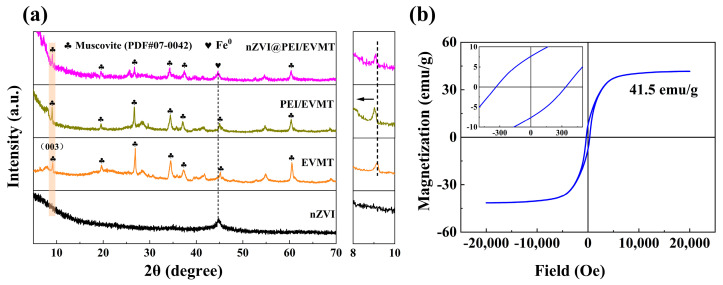 Figure 2
 Figure 3
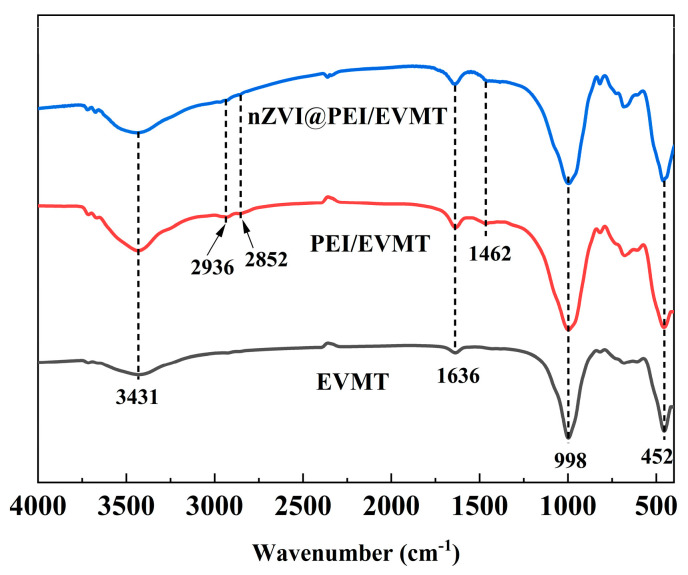 Figure 4
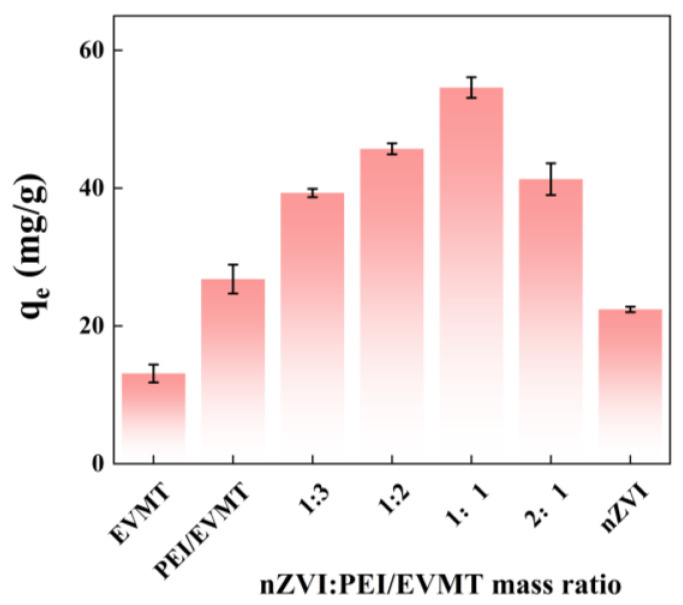 Figure 5
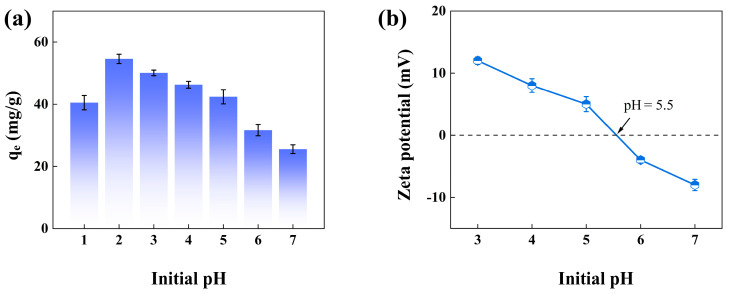 Figure 6
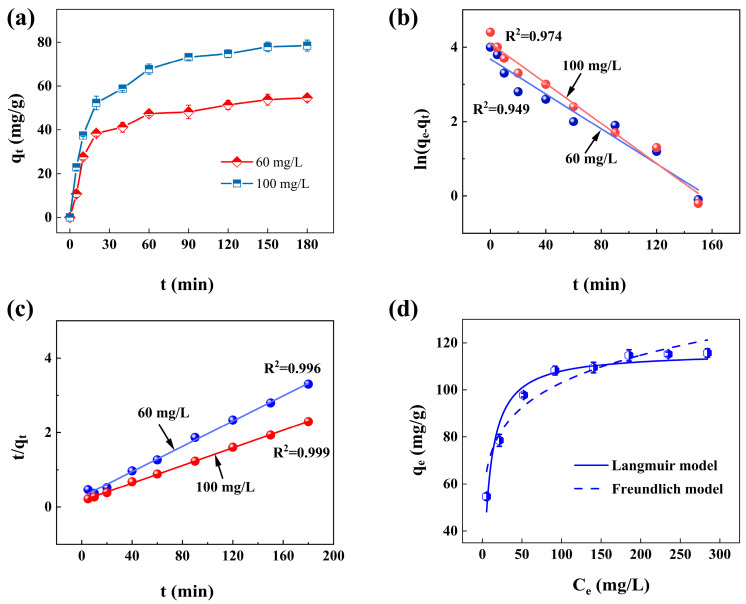 Figure 7
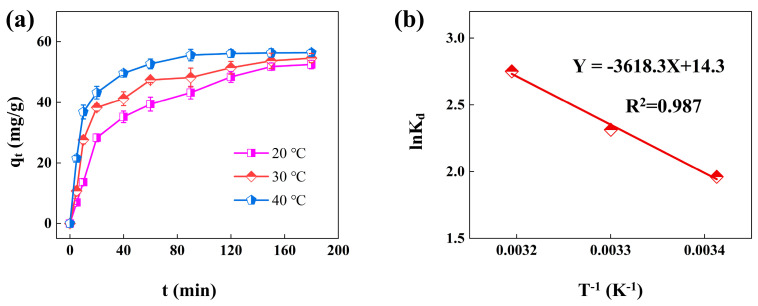 Figure 8
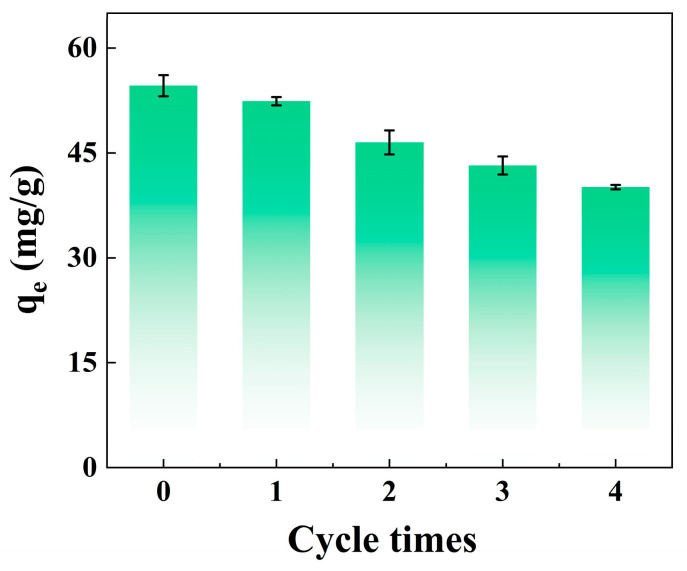 Figure 9
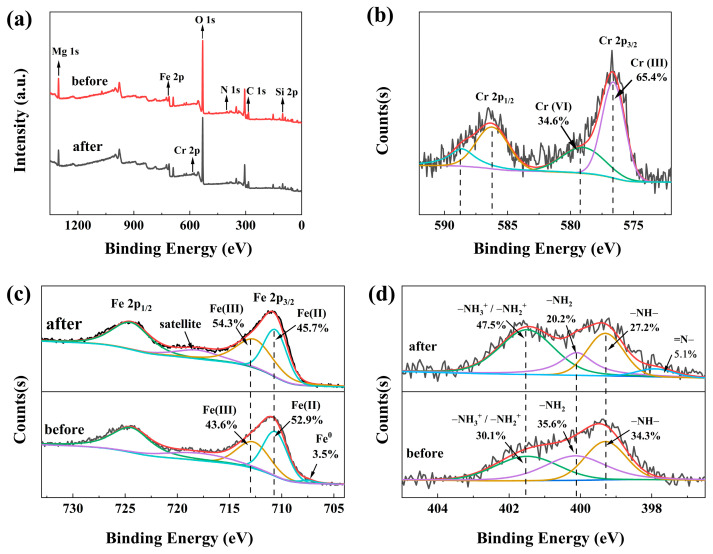 Figure 10
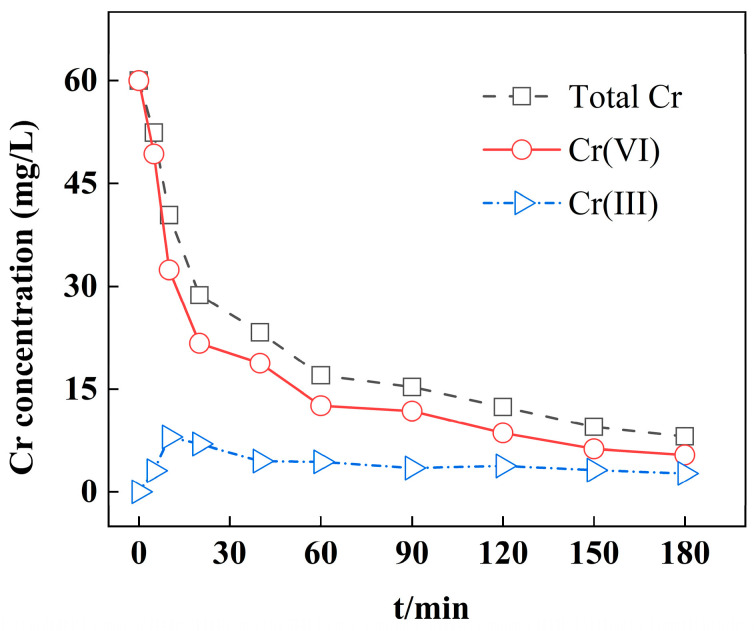 Figure 11
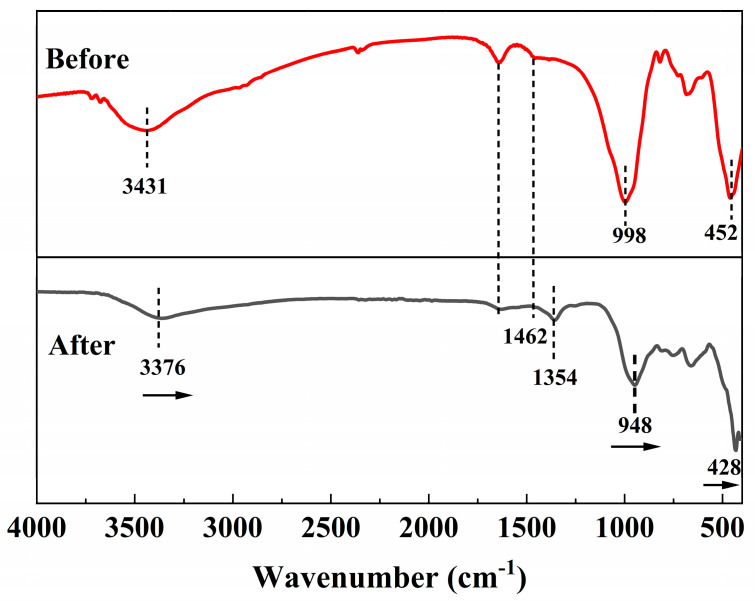 Figure 12
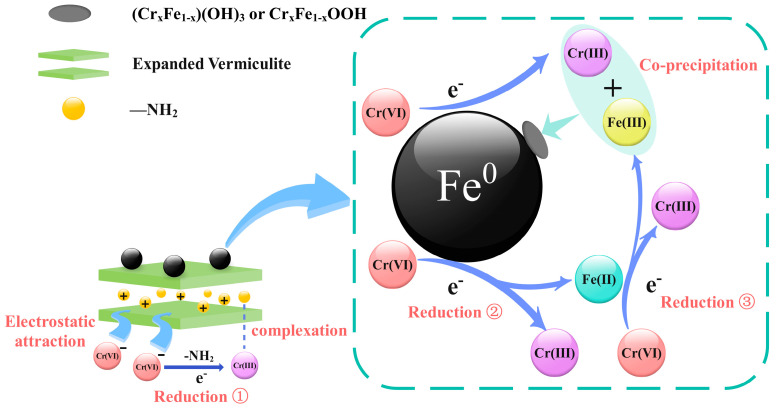 Figure 13
Peer Reviews
No public reviews on file for this paper yet. If you reviewed it on a platform where reviews are public (OpenReview, ICLR, NeurIPS, ICML), you can paste yours below so the community can read it here.
Videos
No videos yet. Explain this paper in a talk, walkthrough, or lecture? Add one.
Taxonomy
TopicsChromium effects and bioremediation · Environmental remediation with nanomaterials · Adsorption and biosorption for pollutant removal