Factors Associated with Changes in Skeletal Muscle Mass in Medical Health Checkups
Saori Onishi, Akira Fukuda, Masahiro Matsui, Kosuke Ushiro, Tomohiro Nishikawa, Akira Asai, Soo Ki Kim, Sachiyo Yoshio, Hiroki Nishikawa

TL;DR
The study identifies factors like age, BMI, and metabolic markers that influence changes in skeletal muscle mass in Japanese individuals.
Contribution
The study provides new insights into lifestyle and metabolic factors associated with skeletal muscle mass changes in a large Japanese population.
Findings
Age, BMI, and baseline fat-free index strongly correlate with changes in skeletal muscle mass.
Metabolic factors like fasting blood sugar and triglycerides are significant predictors in both men and women.
Alcohol intake is a notable factor influencing skeletal muscle mass changes in both genders.
Abstract
Background/Objectives: To explore the factors associated with changes in skeletal muscle mass among Japanese health checkup subjects (5214 men and 6614 women). Methods: Fat-free index (FF index) was defined as FF mass divided by height squared (kg/m2). Change rate in FF index (kg/m2/year) was defined as [FF index (second time) − FF index (first time (i.e., baseline))]/interval between first and second times (years). Factors associated with change rate in FF index >0 kg/m2/year were primarily examined. Results: The average age, body mass index (BMI) were 52.4 years and 23.9 kg/m2 for men, and 50.5 years and 21.8 kg/m2 for women. In the multivariate analyses, age (p < 0.0001), body mass index (BMI, p < 0.0001), baseline FF index (p < 0.0001), waist circumference (p = 0.0365), fasting blood sugar (FBS, p = 0.0012), alanine aminotransferase (p < 0.0001) and alcohol intake were found to be…
Genes, proteins, chemicals, diseases, species, mutations and cell lines named across the full text — each resolved to its canonical identifier and authoritative record.
Click any figure to enlarge with its caption.
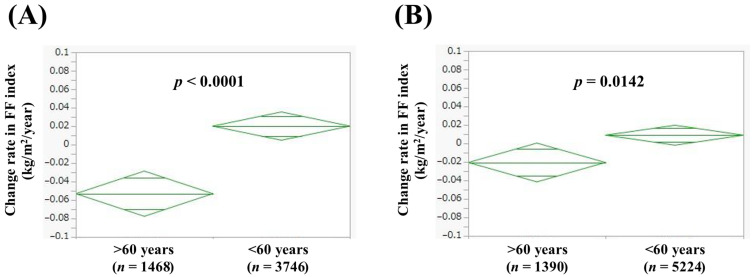 Figure 1
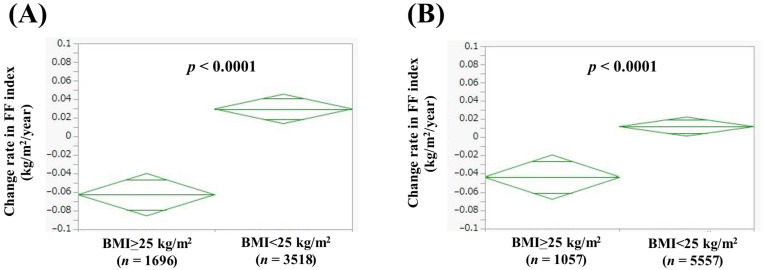 Figure 2
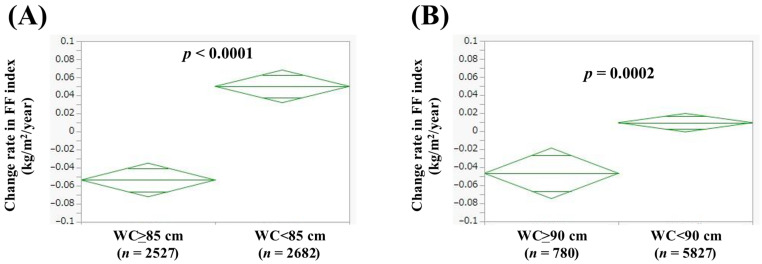 Figure 3
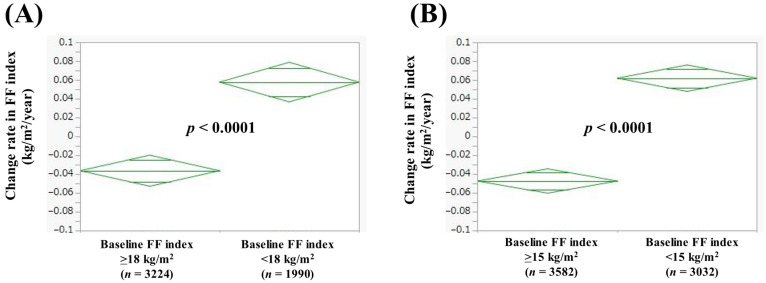 Figure 4
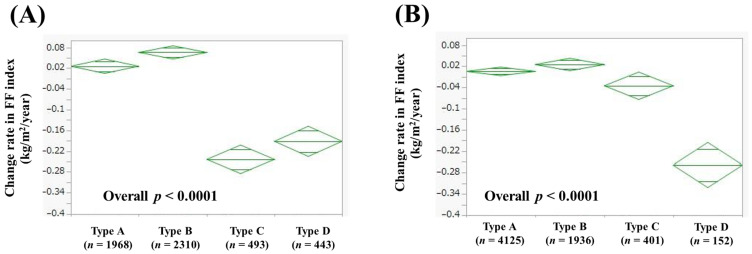 Figure 5
Peer Reviews
No public reviews on file for this paper yet. If you reviewed it on a platform where reviews are public (OpenReview, ICLR, NeurIPS, ICML), you can paste yours below so the community can read it here.
Videos
No videos yet. Explain this paper in a talk, walkthrough, or lecture? Add one.
Taxonomy
TopicsNutrition and Health in Aging · Body Composition Measurement Techniques · Health and Wellbeing Research