Performance and feasibility of self-microsampling of capillary blood and saliva for serological testing of SARS-CoV-2
Ivonne Morales, Josh Bueggeln, Anna Denzler, Vera Sonntag-Buck, Kathleen Börner, Petr Chlanda, Lisa Koeppel, Andreas Deckert, Till Bärnighausen, Michael Knop, Claudia M. Denkinger, Gheyath K. Nasrallah, Ewurama Dedea Ampadu Owusu, Ewurama Dedea Ampadu Owusu

TL;DR
The study shows that self-collected capillary blood and saliva using a microsampling device can effectively detect SARS-CoV-2 antibodies, offering a scalable alternative to traditional blood tests.
Contribution
The study introduces a feasible and user-friendly microsampling method for self-collected capillary blood and saliva for SARS-CoV-2 antibody testing.
Findings
Self-collected capillary blood showed 100% agreement with serum for SARS-CoV-2 antibodies in participants with prior infection.
Self-collected saliva had slightly lower agreement (95.7%) compared to serum.
Most participants found the microsampling device easy to use, though additional training may improve reliability.
Abstract
Serology is a valuable tool to estimate infections, case-fatality rates, and immunity. However, venipuncture and clinical infrastructure hinder scalability. This study evaluated the performance, feasibility and user experience of using a microsampling device for self-collected capillary blood and saliva to determine total SARS-CoV-2 S RBD antibodies. It included 149 participants with (n = 48) or without (n = 101) a known history of SARS-CoV-2 infection and confirmed antibodies. Venous and capillary blood were self- or professionally collected from all, and saliva was self-collected by 46/48 participants with antibodies. The detection of SARS-CoV-2 S RBD antibodies in all sample types was tested using a high-throughput platform and agreement was calculated. Intra- and inter-rater agreement between serum and capillary blood in participants with an unknown antibody status was also…
Genes, proteins, chemicals, diseases, species, mutations and cell lines named across the full text — each resolved to its canonical identifier and authoritative record.
Click any figure to enlarge with its caption.
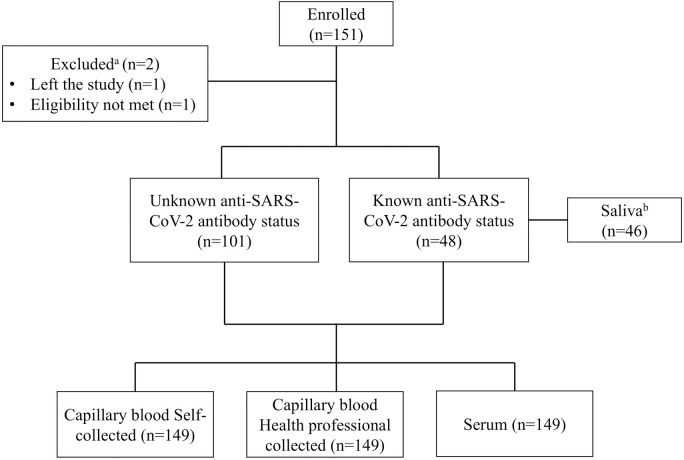 Figure 1
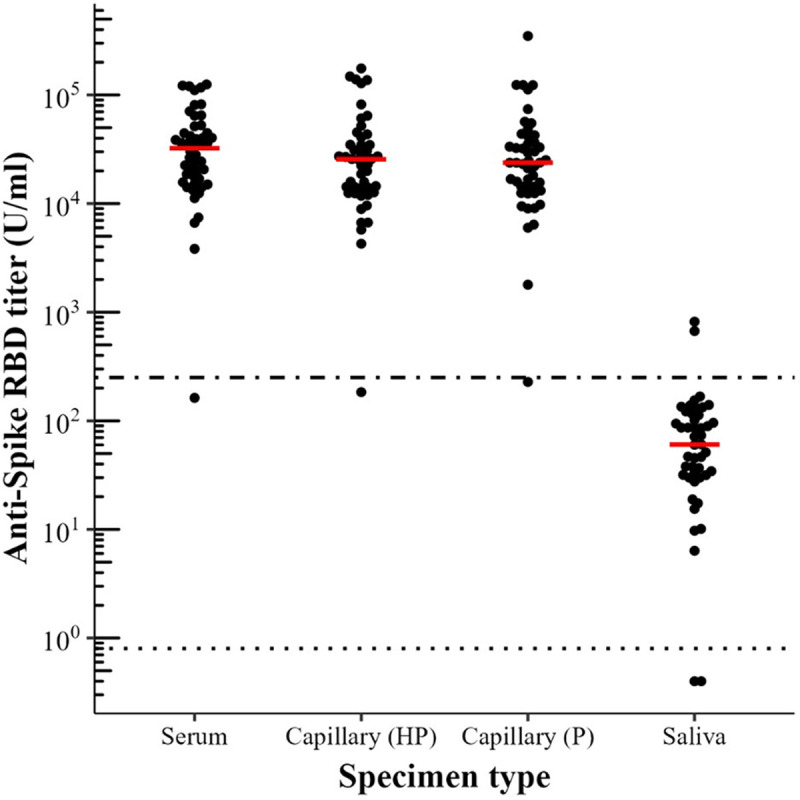 Figure 2
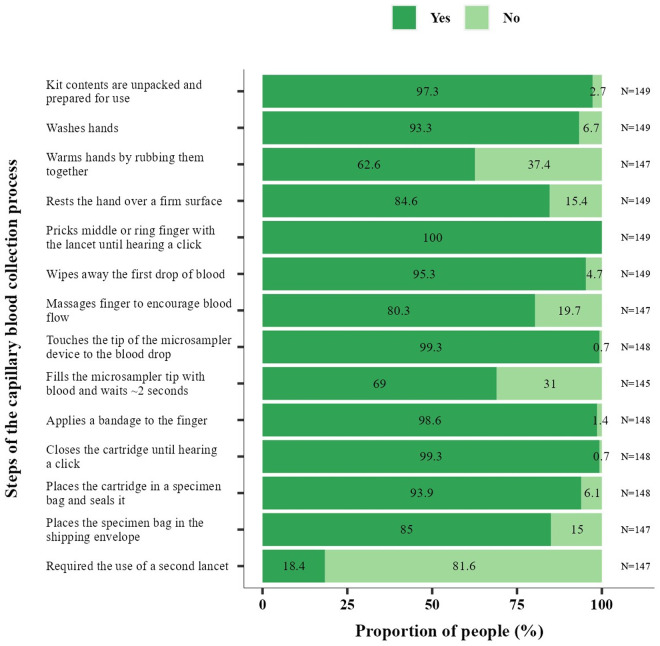 Figure 3
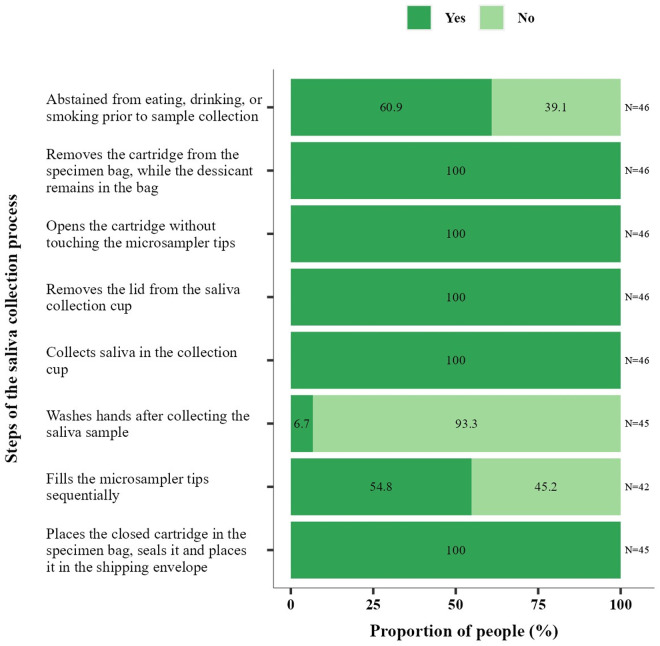 Figure 4
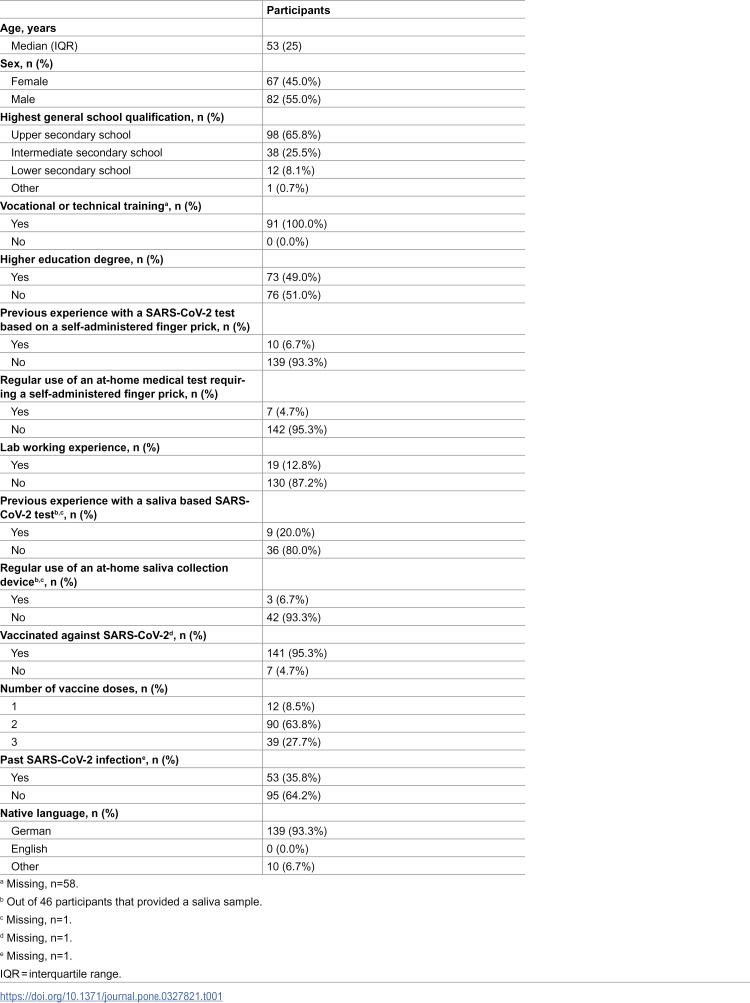 Figure 5
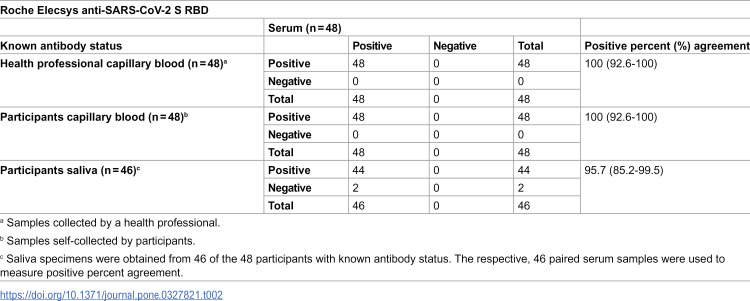 Figure 6
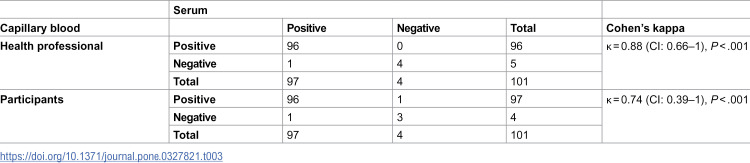 Figure 7
 Figure 8
Peer Reviews
No public reviews on file for this paper yet. If you reviewed it on a platform where reviews are public (OpenReview, ICLR, NeurIPS, ICML), you can paste yours below so the community can read it here.
Videos
No videos yet. Explain this paper in a talk, walkthrough, or lecture? Add one.
Taxonomy
TopicsSARS-CoV-2 detection and testing · SARS-CoV-2 and COVID-19 Research · Biosensors and Analytical Detection