New Quipazine Derivatives Active Against Drug-Resistant Oncogenic Helicobacter pylori Strains with Biofilm
Katarzyna Grychowska, Karolina Klesiewicz, Joanna Pęgiel, Agata Kuziak, Iwona Skiba-Kurek, Vittorio Canale, Gracjana Krzysiek-Mączka, Agata Ptak-Belowska, Kamil Piska, Paulina Koczurkiewicz-Adamczyk, Paweł Krzyżek, Tomasz Brzozowski, Paweł Zajdel, Elżbieta Karczewska

TL;DR
A new quipazine derivative, compound 9c, shows antibacterial and anti-biofilm activity against drug-resistant Helicobacter pylori strains and may reduce gastric cancer risk.
Contribution
Compound 9c is a novel quipazine derivative effective against multidrug-resistant H. pylori and exhibits anti-cancer potential.
Findings
Compound 9c has antibacterial activity against drug-resistant H. pylori strains with MIC values of 2–4 µg/mL.
It prevents biofilm formation and microbial cell auto-aggregation.
Compound 9c reduces the viability of human gastric cancer cells with an IC50 of 3.28 µg/mL.
Abstract
Helicobacter pylori (H. pylori) is regarded as a significant risk factor for gastritis, peptic ulcer disease, and gastric cancer. However, the increasing resistance of H. pylori strains has resulted in low eradication rates and ineffective treatments. Herein, we report on identification of a new quipazine derivative—compound 9c (N-(3-chlorobenzyl)-2-(piperazin-1-yl)quinolin-4-amine), which displayed antibacterial properties (MIC range 2–4 µg/mL) against H. pylori CagA-positive reference strains associated with an increased risk of gastric cancer, including metronidazole-resistant ATCC 43504, clarithromycin-resistant ATCC 700684 and susceptible J99 strain, as well as clinical, multidrug-resistant isolate (3CML, resistant to clarithromycin, metronidazole and levofloxacin). Compound 9c showed bacteriostatic activity (MBC/MIC ratio > 4), demonstrated antibiofilm-forming properties and…
Genes, proteins, chemicals, diseases, species, mutations and cell lines named across the full text — each resolved to its canonical identifier and authoritative record.
Click any figure to enlarge with its caption.
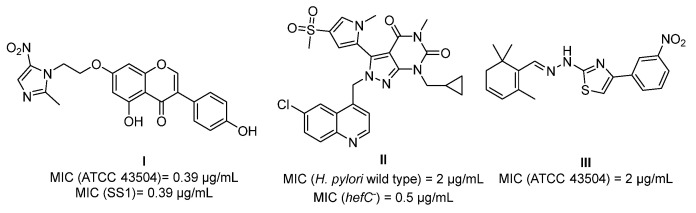 Figure 1
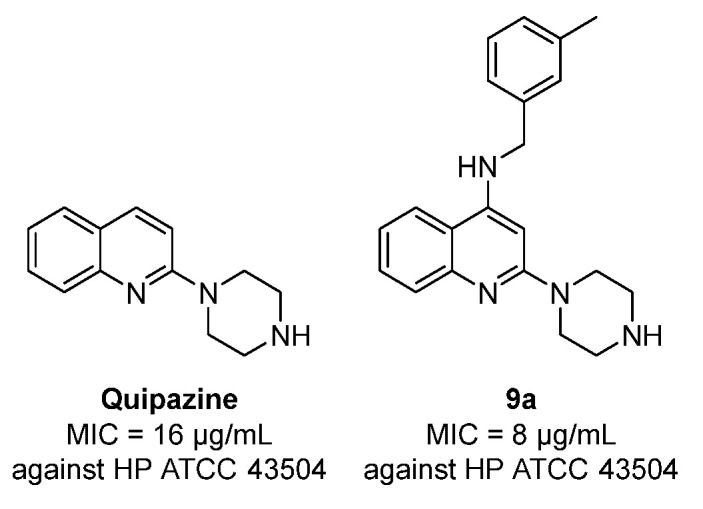 Figure 2
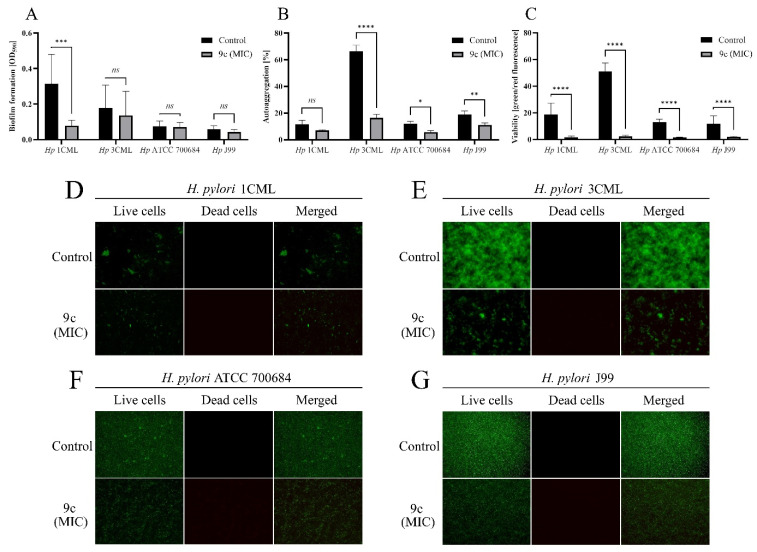 Figure 3
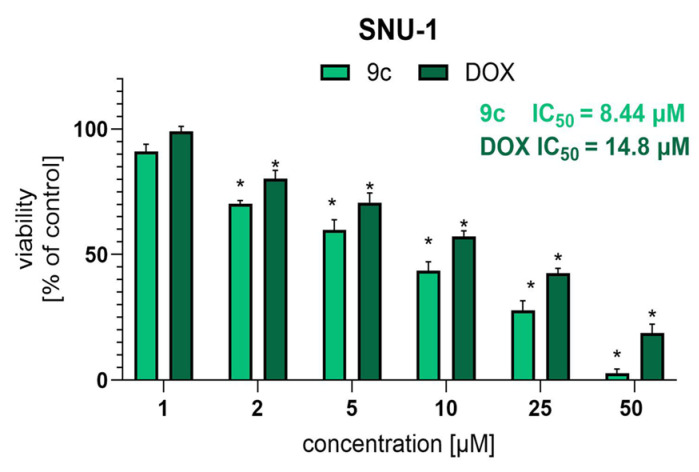 Figure 4
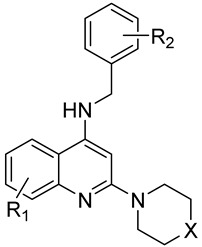 Figure 5
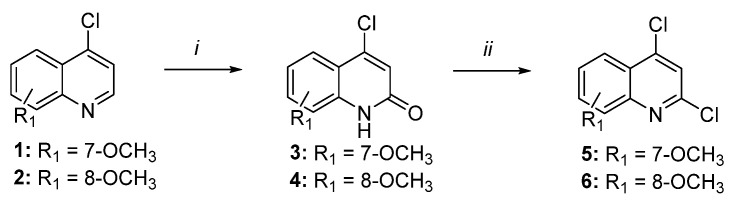 Figure 6
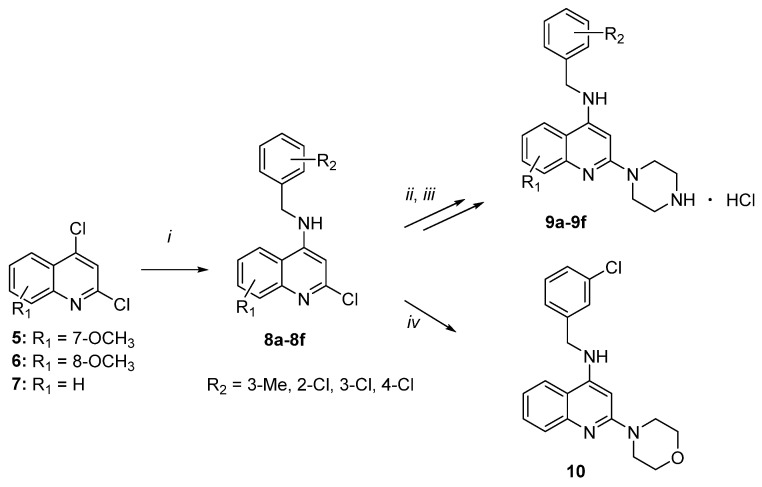 Figure 7
Peer Reviews
No public reviews on file for this paper yet. If you reviewed it on a platform where reviews are public (OpenReview, ICLR, NeurIPS, ICML), you can paste yours below so the community can read it here.
Videos
No videos yet. Explain this paper in a talk, walkthrough, or lecture? Add one.
Taxonomy
TopicsHelicobacter pylori-related gastroenterology studies · Mycobacterium research and diagnosis · Veterinary medicine and infectious diseases