Targeting Recipient Dendritic Cells with Sialic Acid-Modified Donor Alloantigen Prolongs Skin Transplant Survival
Monica Sen, Qi Peng, Kulachelvy Ratnasothy, Martino Ambrosini, Hakan Kalay, Jordan Bazoer, Kate E. Adams, Nouhad El Ouazzani, Abdessamad Ababou, David B. Guiliano, Jose I. Saldaña, Yvette van Kooyk, Giovanna Lombardi, Lesley A. Smyth

TL;DR
Modifying donor antigens with sialic acid and targeting them to recipient dendritic cells can prolong skin transplant survival by inducing immune tolerance.
Contribution
A novel method of targeting sialylated donor alloantigens to dendritic cell Siglecs to induce transplant tolerance is introduced.
Findings
Injecting α2,3 Sia-Kd into recipient mice prolonged skin graft survival.
This treatment increased CD4+CD62L+Foxp3+ regulatory T cells in recipients.
Siglec targeting on DC subsets is a promising strategy for transplant tolerance.
Abstract
Mature dendritic cells (DCs) are known to activate effector immune responses, whereas steady state immature DCs can induce tolerance. Several studies have targeted immature murine quiescent DCs in vivo with antigen, including donor alloantigens, for the induction of tolerance. Receptors expressed by specific DC subsets have been also targeted with antibodies linked with antigens to induce tolerance; for instance, in vivo targeting of the DCIR2+ DC subset with donor alloantigen resulted in long-term survival of heart and skin transplants. DCs also express sialic acid immunoglobulin-like lectin (Siglec) receptors, and these have been successfully targeted with myelin oligiodendrocyte glycoprotein (MOG) antigen to induce tolerance in experimental autoimmune encephalomyelitis (EAE). We investigated, in a mismatched model of skin transplant (B6Kd into B6 recipient mice), whether targeting a…
Genes, proteins, chemicals, diseases, species, mutations and cell lines named across the full text — each resolved to its canonical identifier and authoritative record.
Click any figure to enlarge with its caption.
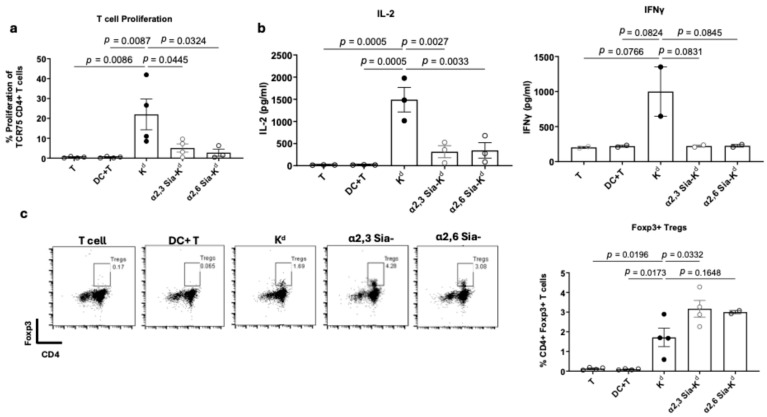 Figure 1
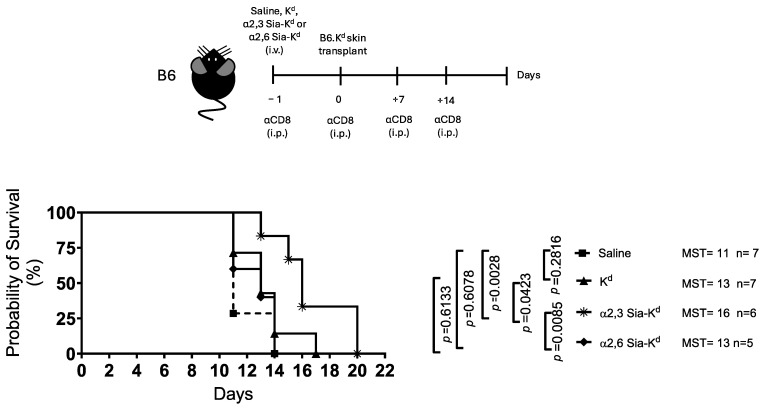 Figure 2
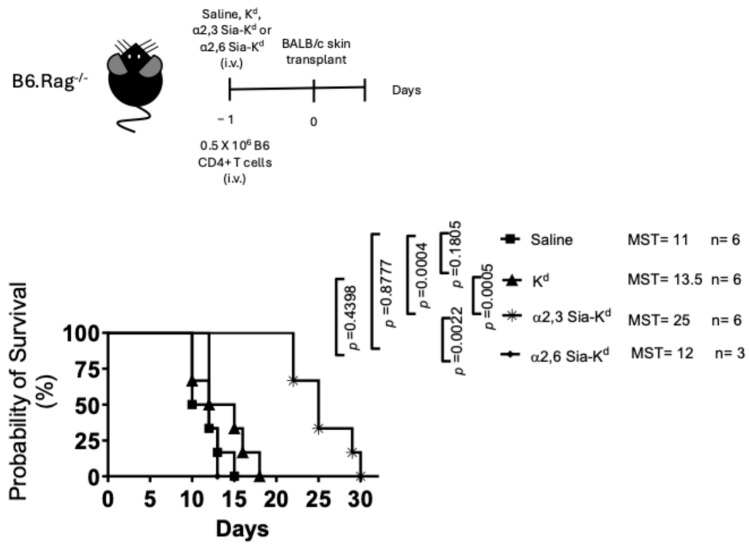 Figure 3
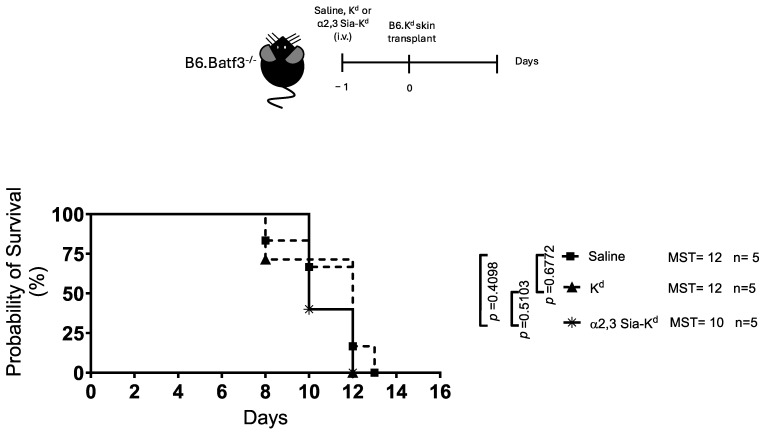 Figure 4
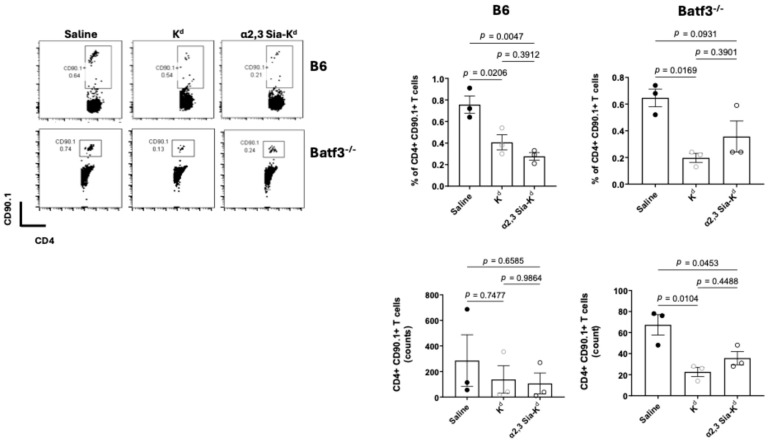 Figure 5
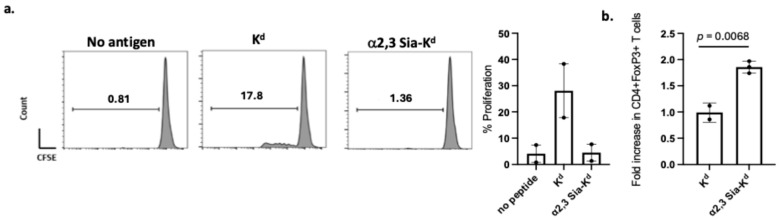 Figure 6
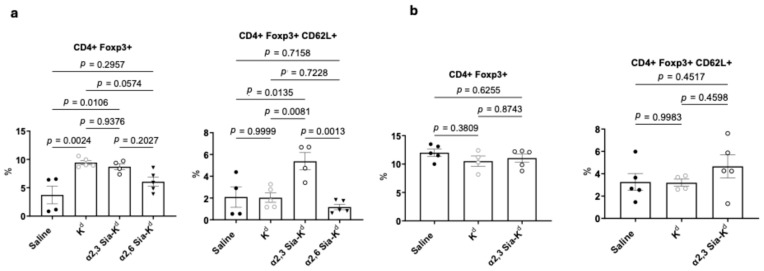 Figure 7
Peer Reviews
No public reviews on file for this paper yet. If you reviewed it on a platform where reviews are public (OpenReview, ICLR, NeurIPS, ICML), you can paste yours below so the community can read it here.
Videos
No videos yet. Explain this paper in a talk, walkthrough, or lecture? Add one.
Taxonomy
TopicsImmunotherapy and Immune Responses · T-cell and B-cell Immunology · Immune Response and Inflammation