Expression of WNT Family Genes in Mesenchymal Stromal Cells of the Hematopoietic Niche in Patients with Different Responses to Multiple Myeloma Treatment
Liubov A. Belik, Natella I. Enukashvily, Natalia Y. Semenova, Dmitrii I. Ostromyshenskii, Ekaterina V. Motyko, Anna N. Kirienko, Daria V. Kustova, Stanislav S. Bessmeltsev, Sergey V. Sidorkevich, Irina S. Martynkevich

TL;DR
This study explores how WNT genes in bone marrow cells relate to treatment outcomes in multiple myeloma patients.
Contribution
The study identifies WNT3A, WNT5A, WNT10B, and β-catenin as potential markers for predicting treatment response in multiple myeloma.
Findings
WNT3A, WNT5A, WNT10B, and β-catenin levels in bone marrow differ based on treatment response.
WNT3A is mainly in mesenchymal stromal cells, while WNT5A and WNT10B are in plasma cells.
WNT genes and CTNNB1 show differential expression in mesenchymal stromal cells from patients versus healthy donors.
Abstract
Mesenchymal stromal cells of the tumor microenvironment (TME) play a significant role in the progression of multiple myeloma (MM). The cells of the TME demonstrate resistance to treatment, thereby creating a favorable environment for disease relapse. The status of the TME during remission is poorly understood. An association between treatment response and TME status (including signaling pathways) has been suggested. One of the key players in the establishment of the MM TME is WNT signaling. In this study, we evaluated the expression of WNT family proteins in the TME and MM cells to assess their potential as TME markers and predictors of treatment response. A bioinformatic analysis of normal and malignant plasma cells, combined with an analysis of published data, revealed the following differentially expressed WNT genes: WNT5A, WNT10B, CTNNB1, and WNT3A. Immunohistochemical staining with…
Genes, proteins, chemicals, diseases, species, mutations and cell lines named across the full text — each resolved to its canonical identifier and authoritative record.
Click any figure to enlarge with its caption.
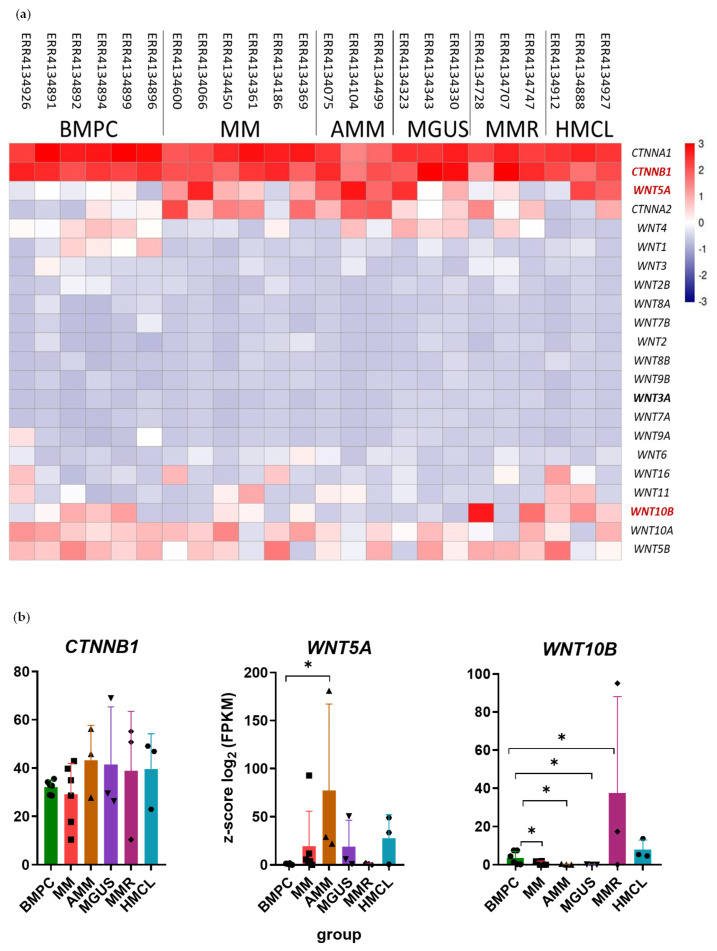 Figure 1
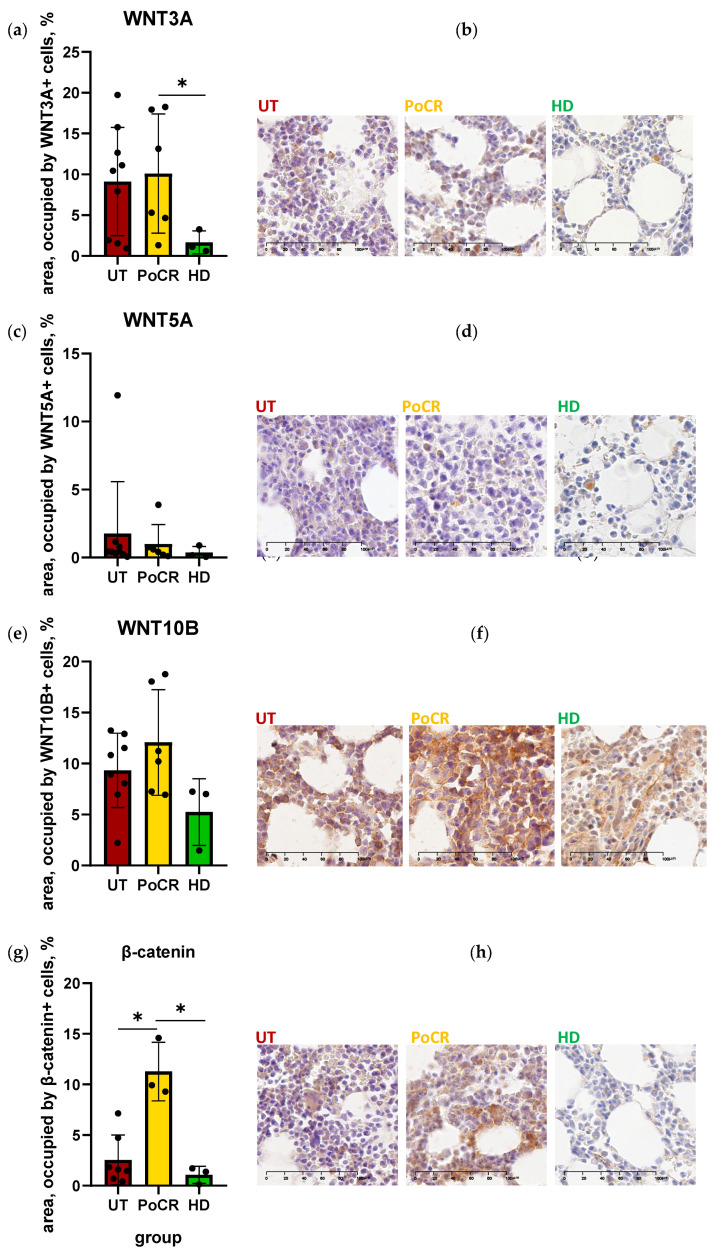 Figure 2
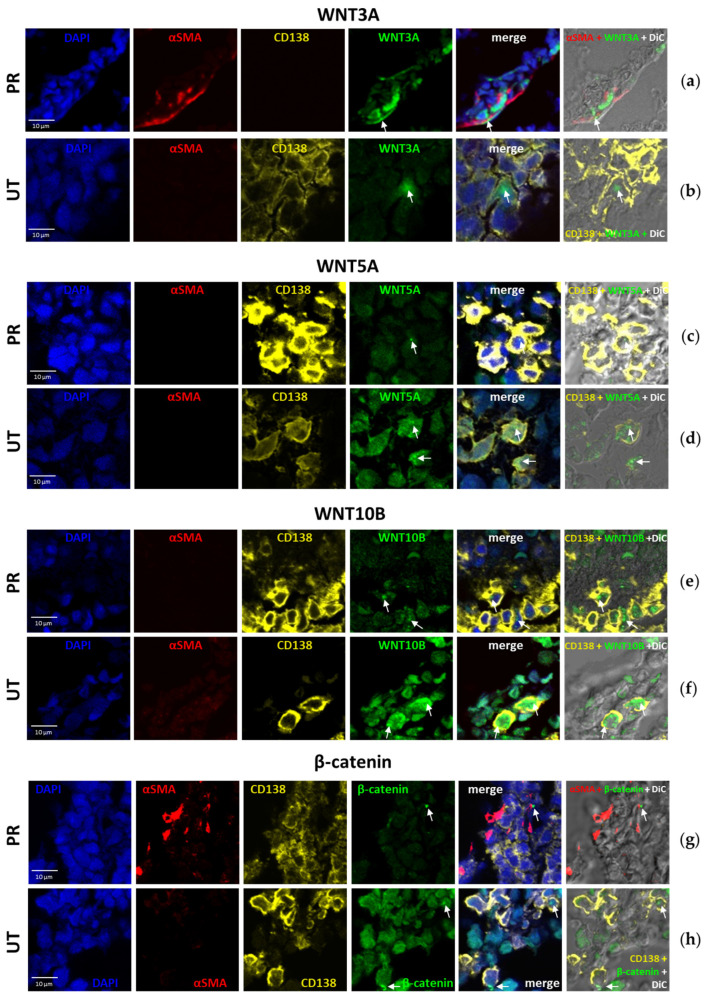 Figure 3
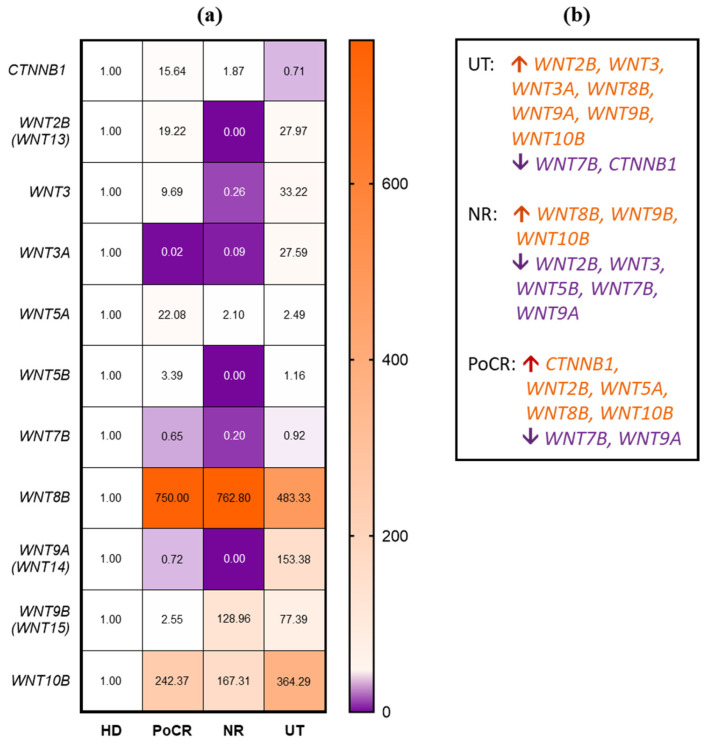 Figure 4
Peer Reviews
No public reviews on file for this paper yet. If you reviewed it on a platform where reviews are public (OpenReview, ICLR, NeurIPS, ICML), you can paste yours below so the community can read it here.
Videos
No videos yet. Explain this paper in a talk, walkthrough, or lecture? Add one.
Taxonomy
TopicsMultiple Myeloma Research and Treatments · Peptidase Inhibition and Analysis · Ubiquitin and proteasome pathways