Analysis of injured-skin SS-OCT images based on combined attention UNet
Xiyu Zheng, Jingyuan Wu, Qiong Ma, Diantao Luo, Qingyu Cai, Haiyang Sun, Hongxing Kang

TL;DR
This study uses improved UNet models with attention mechanisms to analyze laser-induced skin damage in mice using SS-OCT images, showing strong correlations between laser dose, recovery time, and damage volume.
Contribution
The novel contribution is the development and evaluation of three attention-based UNet models for accurate segmentation and quantitative analysis of laser-induced skin damage in SS-OCT images.
Findings
ParallelAT-UNet achieved a Dice coefficient of 0.9364 and 99.39% accuracy in segmenting skin damage regions.
Laser doses between 44.2 J/cm² and 74.4 J/cm² caused significant changes in skin damage volume, varying with dose and recovery time.
All groups showed healing by 14 days post-treatment, with damage volumes smaller than initial measurements.
Abstract
Optical coherence tomography (OCT) is a noninvasive imaging technique that provides high-resolution images of superficial skin tissues and has become widely used for diagnosing various skin disorders. Assessing laser-induced skin tissue damage is essential for understanding the healing mechanisms and optimizing treatment strategies. However, effectively quantifying skin damage and its correlation with laser dosage and recovery time poses a challenge. In this study, we established a laser-induced skin injury model in mice, utilizing 1 μm–2 μm laser wavelengths. We obtained SS-OCT images of the injury site under different laser doses and recovery times. To enhance image clarity, we applied noise reduction using the BM3D algorithm. We employed an improved UNet network model that incorporates SimAM and PSA modules, forming three attention mechanisms: TandemAT-UNet, ParallelAT-UNet, and…
Genes, proteins, chemicals, diseases, species, mutations and cell lines named across the full text — each resolved to its canonical identifier and authoritative record.
Click any figure to enlarge with its caption.
 Figure 1
 Figure 2
 Figure 3
 Figure 4
 Figure 5
 Figure 6
 Figure 7
 Figure 8
 Figure 9
 Figure 10
 Figure 11
 Figure 12
 Figure 13
 Figure 14
 Figure 15
 Figure 16
 Figure 17
 Figure 18
 Figure 19
 Figure 20
 Figure 21
 Figure 22
 Figure 23
 Figure 24
 Figure 25
 Figure 26
 Figure 27
 Figure 28
 Figure 29
 Figure 30
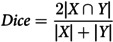 Figure 31
 Figure 32
 Figure 33
 Figure 34
 Figure 35
 Figure 36
 Figure 37
 Figure 38
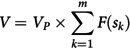 Figure 39
 Figure 40
 Figure 41
 Figure 42
 Figure 43
 Figure 44
 Figure 45
 Figure 46
 Figure 47
 Figure 48
 Figure 49
 Figure 50
Peer Reviews
No public reviews on file for this paper yet. If you reviewed it on a platform where reviews are public (OpenReview, ICLR, NeurIPS, ICML), you can paste yours below so the community can read it here.
Videos
No videos yet. Explain this paper in a talk, walkthrough, or lecture? Add one.
Taxonomy
TopicsOptical Coherence Tomography Applications · Ocular and Laser Science Research · Laser Material Processing Techniques