Active and passive arm movements do not change affective evaluation
Áron Horváth, János Körmendi, Orsolya Drozdovszky, Vera Gál, Ferenc Köteles

TL;DR
This study found that moving the arm actively or passively does not influence how people feel about certain symbols.
Contribution
The study tested the effects of isotonic movements on affective evaluation, extending previous isometric muscle activation research.
Findings
No significant effects of movement type or direction on affective evaluation were found.
Isotonic forearm movements do not change how people rate Chinese-like ideographs.
Muscle effort might be a key factor in understanding the results.
Abstract
Previous research showed that the activation of the arm extensor muscles is associated with a more negative attitude. In contrast, arm flexor muscle activation is associated with a more positive one. However, most of the studies tested these effects with isometric activation of the muscles. The current study was conducted to test if these effects occur with actual passive and active forearm movement (i.e., isotonic muscle activation). 56 university students participated in this preregistered experiment. The study design consisted of two within-subject factors: (1) type of motion (i.e., the arm of the participants was moved actively or passively), and (2) movement direction (i.e., the arm moved toward the body, away from the body, or remained at the middle position. Participants rated their preferences toward Chinese-like ideographs. Data was analysed with repeated measures (2x3) ANCOVAs…
Genes, proteins, chemicals, diseases, species, mutations and cell lines named across the full text — each resolved to its canonical identifier and authoritative record.
Click any figure to enlarge with its caption.
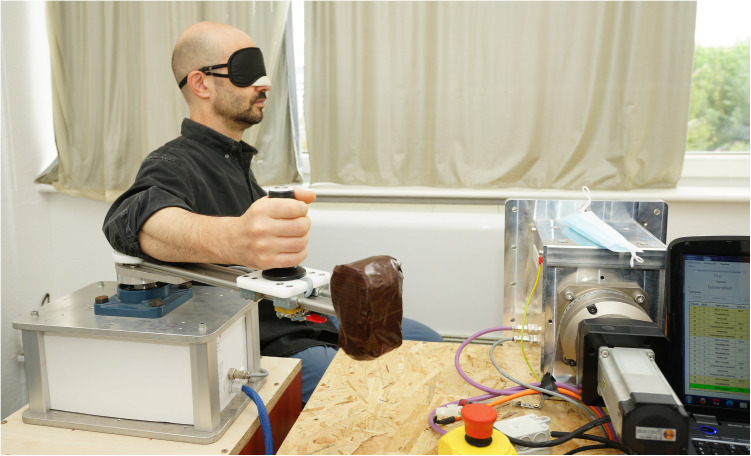 Figure 1
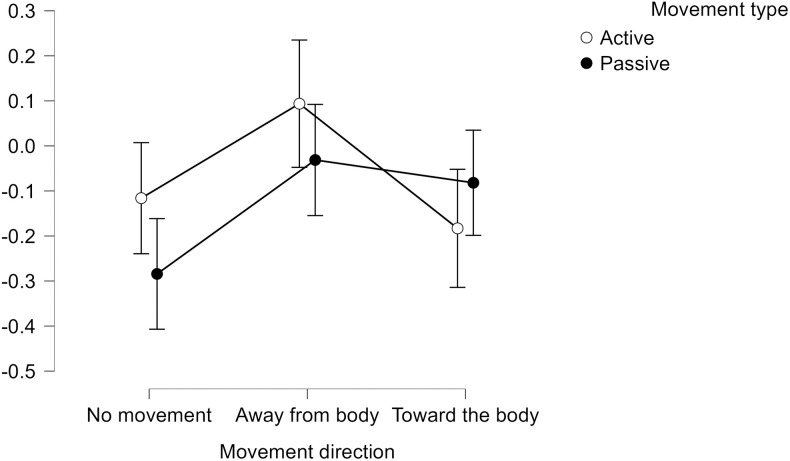 Figure 2
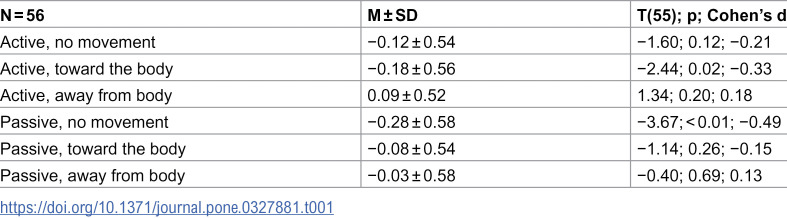 Figure 3
 Figure 4
Peer Reviews
No public reviews on file for this paper yet. If you reviewed it on a platform where reviews are public (OpenReview, ICLR, NeurIPS, ICML), you can paste yours below so the community can read it here.
Videos
No videos yet. Explain this paper in a talk, walkthrough, or lecture? Add one.
Taxonomy
TopicsAction Observation and Synchronization · Sport Psychology and Performance · Social and Intergroup Psychology