Sexual Mechanosensitivity: Age-Related Changes in the Innervation of the Human Prepuce
José A. Vega, Vincenzo Aiello, José Martín-Cruces, Iván Suazo, Ryan Jones, William Musa, Beatrix Szebeni-Varga, Olivia García-Suárez, Yolanda García-Mesa

TL;DR
This study examines how the nerve endings in the male prepuce change with age and finds that mechanosensory innervation peaks at 20 years and declines later.
Contribution
The study provides new insights into age-related changes in prepuce innervation and highlights potential implications of prepuce removal.
Findings
Meissner corpuscles increase in density until age 20, remain stable until 40, then decline.
Krause-like corpuscles are present from age 3 and reach stable density by age 10.
Ruffini and Pacinian corpuscles are rarely observed in the prepuce.
Abstract
Background/Objectives: The male prepuce that covers the glans penis is richly innervated by low-threshold mechanoreceptors, which form cutaneous end-organ complexes (Meissner, Pacinian and Ruffini corpuscles) and mucous end-organ complexes (especially Krause-like corpuscles). The mechanosensory inputs from these formations are the beginning for spinal reflexes that regulate movements of intercourse and erection and, therefore, are required for sexual function. The study was aimed at analyzing the age-dependent changes in prepuce innervation. Methods: Here we used immunohistochemistry to investigate whether the innervation of the male prepuce undergoes age-dependent changes, analyzing subjects aged 4 months to 61 years. Results: Abundant Meissner corpuscles and Krause-like corpuscles were regularly found whose morphology, size, and topography were variable and were not correlated with…
Genes, proteins, chemicals, diseases, species, mutations and cell lines named across the full text — each resolved to its canonical identifier and authoritative record.
Click any figure to enlarge with its caption.
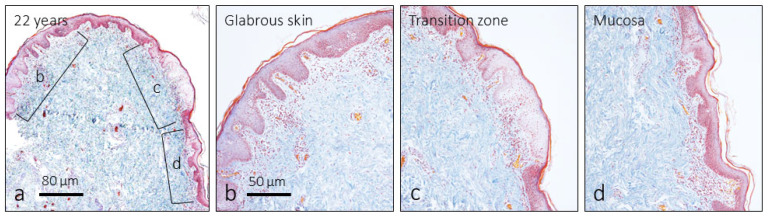 Figure 1
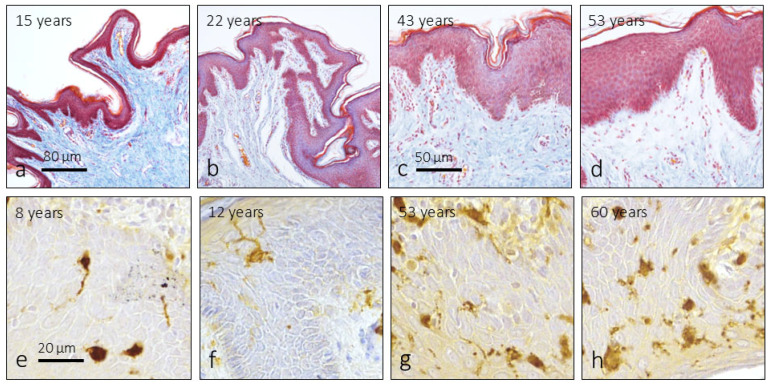 Figure 2
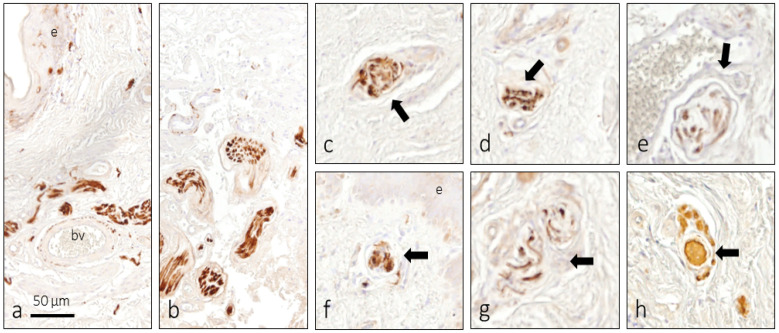 Figure 3
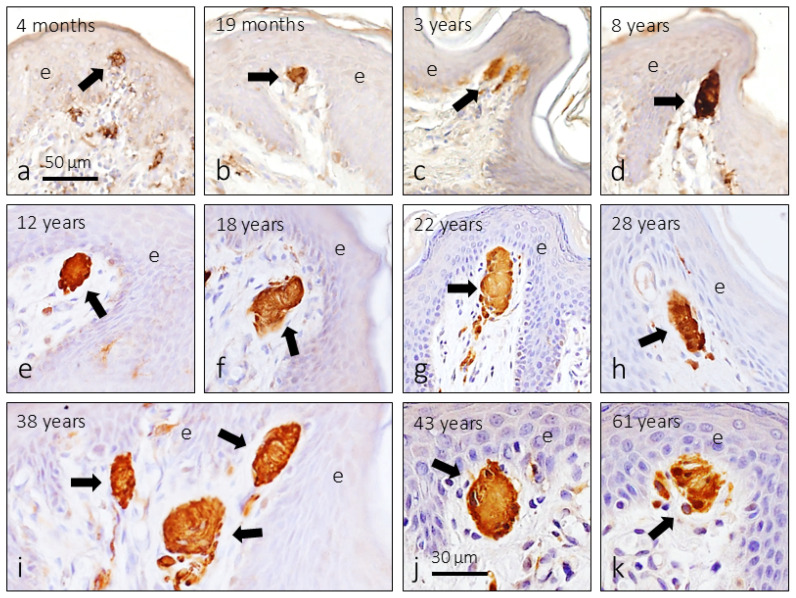 Figure 4
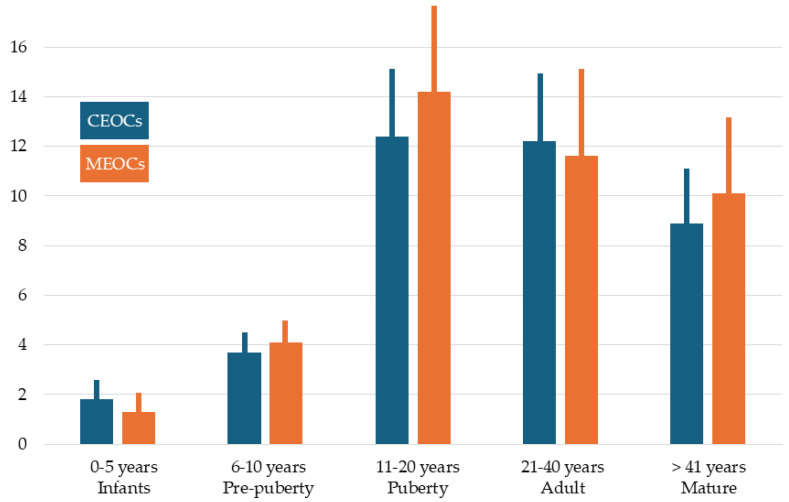 Figure 5
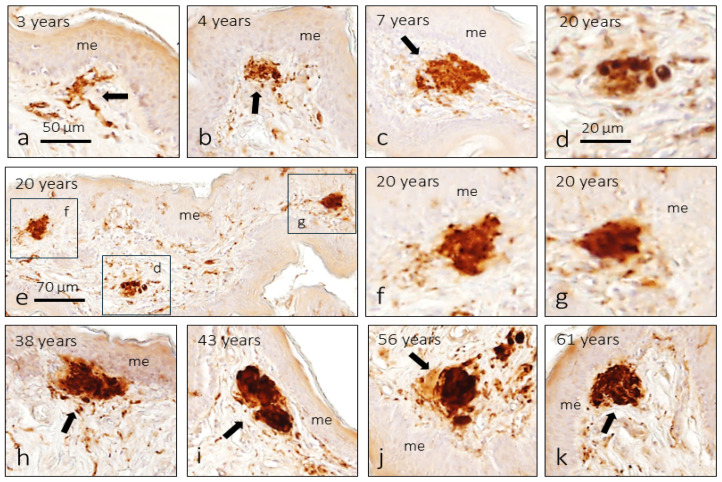 Figure 6
Peer Reviews
No public reviews on file for this paper yet. If you reviewed it on a platform where reviews are public (OpenReview, ICLR, NeurIPS, ICML), you can paste yours below so the community can read it here.
Videos
No videos yet. Explain this paper in a talk, walkthrough, or lecture? Add one.
Taxonomy
TopicsSperm and Testicular Function · Sexual function and dysfunction studies · Sexuality, Behavior, and Technology