POSA-GO: Fusion of Hierarchical Gene Ontology and Protein Language Models for Protein Function Prediction
Yubao Liu, Benrui Wang, Bocheng Yan, Haiyue Jiang, Yinfei Dai

TL;DR
The paper introduces POSA-GO, a new method that combines protein sequences and gene ontology structure to better predict protein functions.
Contribution
POSA-GO introduces a novel framework that integrates hierarchical GO terms and protein language models using partial order self-attention.
Findings
POSA-GO outperforms existing methods in protein function prediction on CAFA3 and SwissProt datasets.
The model uses ESM-2 and topological embeddings of GO terms to improve functional annotation accuracy.
Abstract
Protein function prediction plays a crucial role in uncovering the molecular mechanisms underlying life processes in the post-genomic era. However, with the widespread adoption of high-throughput sequencing technologies, the pace of protein function annotation significantly lags behind that of sequence discovery, highlighting the urgent need for more efficient and reliable predictive methods. To address the problem of existing methods ignoring the hierarchical structure of gene ontology terms and making it challenging to dynamically associate protein features with functional contexts, we propose a novel protein function prediction framework, termed Partial Order-Based Self-Attention for Gene Ontology (POSA-GO). This cross-modal collaborative modelling approach fuses GO terms with protein sequences. The model leverages the pre-trained language model ESM-2 to extract deep semantic…
Genes, proteins, chemicals, diseases, species, mutations and cell lines named across the full text — each resolved to its canonical identifier and authoritative record.
Click any figure to enlarge with its caption.
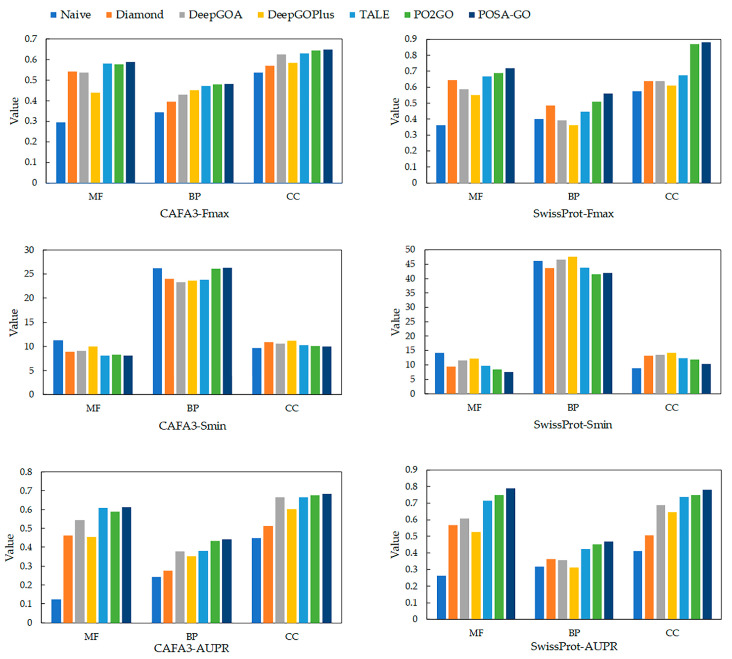 Figure 1
 Figure 2
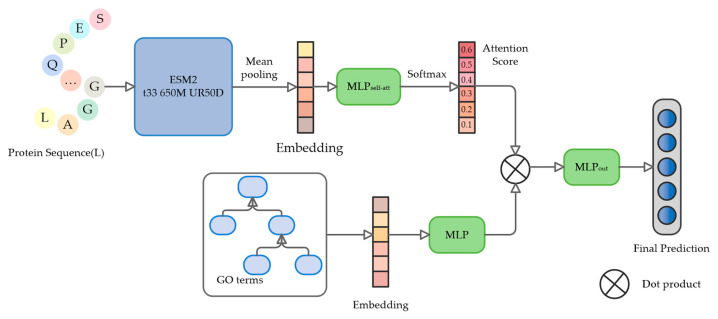 Figure 3
Peer Reviews
No public reviews on file for this paper yet. If you reviewed it on a platform where reviews are public (OpenReview, ICLR, NeurIPS, ICML), you can paste yours below so the community can read it here.
Videos
No videos yet. Explain this paper in a talk, walkthrough, or lecture? Add one.
Taxonomy
TopicsBioinformatics and Genomic Networks · Machine Learning in Bioinformatics · Computational Drug Discovery Methods