Validation with the Dynamic Prediction Model of Protein and Amino Acid Requirements for Growth Performance and Health in Layer Chicks
Zhi-Yuan Xia, Alainaa Refaie, Miao Liu, You-Yang Wei, Lv-Hui Sun, Zhang-Chao Deng

TL;DR
This study validated a dynamic model for predicting protein and amino acid needs in young chickens, showing it supports healthy growth and reduces feed waste.
Contribution
The study validates a dynamic prediction model for layer chicks' protein and amino acid requirements, demonstrating its effectiveness in feed optimization.
Findings
The 100% model diet had no adverse effects on growth performance or health compared to the standard diet.
The model diet reduced nutrient waste while supporting organ and intestinal development in chicks.
The 90% model diet negatively impacted feed intake and growth, while the 110% model increased feed intake.
Abstract
Precision feeding needs dynamic feed formulations that are produced by adjusting the dietary ingredients based on the specific nutritional requirements of animals. Providing precise nutrition for chickens at different life stages can achieve a balance between their nutritional supply and demand, effectively improving feed utilization and reducing costs. This study validated the dynamic prediction model established for the protein and amino acid nutritional requirements of Jing Tint 6 layer chicks aged 0–6 weeks. The results show that dietary supplementation with a 100% model diet formulated based on the prediction model had no adverse effect growth performance and health status when compared to the basal diet formulated according to the feeding standards for layer chicks. Additionally, the 100% model diet appears to be advantageous for the growth and development of both the bursa and…
Genes, proteins, chemicals, diseases, species, mutations and cell lines named across the full text — each resolved to its canonical identifier and authoritative record.
Click any figure to enlarge with its caption.
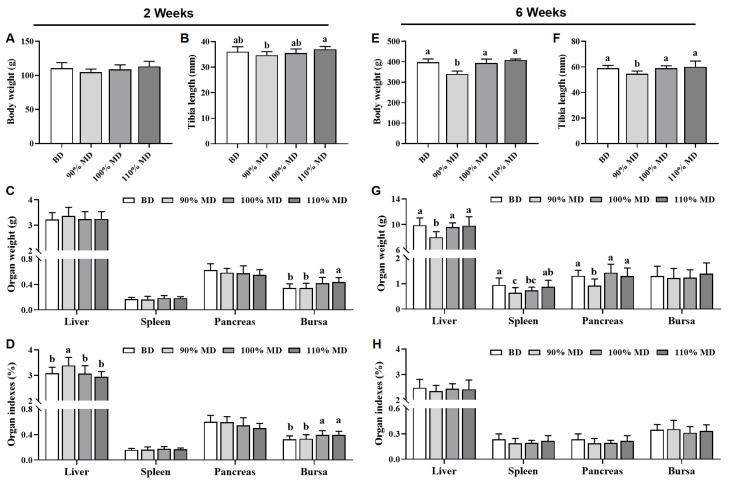 Figure 1
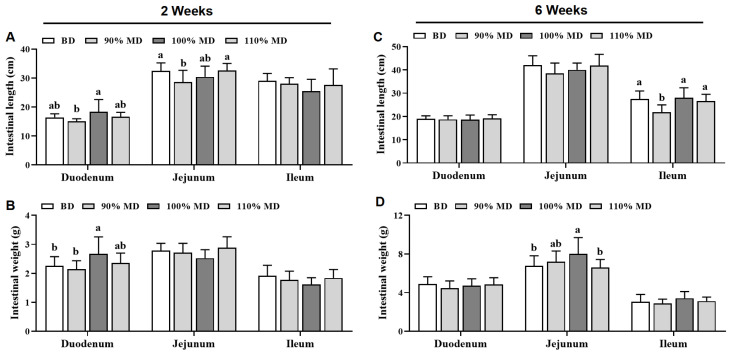 Figure 2
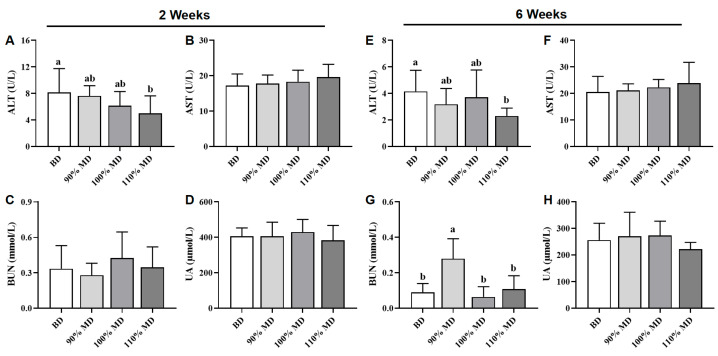 Figure 3
- —National Key Research and Development Program of China
- —fundamental research funds for the Central Universities
Peer Reviews
No public reviews on file for this paper yet. If you reviewed it on a platform where reviews are public (OpenReview, ICLR, NeurIPS, ICML), you can paste yours below so the community can read it here.
Videos
No videos yet. Explain this paper in a talk, walkthrough, or lecture? Add one.
Taxonomy
TopicsAnimal Nutrition and Physiology · Livestock and Poultry Management · Rabbits: Nutrition, Reproduction, Health
1. Introduction
The nutritional requirements of livestock and poultry exhibit dynamic changes over time [1]. Each class of animals, depending on their age and growth stage, has specific nutrient requirements that must be met with feeding formulas [2]. For layer chicks, meeting these requirements through precise dietary formulations is critical for promoting organ growth and development during the brooding period, thus improving their performance during the egg-laying period [3,4]. However, conventional feeding standards often exceed the actual nutritional requirements of animals [2]. Consequently, diets formulated using these standards may either exceed or be deficient for the animals’ actual nutritional requirements, leading to inefficiencies in nutrient utilization [5]. An excessive or deficient nutrient supply, particularly in terms of protein and amino acids, can negatively impact growth and production [6]. Therefore, maintaining a balance between nutrient supply and demand is critical for optimizing production performance while ensuring the profitability and sustainability of the poultry industry [7].
Precision feeding, also referred to as individualized nutrition, enables the development of dynamic feed formulations by adjusting dietary ingredients based on an individual’s specific nutritional requirements [8,9,10]. Through precision feeding technology, providing precise nutrition for animals at different life stages can achieve a balance between their nutritional supply and demand, effectively improving feed utilization, reducing costs, and minimizing environmental pollution [11]. Notably, dynamic models such as those from Gompertz [12] and Bridges [13] have been applied to describe growth curves and patterns in various animals. By incorporating mathematical equations, these models can more accurately predict the nutritional requirements, feed intake, and growth rates of animals at different feeding stages, thereby enhancing the precision of dietary formulations. Thus, establishing a dynamic model for nutritional requirements is a key step toward achieving precision feeding.
In a previous study, we established a dynamic prediction model for the protein and amino acid nutritional requirements of Jing Tint 6 chicks [14]. However, any model must be validated and evaluated to ensure its practical applicability, as predicting its effectiveness across all conditions is challenging [15,16]. Therefore, this study aims to evaluate the accuracy of our established model by comparing the growth performance and health of layer chicks fed diets based on the model’s predicted values against those formulated using conventional feeding standards. This will help facilitate the application of dynamic models in poultry production, contributing to more efficient and sustainable practices in the industry.
2. Materials and Methods
2.1. Birds, Diets, and Treatments
The animal experimental protocol was approved by the Institutional Animal Care and Use Committee of Huazhong Agricultural University, China (ethical code: HZAUCH-2024-0006). A total of 288 one-day-old healthy Jing Tint 6 chicks (33.44 ± 0.08 g) were randomly divided into four treatment groups with 6 replicates of 12 chicks/cage. Each group of 12 chicks was housed in a separate cage (0.8 m × 0.8 m × 0.5 m) as one replicate. The density of each group was the same during the feeding phase. The chicks from the four groups were fed either a basal diet (BD), formulated according to the feeding standards for Jing Tint 6 chicks, or the model diet (MD), formulated according to the dynamic prediction model for protein and amino acid values at 90%, 100%, or 110% for 6 weeks. More details about the dynamic prediction model can be found in our previously published study [14]. The composition and nutritional values of the diets are shown in Table 1. Suitable indoor temperature and humidity, good ventilation, and consistent feeding and management conditions were maintained across all groups [17,18]. The chicks were fed for a period of 6 weeks, during which they were provided with feed and water ad libitum. The body weight (BW) and feed intake (FI) were recorded weekly for each cage (total 6 cages). The body weight gain (BWG) and feed conversion ratio (FCR) were calculated based on BW and FI. BEG (g) = final BW (g) − initial BW (g); FCR = FI (g)/BWG (g). The protein and main amino acid intakes of chicks during the 0–6-week period were calculated based on the FI and nutritional levels of the diet. The calculation formula is as follows: protein and amino acid intake (g) = FI (g) × protein and amino acid levels in the diet (%).
2.2. Sample Collection and Measurement
At the end of 2nd and 6th weeks, two chicks with average BW for each cage were selected. After a 12 h fasting period, 12 chicks from each group were euthanized for sampling and measuring. The vertical distance from the top of the right appendage joint to the bottom of the claws of the chick was measured as the tibial length statistics. Lay the chick on its back with the sternum facing upwards. Press it away from the crop to expose the anterior opening of the chest. Insert the syringe needle along the depression angle of the collarbone, move it horizontally along the midline of the body, and insert it into the heart to collect blood. Serum was subsequently collected from heart blood and then stored at −20 °C for further analysis [19,20]. Subsequently, the liver, spleen, pancreas, and bursae were removed completely and weighed. The organ weight indexes were calculated based on the below formula [21,22]: organ index (%) = organ weight (g)/body weight (g) × 100. Meanwhile, the weight and length of the duodenum, jejunum, and ileum were also measured.
2.3. Serum Biochemistry Analyses
The serum parameters, including alanine aminotransferase (ALT), aspartate aminotransferase (AST), uric acid (UA), and urea nitrogen (BUN) were determined by the corresponding test kits (C009-2-1, C010-2-1, C012-1-1, and C013-2-1; Nanjing Jiancheng Bioengineering Institute; Nanjing, China) according to the manufacturer’s instructions, as previously described [23]. All 12 serum samples were tested.
2.4. Statistical Analyses
The results are presented as the mean ± standard deviation (SD). Statistical analyses were carried out using SPSS 26.0 software. One-way analysis of variance (ANOVA) was used to analyze all the collected data, followed by Duncan’s multiple comparison test. Significant differences were calculated at the p < 0.05 level for all statistical analyses.
3. Results
3.1. Growth Performance
The growth performance results are shown in Table 2. Compared to the BD, the 110% MD exhibited a significant increase (p < 0.05) in FI throughout the entire feeding phase, while BWG and FCR remained unaffected (p > 0.05). Notably, the 100% MD had no effect (p > 0.05) on the FI, BWG, and FCR of chicks compared to the BD throughout the entire feeding phase. However, compared to the BD, the 100% MD, and the 110% MD groups, the 90% MD significantly reduced (p < 0.05) FI and BWG, as well as increasing (p < 0.05) the FCR during weeks 3–6 and weeks 0–6.
3.2. Protein and Main Amino Acid Intake
The results for the protein and main amino acid intake are shown in Table 3. Compared to the BD, the 110% MD significantly increased (p < 0.05) the chicks’ intake of crude protein, lysine, and threonine during weeks 0–6 by 13.8%, 15.0%, and 6.5%, respectively, while reducing the methionine intake by 33.8%. However, compared to the BD and 110% MD groups, dietary supplementation with both the 90% and 100% MDs significantly reduced (p < 0.05) the chicks’ intake of crude protein, methionine, lysine, and threonine during weeks 0–6. Compared to the BD, the 100% MD significantly reduced (p < 0.05) the chicks’ intake of crude protein, methionine, lysine, and threonine by 5.8%, 45.1%, 9.4%, and 11.9%, respectively.
3.3. Organ Weight and Their Indexes
Compared to the BD, both the 100% and 110% MDs had no effect (p > 0.05) on the body weight and tibia length of chicks at 2nd and 6th weeks, while the 90% MD significantly reduced (p < 0.05) the body weight and tibia length at 6th week (Figure 1A,B,E,F). At the 2nd week, both the 100% and 110% MDs increased (p < 0.05) bursa weight and its index, and the 90% MD increased the liver index (Figure 1C,D). At the 6th week, the 90% MD reduced (p < 0.05) the weights of the liver, spleen, and pancreas when compared to the BD (Figure 1G). However, no differences (p > 0.05) were found in the main organ indexes among the four groups at the 6th week (Figure 1H).
3.4. Small Intestine Length and Weight
The lengths and weights of the chicks’ small intestines are shown in Figure 2. At the 2nd week, compared to the BD, the 100% MD increased (p < 0.05) duodenum weight, while the 90% MD decreased jejunum length (Figure 2A,B). At the 6th week, compared to the BD, the 100% MD increased (p < 0.05) jejunum weight, while the 90% MD decreased ileum length (Figure 2C,D). Notably, no differences (p > 0.05) were found in the length and weight of parts of the small intestine, including the duodenum, jejunum, and ileum, between the BD and the 110% MD at the 2nd and 6th weeks (Figure 2).
3.5. Serum Biochemistry
The serum biochemistry results are shown in Figure 3. At the 2nd week, compared to the BD, the 110% MD reduced (p < 0.05) serum ALT, while no differences (p > 0.05) were found in serum AST, BUN, and UA among the four groups (Figure 3A–D). At the 6th week, compared to the BD, the 110% MD also reduced (p < 0.05) serum ALT; the 90% MD increased serum BUN, while no differences (p > 0.05) were found in serum AST and UA among the four groups (Figure 1E–H).
4. Discussion
Precision feeding needs dynamic feed formulations that are produced by adjusting the dietary ingredients based on the specific nutritional requirements of animals [9]. Thus, accurately estimating an animal’s nutritional requirements via establishing the optimal dynamic model is vital for precision feeding [24,25]. In our previous study [14], a dynamic prediction model of the protein and amino acid requirements of Jing Tint 6 chicks during the brooding period was established. In this study, the dynamic model was applied to calculate the weekly protein and amino acid requirements of chicks, which guided the preparation of dietary formulations to validate the model diet’s effect on the growth performance and health of layer chicks. Growth performance serves as a crucial indicator for assessing the growth and development of laying hens during the brooding period [26]. The current study shows that dietary supplementation with 100% and 110% MDs had no adverse effect on the growth performance of chicks compare with the BD throughout the entire feeding phase. However, the 90% MD significantly reduced the growth performance of chicks, as evidenced by the decreasing BW, FI, and BWG, as well as the increasing FCR during weeks 3–6. These outcomes suggesting that insufficient nutrient supply can lead to growth retardation [27] and that the feed prepared according to our predicted dynamic model can meet the nutritional requirements for the normal growth of chicks.
During brooding period, the layer chicks exhibit vigorous growth and metabolism and high dietary requirements for protein and amino acids [28,29,30]. However, high protein levels can lead to metabolic stress, feed resource waste, and environmental pollution [31]. Conversely, low protein levels may fail to meet the growth requirements of chicks, hindering their development and affecting later egg-laying performance [32]. Previous studies have demonstrated that increasing or decreasing the dietary levels of protein and amino acids had a significant impact on the tibia development of laying hens [33,34]. Thus, tibia length is the primary criteria for evaluation of whether dietary protein and amino acids levels meet the development requirements of layer chicks. In this study, the tibia length of laying chicks was not changed by the 100% and 110% MD treatments, indicating that the protein and amino acid levels predicted by the model could meet the growth requirements of laying chicks during the brooding stages. Notably, compared to the BD, dietary supplementation with the 100% MD significantly reduced the chicks intake of crude protein, methionine, lysine, and threonine by 5.8–45.1%. These results suggest that the feed prepared according to our predicted dynamic model could reduce nitrogen intake without any negative effects on the growth and development of laying chicks, which could mean that lower amounts of protein feed ingredient are required, which could lead to economic benefits.
The indices of an animal’s main organs can be used as an indicator to reflect their function [35]. Within a certain range, a higher immune organ index correlates with better-developed immune organs and a stronger ability to resist diseases [36]. The bursa, a primary lymphoid organ responsible for the maturation of B lymphocytes in birds, plays a crucial role in antibody production [37,38]. In this study, dietary supplementation with the 100% and 110% MDs showed a significant increase in the bursa index of the laying chicks at the 2nd week. These findings suggest that the MDs made based on our constructed dynamic model have a positive impact on the development of the bursa, which highlights the importance of precision nutrition in enhancing the immune system and overall health of laying chicks.
The gastrointestinal tract plays an important role in digestion and nutrient absorption [39,40]; intestinal development directly affects the digestion, absorption, and utilization of feed nutrients [41]. In this study, the weights of the duodenum and jejunum of chicks fed the 100% MD were significantly heavier than those of chicks fed the BD at the 2nd and 6th weeks, respectively. This result indicates that the nutritional requirements predicted by the dynamic model can promote the early development of small intestine in layer chicks. Notably, dietary supplementation with the 90% MD decreased the length of the jejunum and ileum, suggesting that nutritional supply below the model-predicted values could not meet the growth requirements of the small intestine in layer chicks.
Protein is an important nutrient in poultry feed and its metabolism plays a vital role in maintaining the normal host physiological function [42,43,44]. BUN, a by-product of protein metabolism, can reflect the level of protein breakdown in the body [45]. In this study, the BUN level in laying chicks was significantly increased under the 90% MD treatment, indicating that protein metabolism is impaired when the nutritional supply of the feed does not meet the predicted level of the model. AST and ALT, the two most active transaminases in the body, play an important role in amino acid metabolism [46,47,48]. In this study, the 110% MD showed a significant decrease in serum ALT levels, indicating a deterioration in protein synthesis. Notably, dietary supplementation with the 100% MD had no adverse effect on the serum biochemistry, as no differences were found in the serum ALT, AST, BUN, and UA between the BD and 100% MD groups. Taken together, these outcomes suggest that increasing or decreasing the dietary levels of protein and amino acids has an adverse effect on the physiological metabolism of chicks, highlighting the importance of nutritional levels for maintaining physiological health in chicks during the brooding period.
5. Conclusions
This study validated the established dynamic prediction model for the protein and amino acid nutritional requirements of Jing Tint 6 layer chicks. Dietary supplementation with the 100% MD resulted in similar growth performance and health status compared to the BD. Meanwhile, the 100% MD could beneficial for the growth and development of the bursae and small intestines of chicks. Moreover, diets formulated according to the prediction model provided more accurate required nutritional levels for supplemented protein and amino acids, thus reducing the waste of these nutrients. These findings indicate that the model accurately predicts the nutritional requirements of Jing Tint 6 layer chicks and has potential efficiency applications in optimizing feed formulations for economic improvements in the poultry industry.
The reference list from the paper itself. Each links out to its DOI / PubMed record.
- 1Caldas J.V. Boonsinchai N. Wang J.R. England J.A. Coon C.N. The dynamics of body composition and body energy content in broilers Poult. Sci.20199886687710.3382/ps/pey 42230500913 · doi ↗ · pubmed ↗
- 2Tian Y.D. Dynamie Model Construction of Energy and Amino Acid Requirements for Broilers Ph.D. Thesis Chinese Academy of Agricultural Sciences Beijing, China 2005
- 3Alfarisy G.A.F. Mahmudy W.F. Natsir M.H. Good parameters for PSO in optimizing laying hen diet Int. J. Electr. Comput. Eng.201882419
- 4Li G. Feng Y. Cui J. Hou Q. Li T. Jia M. Lv Z. Jiang Q. Wang Y. Zhang M. The ionome and proteome landscape of aging in laying hens and relation to egg white quality Sci. China Life Sci.2023662020204010.1007/s 11427-023-2413-437526911 · doi ↗ · pubmed ↗
- 5Pomar C. Hauschild L. Zhang G.-H. Pomar J. Lovatto P.A. Applying precision feeding techniques in growing-finishing pig operations Rev. Bras. Zootec.20093822623710.1590/S 1516-35982009001300023 · doi ↗
- 6Fan L. Xia Y. Wang Y. Han D. Liu Y. Li J. Fu J. Wang L. Gan Z. Liu B. Gut microbiota bridges dietary nutrients and host immunity Sci. China Life Sci.2023662466251410.1007/s 11427-023-2346-137286860 PMC 10247344 · doi ↗ · pubmed ↗
- 7Bamiro O.M. Shittu A.M. Vertical integration and cost behavior in poultry industry in Ogun and Oyo States of Nigeria Agribusiness 20092511510.1002/agr.20185 · doi ↗
- 8Cao K.X. Deng Z.C. Li S.J. Yi D. He X. Yang X.J. Guo Y.M. Sun L.H. Poultry nutrition: Achievement, challenge, and strategy J. Nutr.20241543554356510.1016/j.tjnut.2024.10.03039424066 · doi ↗ · pubmed ↗