TSG6 impacts the immune microenvironment and drug sensitivity in gastric cancer
Valbert Oliveira Costa, Pedro Robson Costa Passos

Abstract
Genes, proteins, chemicals, diseases, species, mutations and cell lines named across the full text — each resolved to its canonical identifier and authoritative record.
Click any figure to enlarge with its caption.
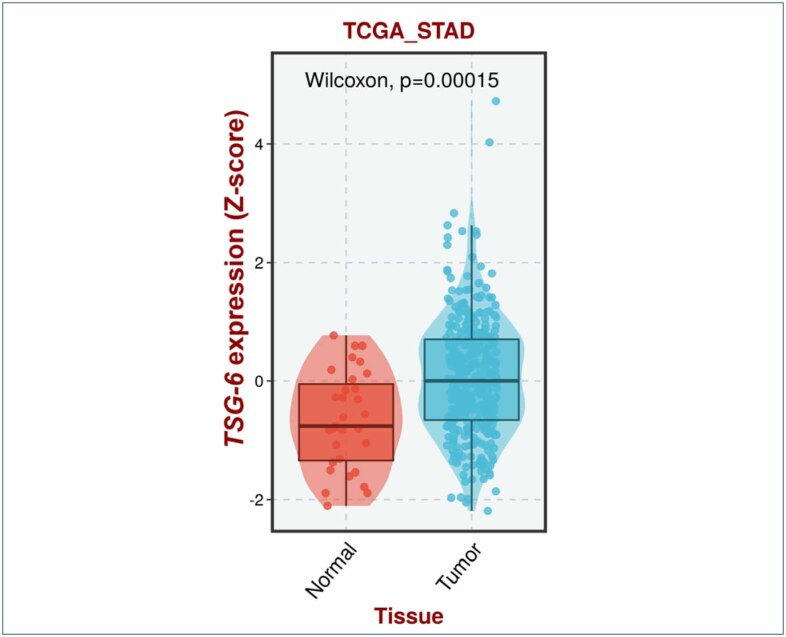 Figure 1
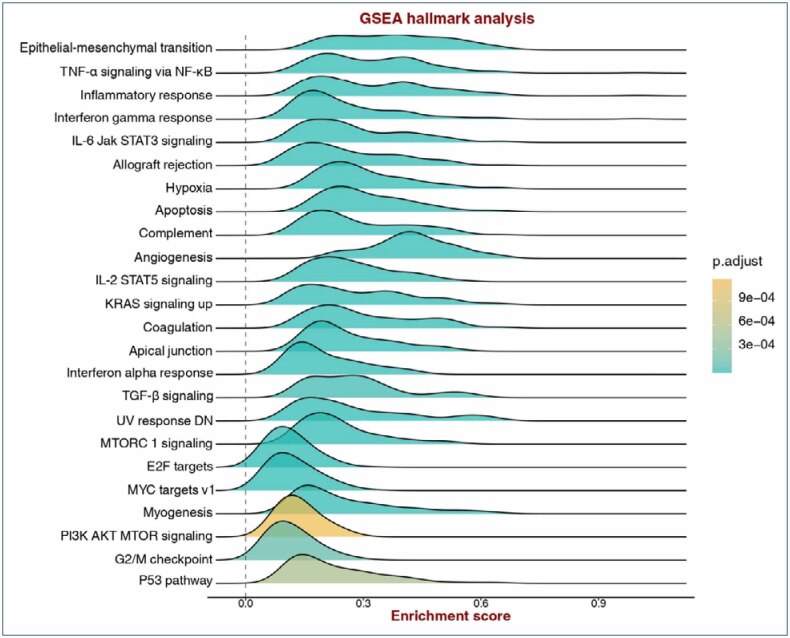 Figure 2
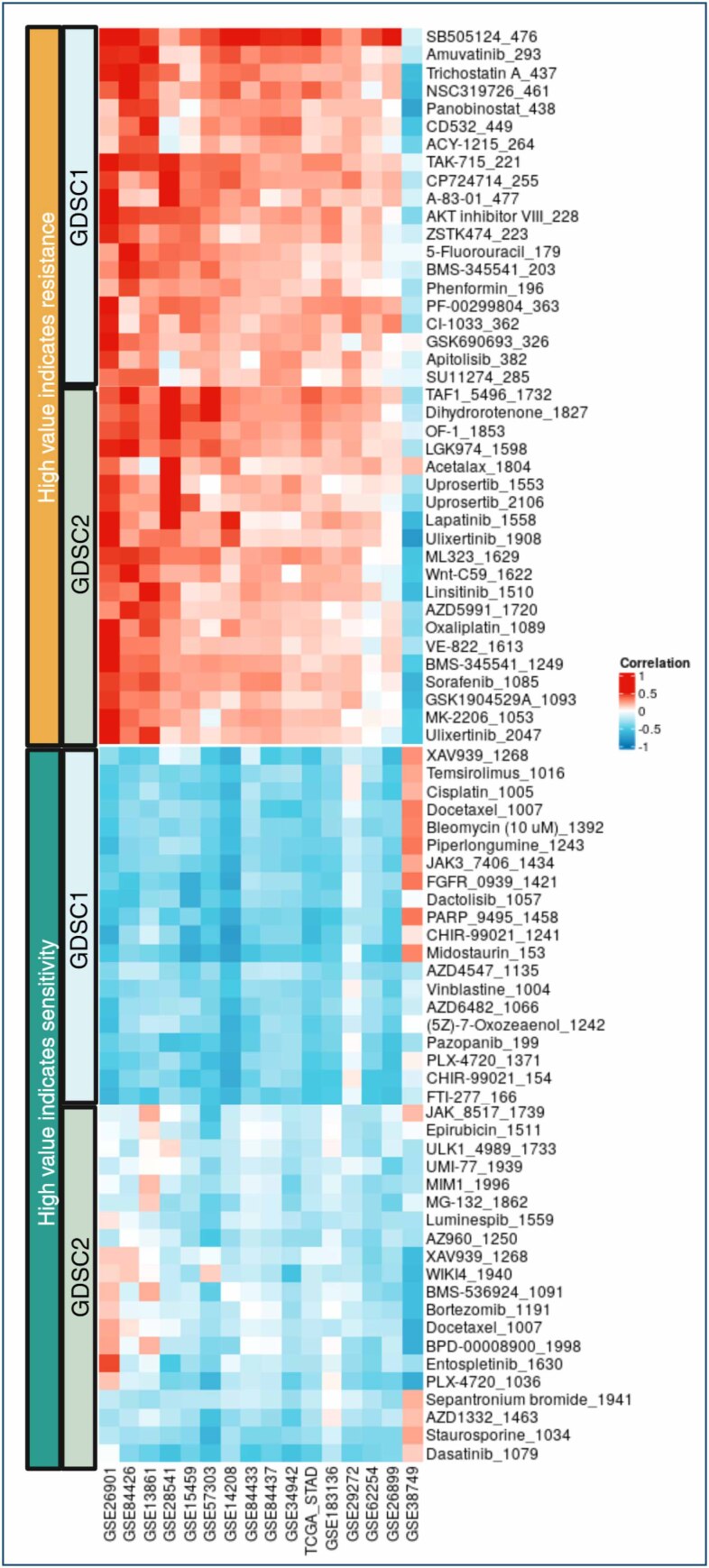 Figure 3
Peer Reviews
No public reviews on file for this paper yet. If you reviewed it on a platform where reviews are public (OpenReview, ICLR, NeurIPS, ICML), you can paste yours below so the community can read it here.
Videos
No videos yet. Explain this paper in a talk, walkthrough, or lecture? Add one.
Taxonomy
TopicsHelicobacter pylori-related gastroenterology studies · Cancer Mechanisms and Therapy · Cancer Immunotherapy and Biomarkers
Dear Editor,
We were very pleased to read the study by Durak et al.^ 1 ^, in which they revealed the significant role of high hyaluronan levels and increased TNFAIP6 (TSG-6) mRNA expression in the pathobiology of gastric cancer. This study provides interesting insights into the molecular mechanisms underlying extracellular matrix abnormalities in gastric cancer. Inspired by their findings, we performed additional analyses focused on TSG-6 to further validate and expand upon the study's conclusions.
Initially, we analyzed transcriptomic datasets containing sequencing data from normal gastric tissues and gastric cancer tissues. Using a Wilcoxon rank-sum test, we observed statistically significantly higher expression levels of TSG-6 in tumor samples compared to normal samples in the Cancer Genome Atlas Cohort (TCGA-STAD) (Figure 1) (p<0.001) and GSE29272 cohort (p<0.001). This result corroborates the findings of Durak et al.^ 1 ^ in larger cohorts through alternative gene expression platforms, reinforcing TSG-6 as a key component in the pathogenesis of gastric cancer.
Next, we utilized TIMER^ 2 ^, a computational algorithm to estimate immune cell infiltration, across patients from the gastric cancer transcriptomic cohort (TCGA-STAD). Our analyses through Spearman's rank correlation coefficient revealed a correlation between elevated TSG-6 expression and infiltration of immune cells, particularly neutrophils (Cor=0.51, p<0.001), macrophages (Cor=0.27, p<0.001), and CD8+ T lymphocytes (Cor=0.24, p<0.001). Our findings suggest that TSG-6 influences the immune landscape within the gastric tumor microenvironment.
Using the TCGA cohort, we stratified patients into two groups based on TSG-6 expression: TSG-6-high (>median) and TSG-6-low (Imedian). Gene set enrichment analysis demonstrated that the TSG-6-high group was significantly associated with enhanced inflammatory responses, increased tumor necrosis factor-α (TNF-α) signaling via nuclear factor (NF)-κB, and heightened epithelial–mesenchymal transition activity (Figure 2). These results further underscore the multifaceted role of TSG-6 in gastric cancer, suggesting its involvement in both immune regulation and tumor aggressiveness.
Considering the distinct tumor biology associated with different TSG-6 expression groups, we conducted a drug sensitivity analysis using data from cell lines treated with various compounds via the BEST tool^ 3 ^. Specifically, we assessed whether TSG-6 expression correlated with the half-maximal inhibitory concentration (IC50) values of anticancer drugs across 16 transcriptomic datasets from gastric cancer patients, leveraging data from GDSC1 and GDSC2^ 4 ^ (Figure 3).
Interestingly, higher TSG-6 expression levels were associated with increased resistance to 5-fluorouracil, oxaliplatin, and sorafenib. Conversely, elevated TSG-6 levels correlated with decreased resistance to cisplatin, docetaxel, and epirubicin. These findings suggest that TSG-6 may serve as a predictive biomarker for therapeutic response in gastric cancer, potentially guiding treatment decisions. For instance, patients with a high TSG-6 expression might benefit from substituting oxaliplatin with cisplatin to enhance treatment efficacy. This highlights the potential clinical relevance of TSG-6 not only in understanding tumor biology but also in optimizing personalized therapeutic strategies for gastric cancer.
In summary, our findings validate those of Durak et al.^ 1 ^, highlighting the role of TSG-6 in gastric cancer pathogenesis and its association with immune infiltration and therapeutic sensitivity. We recommend that future studies further investigate TSG-6 as a biomarker to guide personalized treatment strategies, given its potential to predict drug sensitivity and resistance.
The reference list from the paper itself. Each links out to its DOI / PubMed record.
- 1Durak AT Akyıldız HY Çelik PA Aytekin M The role of hyaluronan modification in the etiopathogenesis of gastric cancer Rev Assoc Med Bras (1992)20247012 e 2024108710.1590/1806-9282.2024108739699484 PMC 11656538 · doi ↗ · pubmed ↗
- 2Li T Fu J Zeng Z Cohen D Li J Chen Q TIMER 2.0 for analysis of tumor-infiltrating immune cells Nucleic Acids Res 202048 W 1W 509W 51410.1093/nar/gkaa 40732442275 PMC 7319575 · doi ↗ · pubmed ↗
- 3Liu Z Liu L Weng S Xu H Xing Z Ren Y BEST: a web application for comprehensive biomarker exploration on large-scale data in solid tumors J Big Data 202310110.1186/s 40537-023-00844-y · doi ↗
- 4Yang W Soares J Greninger P Edelman EJ Lightfoot H Forbes S Genomics of drug sensitivity in cancer (GDSC): a resource for therapeutic biomarker discovery in cancer cells Nucleic Acids Res 201341 Database issue D 955D 96110.1093/nar/gks 111123180760 PMC 3531057 · doi ↗ · pubmed ↗