NSUN2 rs13181449 variant decreases the risk of oral cancer development
Li-Chung Hung, Cheng-Chen Huang, Yen-Ting Lu, Chun-Wen Su, Chiao-Wen Lin, Hsiao-Ju Chu, Shun-Fa Yang, Hsueh-Ju Lu

TL;DR
A genetic variant in the NSUN2 gene is linked to a reduced risk of oral cancer, especially in smokers, and is associated with lower gene expression and worse outcomes in patients.
Contribution
The study identifies a novel association between the NSUN2 rs13181449 variant and reduced oral cancer risk, particularly in smokers.
Findings
The NSUN2 rs13181449 TT allele is associated with a 24% lower risk of oral cancer.
Smokers with the rs13181449 TT allele have a significantly reduced cancer risk compared to non-carriers.
Higher NSUN2 expression correlates with worse survival in oral cancer patients.
Abstract
NOP2/Sun RNA methyltransferase 2 (NSUN2), encoded by the NSUN2 gene, is a nuclear RNA methyltransferase that catalyzes the methylation of cytosine to 5-methylcytosine (m5C). Although RNA modification has been widely discussed in cancer development and prognosis, the role of the NSUN2 gene in oral cavity squamous cell carcinoma (OCSCC) is unclear. This was a retrospective, case-control study. A total of 2514 participants were enrolled, including 52.4% (1318/2514) diagnosed with OCSCC and others as health control. The impact of NSUN2 rs4702373, rs166049, rs13181449, and rs8192120 on cancer development and prognosis were analyzed. Our results revealed that NSUN2 rs13181449 allele TT was significantly associated with lower OCSCC risk, with an adjusted odd ratio (AOR) [95% confidence index (CI)] of 0.757[0.575-0.997]. For cigarette smokers, the impact of rs13181449 was more obvious that AOR…
Genes, proteins, chemicals, diseases, species, mutations and cell lines named across the full text — each resolved to its canonical identifier and authoritative record.
Click any figure to enlarge with its caption.
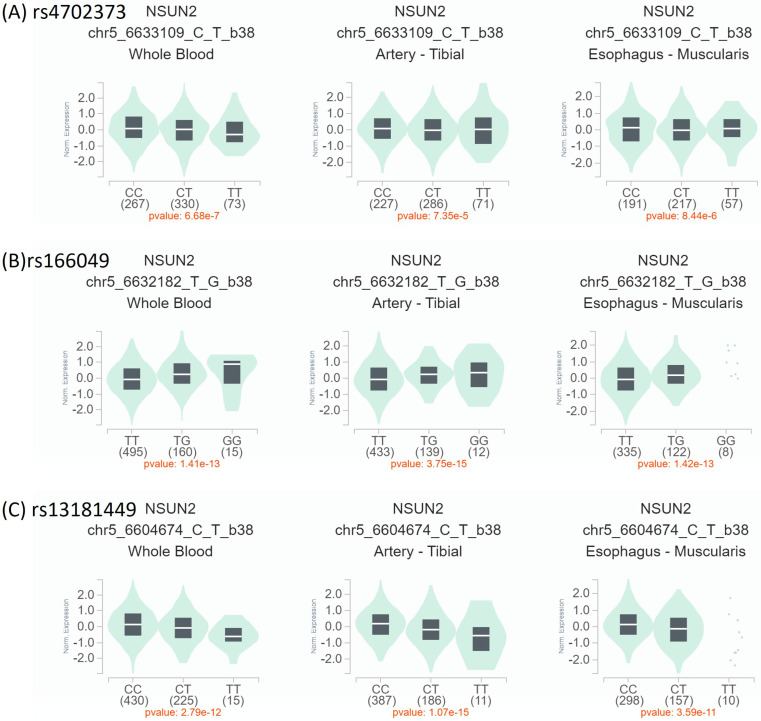 Figure 1
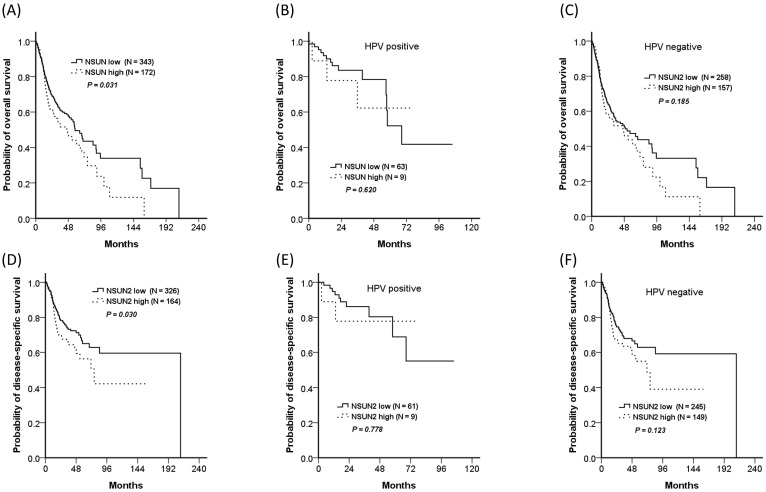 Figure 2
Peer Reviews
No public reviews on file for this paper yet. If you reviewed it on a platform where reviews are public (OpenReview, ICLR, NeurIPS, ICML), you can paste yours below so the community can read it here.
Videos
No videos yet. Explain this paper in a talk, walkthrough, or lecture? Add one.
Taxonomy
TopicsRNA modifications and cancer
Introduction
Oral cavity squamous cell carcinoma (OCSCC) is one of the largest subpopulations of head and neck squamous cell carcinoma (HNSCC), the eighth most common cancer globally and the fourth most common cancer of males in Taiwan 1, 2. Although previous studies reported personal health habits impacted the risk of OCSCC development 3, genetic risks of OCSCC development were rarely discussed 4-8. Once the disease progresses to recurrent metastatic status, a poor prognostic situation 9, 10, genetic roles in prognosis also need to be clear. In the genomics era, genetic profiling associated with developmental risk and prognosis for OCSCC is significant.
Developing next-generation sequencing technologies improves genomic studies and treatment decisions in the modern era 11, 12. From the aspect of prevention medicine, some genetic variants also have been reported as significantly associated with cancer development, such as BRCA1/BRCA2 mutations 13. The roles of single nucleotide polymorphisms were also discussed in the relationships of cancer risks across various cancer types 14, 15. Additionally, RNA modification is another critical issue in the occurrence and progression of cancer 16, 17. The mutation and regulation of long-noncoding RNA have been proven major role in cancer development for various cancer types 18-21. In previous study, the role of RNA modification, such as RNA methylation mediated by the NSUN2 gene, was discussed, especially in cancer development and prognosis 22.
NOP2/Sun RNA methyltransferase 2 (NSUN2), a nuclear RNA methyltransferase that catalyzes the methylation of cytosine to 5-methylcytosine (m5C) at position 34 of intron-containing tRNA precursors, is a protein encoded by the NSUN2 gene 23, 24. The physiologic function of NSUN2 is to regulate RNA modification, which is necessary to stabilize the anticodon-codon pairing and correctly translate the mRNA 24. NSUN2 directly plays an important role in tissue homeostasis, especially mitotic spindle stability. Other functions including cellular proliferation, migration, and differentiation were also presented 25. For malignancies, NSUN2 was discovered as a target of MYC and the depletion of NSUN2 wound impaired MYC-dependent proliferation 26. Prognostic roles of NSUN2 were also presented in various cancers, including gastric cancer, breast cancer, and others 27-29. In addition to the studies discussing the function of NSUN2 in malignancies, NSUN2 polymorphisms have been reported to reduce cancer development in neuroblastoma 22. However, the roles of NSUN2 polymorphisms as well as methyltransferase NSUN2 in OCSCC are limited.
To identify the impact of NSUN2 polymorphisms on cancer development and prognosis, our study retrospectively analyzed their roles between patients with OCSCC and healthy people. Published databases, such as the Genotype-Tissue Expression (GTEx) Portal and TCGA, were used to validate our results.
Materials and methods
Study subjects
This retrospective case-control study included patients diagnosed with OCSCC, selected from the BioBank database of Chung Shan Medical University Hospital. The control group comprised healthy individuals aged 30 to 70 years, with normal cognitive function and no history of cancer, selected from the Taiwan Biobank. For the case group, individuals without a pathological diagnosis or those with second primary malignancies were excluded. Female participants were excluded from both the case and control groups, as nearly 90% of OCSCC patients were male 30. The study was approved by the Institutional Review Board of Chung Shan Medical University Hospital (CSMUH No: CS1-21151).
Clinical data collection
Basic characteristics, including age, cigarette smoking, alcohol drinking, and betel quid chewing, were collected from the BioBank databases. Pathologic factors of the case group were also supported in our previous studies 31, 32. The American Joint Committee on Cancer's staging system (seventh edition) was used in this study 33. However, due to delinking and anonymity, cancer-specific clinical outcomes of the case group were limited and difficult to available.
DNA extraction and genotyping
Genomic DNA was extracted from peripheral blood leukocytes by using QIAamp DNA blood mini kits (Qiagen, Valencia, CA, USA) according to the manufacturer's instructions. Because NSUN2 polymorphisms, including rs4702373, rs166049, rs13181449, and rs8192120, were associated with cancer risk in previous studies 22, these polymorphisms were studied for OCSCC in our study. The results were further analyzed using SDS version 3.0. The details of DNA extraction and genotyping were published in our previous study 34.
Published databases for validation
Several published databases were used to verify our results, including the Genotype-Tissue Expression (GTEx) portal and cBioPortal. The GTEx portal is a comprehensive public resource to study human gene expression and regulation, and its relationship to genetic variation across multiple diverse tissues and individuals, including whole-genome sequencing (WGS), whole-exome sequencing, and RNA-seq (https://gtexportal.org/home/) 35. The cBioPortal is an open-access, open-source resource for interactive exploration of multidimensional cancer genomics data sets, including the TCGA database (https://www.cbioportal.org/) 36.
Statistical analysis
Clinicopathological parameters were compared using the χ^2^ and Fisher exact tests. Independent risks of cancer development were analyzed by using univariate and multivariate logistic regressions with the odd ratios (ORs) [95% confidence index (CI)]. Additionally, the impact of NSUN2 polymorphisms in the OCSCC development was adjusted by age and personal health habits, with the so-called adjusted odd ratios (AOR). Significant association between genotypes and NSUN2 expression levels in the GTEx portal was detected with the linear regression model. Survival outcomes from the TCGA database were analyzed using Kaplan-Meier plots and the log-rank test. A two-sided P value of <0.05 was statistically significant. SPSS (version 21.0, SPSS Inc., Chicago, IL, USA) was used for all statistical analyses.
Results
Baseline characteristics
A total of 2514 participants were enrolled in the study, including 52.4% (1318/2514) in the case group and others (47.6%, 1196/2514) in the control group. The case group, diagnosed with OCSCC, were elderly, with more cigarette smoking, alcohol drinking, and betel quid chewing than the control group (all P < 0.001). Basic characteristics are shown in Table 1.
NSUN2 rs13181449 prevents the development of OCSCC
The distributions of all allele mutations were shown. Among all participants, the allele mutant frequencies of NSUN2 rs4702373, rs166049, rs13181449, and rs8192120 were 32.4% (815/2514), 35.6% (895/2514), 67.3% (1692/2514), and 50.9% (1280/2514), respectively. The distributions of the allele mutations between the case and control groups were similar, with P values of 0.312, 0.872, 0.348, and 0.360, respectively. To know the impacts of NSUN2 polymorphisms on the development of OCSCC, logistic regression analysis was done to identify the odd ratio (95% confidence index [CI]) of each allele. After adjusting to age, cigarette smoking, alcohol drinking, and betel quid chewing, the participants with rs13181449 allele TT significantly had lower OCSCC development than those without (AOR [95% CI], 0.757[0.575-0.997]) (Table 2).
For cigarette smokers, one of the most common subgroups representing 65.4% (1643/2514) of all participants, rs13181449 allele mutations were also significantly associated with low OCSCC development. AORs [95% CI] of rs13181449 allele CT, TT, and CT+TT were 0.760 [0.583-0.991], 0.699 [0.493-0.990], 0.746 [0.580-0.960], respectively. NSUN2 rs13181449 decreasing OCSCC risk was advanced for cigarette smokers (Table 2).
NSUN2 mRNA expression among different tissues
To verify our finding, the expressions of NSUN2 allele mutations among different tissues were compared based on the GTEx database. The participants with rs4702373 and rs166049 mutations were significantly associated with higher NSUN2 expression in whole blood, artery, and upper aerodigestive soft tissue (esophageal muscularis) than those without (all P values < 0.05). However, the participants with rs13181449 mutation had lower expression than others (P < 0.05) (Figure 1). It might indirectly support that the participants with lower NSUN2 expression levels were related to lower OCSCC development. Future warranted studies were needed.
Prognostic role of NSUN2 polymorphisms in OCSCC
The prognostic roles of NSUN2 allele mutations in OCSCC were also studied. Among the participants diagnosed with OCSCC, allele mutations of rs4702373, rs166049, rs13181449, and rs8192120 were 33.5% (442/1318), 35.9% (473/1318), 66.5% (877/1318), and 52.2% (668/1318), respectively. Basic characteristics between the OCSCC patients with and without allele mutations were insignificant differences, except for the patients with rs4702373 allele mutation who were associated with advanced histological grade than those without (P = 0.038) (Table 3). However, for the patients with cigarette smoking, the patients with rs4702373 mutation also had a trend of advanced histological grade than those without but insignificant in statistic (advanced histologic grade, patients with and without rs4702373 mutation, 85.5% vs. 81.3%, respectively,* P* = 0.058) (Table 4).
Independent roles of NSUN2 alleles for histologic grades were analyzed by using univariant and multivariate logistic regression. In Table 5, cigarette smoking, betel quid chewing, pathologic N staging, and rs4702373 allele CT were significantly associated with moderate-to-poor histological grade in univariant analysis. But only rs4702373 allele CT was independent impacting histological grade (OR [95% CI], 1.451[1.017-2.069]). Other allele mutations were not associated with the impact of histological grade formation in analyses.
Relationship between NSUN2 expression and clinical outcomes
In addition, the TCGA database was also used for validation. Because nearly one-third of OCSCC patients in our cohort had rs4702373 allele mutation and the mutant allele might be associated with higher NSUN2 expression, a total of 515 HNSCC patients from the TCGA database were divided into the two groups of high- (33.4%, 172/515) and low- (66.6%, 343/515) NSUN2 expression. The high-NSUN2 group significantly worsened in overall survival and disease-free survival, with P values of 0.031 and 0.030, respectively. The impact of NSUN2 expression was also presented in both patients with and without human papillomavirus (HPV) associated. Although there were insignificant differences in overall survival and disease-free survival between the patients with high- and low- NSUN2 expression, either with or without HPV associated, the trend showed that the patients with high expression seemed worse survivals than those with low expression.
Discussion
A total of 2514 participants were retrospectively enrolled in our study, with 52.4% belonging to the case group diagnosed with OCSCC and others as healthy control. NSUN2 rs13181449 allele TT was significantly associated with a lower OCSCC development. For cigarette smokers, the effect of NSUN2 rs13181449 decreasing the risk of OCSCC development was more obvious. In the prognostic role, the NSUN2 rs4702373 CT allele was an independent factor associated with the formation of advanced histological grade for the patients diagnosed with OCSCC. The published database validated that except for rs13181449 mutations associated with lower expression levels, the participants with NSUN2 polymorphism mutations significantly had higher expression than those without. For both subgroups with or without HPV associated, the patients with higher expression levels had worse clinical outcomes than those with lower expression. Future studies were needed.
There were several advantages in our study as follows. First, this was a large real-world population, with a total of 2514 participants, and 52.4% of them diagnosed with OCSCC. It was representative to discuss the role of NSUN2 in OCSCC. In addition, although genomic studies were important in the modern era, genetic roles in decreasing the risk of malignancies were limited 13. In our study, NSUN2 rs13181449 independently reduced the risk of OCSCC development, especially for the subgroup with cigarette smoking. Third, NSUN2 expressions were various in several cancer types. In OCSCC, the patients with higher NSUN2 expression were associated with worse prognosis than those without. However, different allele mutations might be associated with opposite gene expressions. Future studies to validate this issue should be careful.
DNA methylation has been reported as an important regulator of gene transcription, and its carcinogenetic role is also an interesting issue in the last few years. Alterations in DNA methylation are common in a variety of tumors as well as in development 37. Recently, the roles of RNA methylation have been discussed widely 38, 39. The Biological significance of NSUN2 upregulating cell proliferation and metastasis was reported, and the TCGA database also showed that in tumor specimens, NSUN2 expressions are higher than those in normal tissue across several cancer types 25, 40, 41. For HNSCC, Lu et al. study presented that NSUN2 expression was 1.99-fold upregulation versus normal tissue. The patients associated with higher NSUN2 were correlated with worse survival than those with lower 42. NSUN2 expression was also reported as a potential biomarker that immune checkpoint therapy might benefit patients with higher expression and less effective for those with lower expression 43. Our study reported that for OCSCC, patients with higher* NSUN2* expression were associated with worsened survival. In addition, NSUN2 rs4702373 allele mutation, related to higher expression, was independent of advanced histological grade. This finding was correlative to previous studies. However, the expression levels might vary between different alleles. Compared with normal tissue, the expression level of the rs13181449 mutation was lower, and conversely, the expression level of the rs4702373 and rs166049 mutations was higher. This point needed to be advanced validated.
Although the mechanism that rs13181449 associated with lower expression needed to be studied, patients with rs13181449 mutation seemed to have a lower risk of cancer development. In Lin et al. study, NSUN2 rs13181449 was significantly associated with lower neuroblastoma risk (CT/TT vs. CC: AOR [95% CI]: 0.69 [0.50-0.97]) 22. In our cohort, NSUN2 rs13181449 also reduced the development of OCSCC, especially for cigarette smokers. Although detailed mechanisms between NSUN2 mutation, cigarette smokers, and cancer development are unknown, it might be because cigarette smoking might increase HIF-1-alpha levels, which mediated RNA modification through complex regulation, such as cell cycle, PI3K-AKT pathway, and others 44-46. Therefore, NSUN2 rs13181449-associated lower expression might decrease the activation of the cell cycle and PI3K-AKT pathway, protecting cancer development more obviously for patients with cigarette smoking. Advanced experiment studies are needed.
Several limitations were presented in this study. Although this was a large cohort study, with more than two thousand five hundred participants enrolled, functional experiments in vitro and in vivo were needed to validate. In addition, the anonymous and delinked policy due to ethical issues caused detailed clinicopathological information not available. This information was also important for validation. Third, expression levels of different NSUN2 polymorphisms were various in the published database. Detailed mechanisms were suggested to support our findings, especially for the relationship between NSUN2 rs13181449, cigarette smokers, and cancer development.
In conclusion, the roles of NSUN2 polymorphisms in OCSCC development and prognosis were rarely discussed. In our study, NSUN2 rs13181449 was independent in decreasing the risk of OCSCC, especially for cigarette smokers. However, based on the published database, expression levels of different polymorphisms might be various. In the prognostic role, the patients with higher expression were associated with advanced histological grade and worsened survival. In vitro and in vivo advanced functional studies were needed to validate the results.
Funding
This study was supported by Chung Shan Medical University Hospital (CSH-2023-C-006).
The reference list from the paper itself. Each links out to its DOI / PubMed record.
- 1Su SC Chang LC Huang HD Peng CY Chuang CY Chen YT Lu MY Chiu YW Chen PY Yang SF Oral microbial dysbiosis and its performance in predicting oral cancer Carcinogenesis 202142127353262174010.1093/carcin/bgaa 062 · doi ↗ · pubmed ↗
- 2Su SC Yeh CM Lin CW Hsieh YH Chuang CY Tang CH Lee YC Yang SFA novel melatonin-regulated lnc RNA suppresses TPA-induced oral cancer cell motility through replenishing PRUNE 2 expression J Pineal Res 202171 e 127603433954110.1111/jpi.12760 · doi ↗ · pubmed ↗
- 3Lee YA Li S Chen Y Li Q Chen CJ Hsu WL Lou PJ Zhu C Pan J Shen H Ma H Cai L He B Wang Y Zhou X Ji Q Zhou B Wu W Ma J Boffetta P Zhang ZF Dai M Hashibe M Tobacco smoking, alcohol drinking, betel quid chewing, and the risk of head and neck cancer in an East Asian population Head Neck 201941921023055282610.1002/hed.25383 · doi ↗ · pubmed ↗
- 4da Silva AM Falcão MML Freitas VS Vieira AR Genetic and environmental contributions for the relationship between tooth loss and oral potentially malignant disorders and oral squamous cell carcinoma Head Neck 2024461417273828860910.1002/hed.27648 · doi ↗ · pubmed ↗
- 5da Silva AM Freitas VS Vieira AR Polymorphisms associated with oral clefts as potential markers for oral pre and malignant disorders Oral Dis 2024302985903785664910.1111/odi.14779 · doi ↗ · pubmed ↗
- 6Chen YT Lin CW Chou YE Su SC Chang LC Lee CY Hsieh MJ Yang SF Potential impact of ADAM-10 genetic variants with the clinical features of oral squamous cell carcinoma J Cell Mol Med 2023271144523694628110.1111/jcmm.17728 PMC 10098292 · doi ↗ · pubmed ↗
- 7Yeh JC Chen YT Chou YE Su SC Chang LC Chen YL Lin CW Yang SF Interactive effects of CDKN 2B-AS 1 gene polymorphism and habitual risk factors on oral cancer J Cell Mol Med 20232733954033772435610.1111/jcmm.17966 PMC 10623535 · doi ↗ · pubmed ↗
- 8Su SC Lin CW Liu YF Fan WL Chen MK Yu CP Yang WE Su CW Chuang CY Li WH Chung WH Yang SF Exome Sequencing of Oral Squamous Cell Carcinoma Reveals Molecular Subgroups and Novel Therapeutic Opportunities Theranostics 201771088992843545010.7150/thno.18551 PMC 5399578 · doi ↗ · pubmed ↗